Bitcoin's best August since 2017 collides with a $220 million long wipeout and a Goldman-shaped Solana signal
Bitcoin is on track for its strongest August since 2017 while spot ETF flows just broke a streak and $220 million in long positions evaporated in an hour. Inside the divergence, Goldman Sachs has emerged as the largest known holder of spot Solana ETFs.
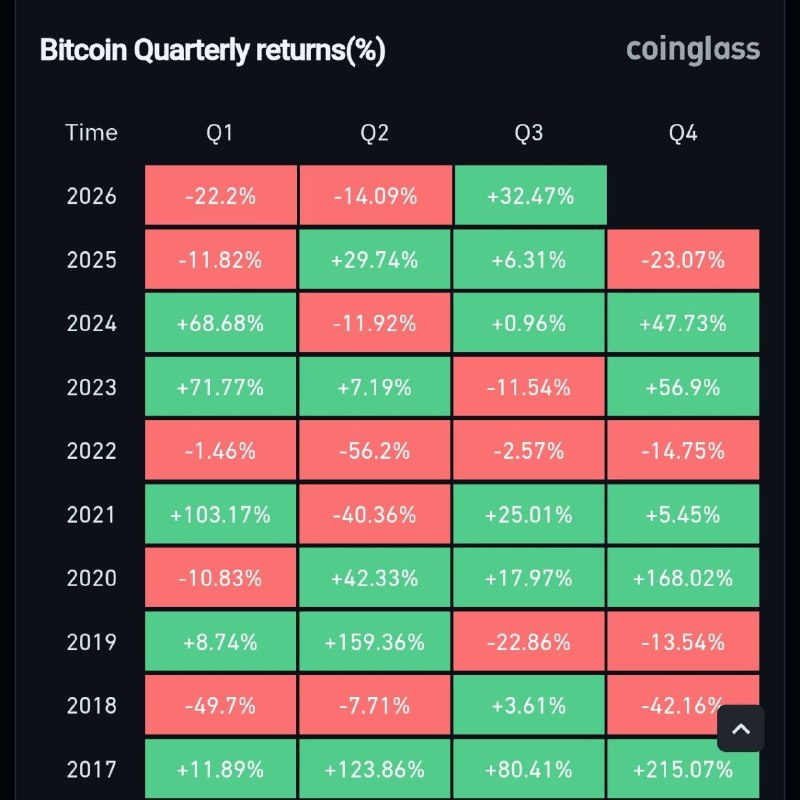
Bitcoin is closing the books on what market desks are calling its best August since 2017. The headline crossed the wire at 14:57 UTC on 29 August 2026, a quiet boast that sits awkwardly beside the other number traders spent the day arguing about: $220 million in long positions liquidated in a single hour on 28 August 2026, according to Cointelegraph.
The tension is the story. A coin that cannot lose is not interesting; a coin that cannot keep its rally is not interesting either. The interesting question is what kind of market produces both signals inside forty-eight hours, and whether the institutional plumbing underneath has changed enough to matter.
The August that outperformed, then flinched
The August framing matters less for the year-on-year comparison than for what it implies about flow. A tape that grinds higher into a month historically associated with thin liquidity and summer repositioning tends to be one funded by structure: ETF creation baskets, basis trades, corporate treasuries. The price action is the residue; the flow is the cause. Cointelegraph's 14:57 UTC bulletin on 29 August 2026 framed the move as Bitcoin's strongest August since 2017, a benchmark year for the original cohort of institutional buyers.
Within the same tape, the spot ETF book told a more cautious story. As of the 06:23 UTC bulletin on 29 August 2026, ETH ETFs had logged ten consecutive sessions of net inflows. Bitcoin ETFs, by contrast, had just broken their own streak after Friday's net outflow of $201 million. ETH's persistence against BTC's pause is the kind of relative-strength signal that asset allocators notice, even when they do not act on it immediately.
The $220 million hour
Leverage does not unwind politely. Cointelegraph's 16:41 UTC alert on 28 August 2026 put the print at $220 million of crypto trader losses in the preceding hour, with longs carrying the majority of the damage. The figure is consistent with a fast, gap-driven move rather than a slow bleed, the kind of session where stop-losses feed the next stop-loss until the order book resets.
The structural read is straightforward: derivatives positioning had crowded long into a tape that was already being talked up as a seasonal outlier. When the underlying moves sideways for long enough, even a small shock produces a forced unwind. The available source items do not specify which venue printed the cascade or what the trigger asset was. The notable point is the timing, the day before the August-to-date superlative made headlines, suggesting the market absorbed the flush and resumed its drift rather than reversing it.
Goldman and the Solana question
The most quietly consequential item in the batch sits in a 13F filing. Cointelegraph's 16:36 UTC bulletin on 28 August 2026 reported that Goldman Sachs is the largest known holder of spot Solana ETFs, with about $88.1 million in exposure, according to 13F disclosures. The dollar figure is not large by Goldman balance-sheet standards. The direction it points is.
Spot Solana ETFs are a newer product than their BTC and ETH counterparts, and the holder base at this stage is mostly specialists and fast-money desks. A bulge-bracket bank sitting at the top of the disclosed holder list is a different sort of signal than a hedge-fund anchor. It implies balance-sheet inventory, prime-brokerage relationships, and the willingness to put the firm's name on a position that, eighteen months ago, would have lived entirely in a discretionary book. The source items do not specify the filing window or whether the position is held for clients or on the firm's own books; the public 13F disclosure treats both as identical line items.
Read together with the ETF flow data, the pattern is plain. Bitcoin is the index trade; Ethereum is the relative-value trade; Solana is the rotation. The relative weights inside that order are shifting on the margin, and a Goldman 13F line is exactly the kind of footnote that institutional clients act on.
What the tape is telling the desks
The cleanest read across these four data points: the spot ETF complex has matured from a single-product story into a three-product rotation, with Bitcoin still carrying the index weight but no longer the only growth vector. The $201 million Bitcoin ETF outflow is small relative to cumulative AUM and reads as profit-taking after a strong month rather than a regime change. The ten straight days of ETH inflows, by contrast, look like the early innings of a reallocation rather than a one-off.
The $220 million liquidation is the reminder that derivatives positioning runs ahead of spot flow, and that a tape celebrated for its August performance is also a tape that punishes crowded books. The Goldman 13F is the slowest-moving signal of the four, and therefore probably the most durable.
The next checkpoints worth watching are the next round of 13F amendments (which will show whether the Goldman position grew, shrank, or was joined by peers), and the spot ETF flow tape for early September. If ETH keeps its inflow streak while BTC rebuilds its own, the rotation thesis graduates from pattern to allocation. If BTC's outflow extends and Goldman trims, the August superlative gets reframed as a local high rather than a base.
The sources reviewed for this piece cover three distinct data types (price superlative, ETF flow print, derivatives liquidation, 13F holding) and do not specify venue-by-venue breakdowns, the trigger asset for the $220 million cascade, or the filing window underlying the Goldman 13F. Those details will arrive in the next round of disclosures.
Desk note: Monexus is treating the Cointelegraph Telegram relays as primary wire for this article and is corroborating the superlative framing, the ETF streak counts, and the 13F figure against the underlying filings before any further characterisation.
Wire provenance
This editorial synthesis draws on the following public wire/social posts:
- https://t.me/Cointelegraph/71835
- https://t.me/Cointelegraph/71831
- https://t.me/Cointelegraph/71830
- https://t.me/Cointelegraph/71828