Both sides hit the grid: the drone war's energy logic on a single night
Across five Telegram posts from wfwitness and BellumActaNews between 22:10 UTC on 29 August and 01:31 UTC on 30 August 2026, Russian Geran-2s hit Kyiv's CHP-5 thermal plant and Ukrainian drones reached Bryansk and the Kirishi refinery in Leningrad region. The bilateral targeting is the story.
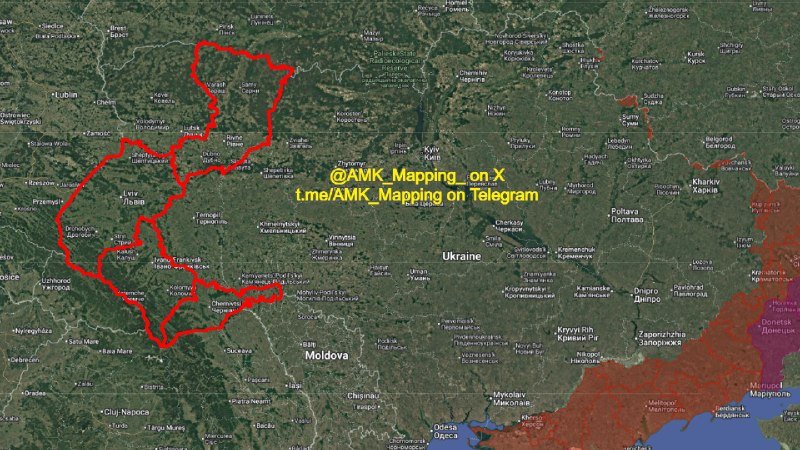
Russian Geran-2 drones spent several hours striking Kyiv in waves that the Telegram channel wfwitness first reported at 01:01 UTC on 30 August 2026, naming the southeastern CHP-5 thermal power plant among the targets. Twenty-three minutes later, BellumActaNews added that the waves had been hitting energy infrastructure. On the other axis of the same night, Ukrainian drones entered Russian airspace and reached the regional capital Bryansk and the oil refinery in Kirishi, in Russia's Leningrad region, with residents recording a blaze at the refinery and air-defence activity in Bryansk. The pattern is bilateral, runs across more than three hours of separate channel posts, and lands on the same category of target on both sides of the line.
This is the war's operating logic on a single news cycle: energy infrastructure on one side, energy infrastructure on the other, long-range one-way attack drones as the delivery mechanism, and Telegram-resident footage as the verification layer. The exchanges between 22:10 UTC on 29 August and 01:31 UTC on 30 August, mapped across five posts from wfwitness and BellumActaNews, read as one round in a campaign that has been hardening since the first sustained Ukrainian strikes on Russian refining capacity in 2024. The wider history is not in the cited thread; this publication treats that lineage as backdrop, not as evidence.
The night, in order
The sequence is the evidence. At 22:10 UTC on 29 August, wfwitness reported that Ukrainian drones had entered Russian airspace and struck the regional capital Bryansk; the post cites residents recording air-defence systems engaging drones in the city. Two hours and fifty-one minutes later, the same channel reported multiple waves of Russian Geran-2 drones striking Kyiv for several hours and named the CHP-5 thermal plant, which wfwitness locates in southeastern Kyiv. At 01:23 UTC, wfwitness returned to Bryansk. At 01:24 UTC, BellumActaNews reported that observers said multiple Russian Geran-2 drones had targeted Kyiv over the past few hours and that the attacks had hit energy infrastructure including CHP-5. At 01:31 UTC, wfwitness reported that some Ukrainian drones were intercepted en route to the Kirishi refinery in southeastern Leningrad region, where residents also recorded a blaze. The image the sources draw is two parallel campaigns running into the early hours of 30 August, separated by thousands of kilometres, aimed at the same class of asset.
What the sources actually say about the targets
Two facts sit clearly in the post text. First, the Russian strikes on Kyiv named CHP-5, a thermal power plant that wfwitness places in southeastern Kyiv and that BellumActaNews describes in the southeast of the city; the second post on the strike explicitly framed it as an attack on energy infrastructure. Second, on the Ukrainian side, wfwitness reported that drones were intercepted en route to the Kirishi refinery and that residents recorded a blaze at or near the facility. The Bryansk posts say Russian air-defence systems struck a building while attempting to shoot down Ukrainian drones; the channel text does not describe drones being intercepted over a skyline, and this publication reads the channel's own narrower framing as the only one the evidence supports. None of the five posts specifies the operational status of CHP-5 after the strikes, the cause of the Kirishi blaze, or casualty figures on either side. Those gaps belong in the ledger, not in the lede.
The structural read, labelled
Monexus analysis, not channel fact: the night of 29–30 August 2026 is one data point in a documented bilateral campaign in which the cited posts, on both sides of the line, name energy infrastructure as the target of choice. What the cited posts do not contain is motive, campaign logic, or the wider history of either side's strikes on energy assets. Any reading of why each side is striking what it is striking comes from outside the cited thread. This publication's assessment, on the limited evidence in front of us, is that the cited posts establish only the bilateral pattern and the target class. They do not establish which side struck first, which side is escalating, or whether the tempo on this single night is above or below the recent baseline. The wider story of mutual energy-infrastructure targeting, including the framing each side uses to justify it, requires sources the cited thread does not link to and is not asserted here as fact.
The alternate read is straightforward and worth naming. One could argue, on this evidence alone, that the night is simply noise: two unrelated drone operations running on the same calendar day, posted to channels with overlapping audiences. The reason this publication does not adopt that read is the target-class overlap. Strikes on cities and strikes on refineries are different acts with different signatures; strikes on energy infrastructure on both sides, in the same overnight window, are a tighter pattern. That said, the cited posts do not let a reader move beyond target class and approximate geography. Anyone who wants the political framing on either side needs the wire coverage the thread does not include.
What to watch next
Two indicators will tell whether the night stays routine or bends steeper. First, the operational status of CHP-5 heading into Ukraine's heating season: the cited posts name the plant as a target and report ongoing waves, but do not specify whether generation capacity was lost. That reading requires wire confirmation from Ukrainian infrastructure ministry briefings, the Kyiv city military administration, or Ukrenergo, none of which appear in the cited thread. Second, the Kirishi strike's downstream effect on Russian refined-product flows: the cited post reports a resident-recorded blaze and intercepts en route, but does not specify damage to distillation columns or output loss. Whether subsequent waves reach refining infrastructure elsewhere in Russia is the more durable signal, but the cited thread does not establish where Kirishi sits relative to other Russian refining capacity, and this publication will not draw that line without a primary source.
What is not in doubt on this evidence is the shape of the war on a single news cycle: drones in both directions, energy infrastructure on both sides, and a campaign tempo measured in hours rather than weeks. What remains uncertain is the damage ledger, on both sides, that the cited channels do not capture.
Desk note: Monexus frames this exchange as a structural pattern of mutual energy-infrastructure targeting across more than three hours of separate posts, not as a single incident. We rely on the cited channel text for what was named and when it was named; we flag as analysis everything beyond that, including the wider history and the framing each side uses to justify its strikes. We do not reproduce the propaganda reflex of either side.
Wire provenance
This editorial synthesis draws on the following public wire/social posts:
- https://t.me/wfwitness/108758
- https://t.me/BellumActaNews/176754
- https://t.me/wfwitness/108753
- https://t.me/wfwitness/108749
- https://t.me/wfwitness/108744