Kyiv's deep-reach strikes land inside Russia, and the target list is the argument
Zelensky confirmed overnight Ukrainian strikes on drone launch sites in Oryol and Rostov regions, the Yeysk military airfield, a Black Sea target and the Kirishi refinery in Leningrad region. He also referenced earlier long-range strikes in Bashkortostan and Arkhangelsk. The list is the argument.
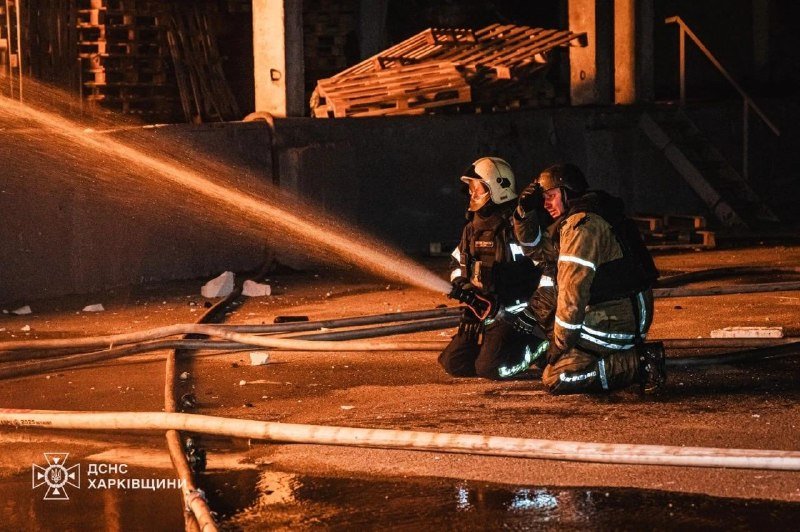
On the morning of 30 August 2026, President Volodymyr Zelensky publicly confirmed a campaign of overnight Ukrainian strikes on Russian military and energy infrastructure. The target list, circulated in translation by WarTranslated and corroborated by independent OSINT feeds before noon UTC, included drone storage, preparation and launch sites in Oryol and Rostov regions, the Yeysk military airfield, a Black Sea target and a refinery in Russia's Leningrad region that Zelensky identifies as Kirishi. In the same address he referenced additional long-range strikes earlier in the week against targets in Bashkortostan and Arkhangelsk region. Read together, the list is a procurement map of the Russian long-range strike complex.
Monexus analysis: read the targets, not the press releases. Ukraine is no longer reaching deep into Russia for catharsis. It is reaching for the nodes that feed the drone production and launch line that has battered its cities for two years. The geography of the confirmed strikes is the point.
The Kirishi line
Kirishi is a refinery in Russia's Leningrad region that Zelensky characterises as generating millions of dollars each month for Russia's war budget, according to Noel Reports' write-up of his address published at 09:33 UTC on 30 August. Hitting it again, after months of Ukrainian operations against other Russian refineries, is the maintenance phase of an attrition campaign rather than a one-off. The structural logic Ukraine has voiced for the better part of a year is that every barrel of product Kyiv can keep off the Russian market is a barrel that does not become diesel for the front. The available source items do not specify the volume of refined product affected by this particular strike.
Drone-on-drone logic
The Oryol and Rostov strikes are the news. Russian Shahed-type one-way attack drones and their associated storage, refurbishment and launch infrastructure have been the dominant overnight threat to Ukrainian cities since the autumn of 2024. Striking the launch sites rather than the airframes in flight is the cheaper, more repeatable option, and it forces Moscow to disperse, relocate and rebuild before each launch cycle. Noel Reports' write-up of Zelensky's address frames the campaign explicitly as targeting the ground side of that machine: storage, preparation and launch. That language matters, because it tells Russian planners that the threat is now at the gantry, not only in the air.
Bashkortostan and Arkhangelsk: a separate file
In the same address Zelensky also confirmed effective long-range strikes earlier in the week against targets in Bashkortostan and Arkhangelsk region. The available source items do not specify which facilities were struck, the weapons used, or the extent of damage. Monexus has not independently established any of those details from the cited posts. The relevant point for now is the temporal framing: the source items place those strikes earlier in the week, not as part of the overnight operation of 29 into 30 August. Reading them into the same strike night, as some commentary has done, blurs the picture. The Bashkortostan and Arkhangelsk file deserves its own corroboration pass before it is folded into the broader campaign narrative.
Counter-narrative: what Moscow will say
The Russian framing of operations like these is consistent enough to be predicted in advance. Expect state media and Russian defence Telegram channels to characterise the strikes as either ineffective, provocations against civilian infrastructure, or both; to understate damage at Kirishi; and to argue that deep Ukrainian reach is a Western-enabled escalation. That last line will land differently in different capitals. In Berlin, Paris and London it will be brushed past. In Beijing, Ankara and parts of the Global South it will be heard. Monexus assessment: the structural argument, that a country subjected to nightly long-range attack has a legitimate right to strike back at the ground side of that attack, holds. It is the argument Western wire reporting has steadily normalised over the past twelve months, and it is the argument Kyiv is now making with force rather than rhetoric.
What to watch next
Three things. First, confirmed imagery from inside the Kirishi refinery, which usually surfaces within 48 to 72 hours via Russian local channels and OSINT analysts tracking satellite fire detections. Second, Russian retaliatory strikes on Ukrainian energy infrastructure in the same window, since the autumn pattern has been tit-for-tat. Third, the Bashkortostan and Arkhangelsk file. If Ukrainian weapons reached and damaged targets there, Kyiv will eventually want the world to see it, which means satellite imagery or footage will follow. If they did not, the topic will quietly disappear, and that too will be a tell.
The bigger story is the one this strike night quietly confirms. Ukraine is waging a methodical infrastructure campaign against the Russian long-range strike complex, on Russian territory, with domestic weapons. The night of 29 into 30 August 2026 was one of the louder data points. It will not be the last.
Desk note: Monexus framed this as a Ukrainian strategic communication moment, not as a Russian-framing rebuttal exercise. The Western wire line has converged on the legitimacy reading; the Russian-state framing is treated as counter-claim material only.
Wire provenance
This editorial synthesis draws on the following public wire/social posts:
- https://t.me/wartranslated/18451
- https://t.me/wartranslated/18447
- https://t.me/noel_reports/51916
- https://t.me/osintlive/568082