Tehran issues post-strike warning: 'no aggression tolerated from any direction'
On 31 August 2026, Iran's General Staff and Khatam al-Anbiya Central Headquarters issued a warning that the Islamic Republic would not tolerate aggression from any source, hours after Iranian forces struck US bases in the UAE and Jordan in reprisal for US aerial assaults on Larak Island.
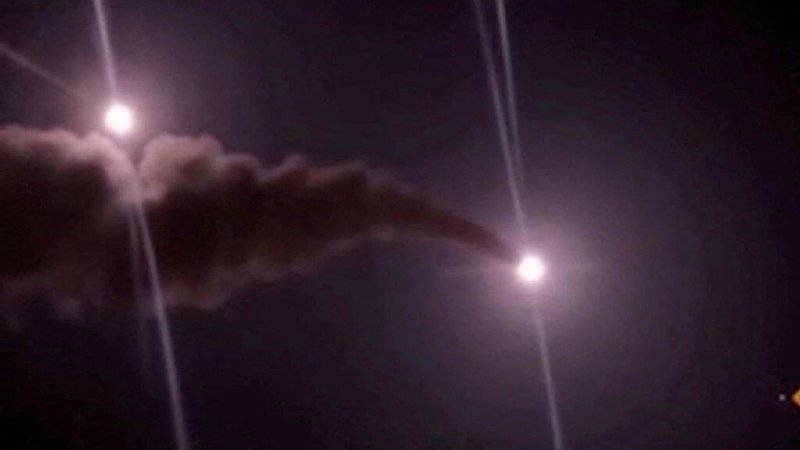
At 19:35 UTC on 31 August 2026, the General Staff of Iran's Armed Forces and the Khatam al-Anbiya Central Headquarters published a joint statement declaring that the Islamic Republic would not tolerate aggression from any direction. The text, carried by PressTV's official Telegram channel within minutes and republished in English by IRNA at 19:43 UTC, asserted that the United States continued to use the territory and airspace of unnamed regional partners to attack Iran despite what Tehran described as official assurances from some of those same governments.
What makes the warning more than routine rhetoric is the timing the IRNA and Sprinter Press versions put on it. According to IRNA's English Telegram post and the text amplified on X at 19:55 UTC, the joint declaration was issued "after Iran targeted American military bases in the UAE and Jordan in reprisal for US aerial assaults on Iran's Larak Island." Monexus analysis: this is a post-exchange declaration, not a preventive one. The red line is being drawn after the Iranian side has already fired, and the political text is calibrated to shape the interpretation of strikes that have already happened.
What the General Staff actually said
The 19:35 UTC statement, published on PressTV's official Telegram channel, runs through a tight sequence of claims. It asserts that, "despite assurances from some regional countries, the US continues to use their territory and airspace to attack Iran." It accuses those regional governments of failing to live up to those assurances. And it closes with the operative line: Iran will not tolerate aggression from any direction, by any party, and reserves the right to respond. PressTV carried the full text at 19:35 UTC, IRNA English republished it at 19:43 UTC, and the X account Sprinter Press amplified it at 19:55 UTC. By 20:50 UTC, PressTV was reporting the same warning as the headline of a follow-up post, signalling that the messaging was intended to be read as durable, not reactive.
The statement does not name the regional governments whose airspace it references. It also does not name a specific US strike or a specific Iranian reprisal; the operational specifics are located in the IRNA framing of the joint declaration as a post-strike text, rather than in the General Staff statement itself. The IRNA framing, alongside Sprinter Press's reference to "the valiant forces of the Islamic Revolutionary Guard Corps and the Army," is what converts the document from a generic warning into a dated one.
The air-defence layer underneath
At 20:27 UTC, Brigadier General Elhami, commander of the Khatam al-Anbiya Air Defense Headquarters, delivered a parallel message through the same PressTV channel. The framing was industrial and doctrinal: lessons drawn from "recent wars of aggression" have, he said, fed directly into domestic arms production; Iran has, in his telling, "achieved valuable experience" in air defence; and the country is positioned to defend itself against a wider spectrum of threats than before. In the context the IRNA and Sprinter Press posts establish, "recent wars of aggression" reads as shorthand for the Larak Island exchanges and the broader US-Iran round that preceded them.
The General Staff's political warning and Elhami's technical claim track in parallel. One frames the political red line and the readiness to enforce it; the other reassures the domestic audience that the line can be held. Monexus analysis: the pairing suggests a Tehran that wants both deterrent value in the political statement and morale value in the air-defence claim, while keeping the dated operational facts in the IRNA framing rather than in the General Staff statement itself.
Counterpoint: how to read a post-strike declaration
The dominant read, given the IRNA and Sprinter Press evidence, is that Tehran is consolidating a specific round of exchanges into a doctrinal statement: a retaliatory strike on US bases in the UAE and Jordan has already been carried out in response to US aerial assaults on Larak Island, and the General Staff statement is the political envelope around that military action. Under that reading, the warning is forward-looking but anchored to a dated event.
A more cautious read treats the same material differently. Iranian state media routinely pairs capability claims with political warnings, and the headline-level signal ("no aggression tolerated") carries less new information than the volume suggests. The General Staff text itself does not specify a trigger, an actor, a target, or a timeline; the operational specifics live in the IRNA framing rather than in the joint statement. A reader relying only on the General Staff text would not know that Iranian forces had already struck US bases in the UAE and Jordan.
A third, more sceptical read is that the separation between the political text (silent on operational specifics) and the state-agency framing (locating the text after specific strikes) is itself deliberate. It allows Tehran to claim a retaliatory strike while preserving deniability about its scale, and to reserve the right to characterise follow-on exchanges without locking itself to a specific incident.
What to watch next
Three concrete markers will tell us whether the warning is operational or rhetorical. First, any official statement from a named Gulf government disputing or clarifying the "assurances" the General Staff references; absent that, the accusation will sit unaddressed. Second, independent confirmation of the specific strikes the IRNA framing describes, including the targeting of US bases in the UAE and Jordan and the US aerial assaults on Larak Island; this article has not independently established those strikes from the available source items. Third, a visible change in Iranian air-defence posture, dispersal of assets, or movement of mobile systems that would corroborate Elhami's industrial-doctrinal claims.
Until one of those three happens, the most accurate read is the plain one: Tehran has framed a specific round of exchanges as the trigger for a redrawn deterrent line, and is signalling that the cost calculus for any future US or US-partnered strike should include a regional bill, not a bilateral one. The line is drawn in language that points to dated events, not yet in deployment beyond what IRNA's framing describes.
Desk note: Monexus leads on Iranian state-media sources here because the story originates there. We have flagged, throughout, where the General Staff statement itself is silent on operational specifics and where the operational context is supplied only by the IRNA and Sprinter Press framing. The political statement, the air-defence technical claim, and the IRNA post-strike framing are kept distinct; readers should treat them as three layers of the same messaging cycle, not as a single factual event.
Wire provenance
This editorial synthesis draws on the following public wire/social posts:
- https://t.me/presstv/204943
- https://t.me/Irna_en/38779
- https://x.com/SprinterPress/status/2094514348689383608
- https://t.me/presstv/204948
- https://t.me/presstv/204949