Missile at the F-35: How the Strait of Hormuz Became the Front Line of an Iran-US Standoff
An account relaying Axios reported on 31 August 2026, citing a US official, that Iran launched a missile at a US F-35 over the Strait of Hormuz. The same day, Polymarket priced a 37% probability that Tehran would charge transit fees there before year-end.
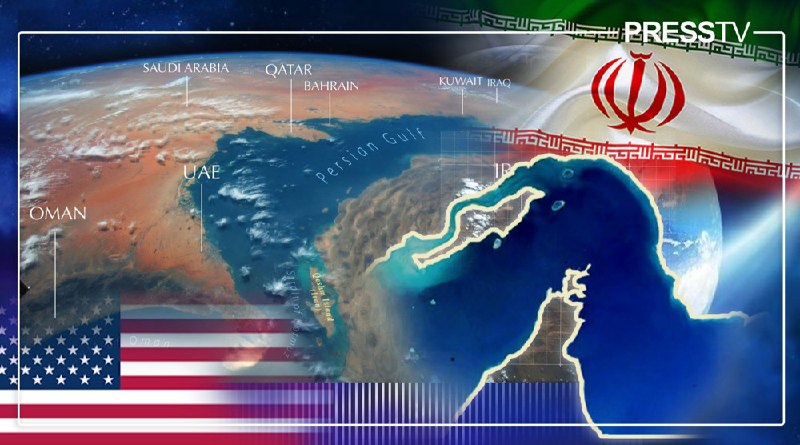
At 19:55 UTC on 31 August 2026, an account on X relaying Axios reported, citing a US official, that Iran had launched a missile at a US F-35 fighter jet providing air cover for ships in the Strait of Hormuz. The available source item does not specify whether the aircraft was hit, the missile type, or the circumstances of the reported launch. It does, however, place the incident inside a series of recent confrontations involving the United States and Iran.
The relay carries two overlapping dimensions. One is a militarised signal around a strategic waterway. The other is the possibility that Iran could convert control of, or influence over, that waterway into economic leverage, with a prediction market pricing a 37% probability on Tehran charging transit fees before the end of 2026. That market price is not evidence of an official Iranian policy. It is a measure of how traders are currently pricing the possibility.
A military signal, not yet a settled account
The reported F-35 engagement is the most consequential item in the available record because it describes a direct interaction between an Iranian missile launch and a US combat aircraft. The relay attributes the account to a US official and says the F-35 was providing air cover for ships in the Strait of Hormuz. It does not identify the unit, the vessels involved, the missile system, or the outcome of the engagement. Whether the launch was intercepted, missed, or preceded by warning is not established by the available record.
That distinction matters. A successful interception, a warning shot, and an unsuccessful engagement have different implications for escalation dynamics, rules of engagement, and the political cost of any follow-on action. The available source items support only the narrower proposition that an account citing a US official reported a missile launch at a US F-35 in the strait on 31 August 2026. The report should be read as a signal inside a wider contest over movement through the waterway, not as a complete account of the engagement.
The political language around Iran and China
President Donald Trump was reported by Clash Report in two separate Telegram posts on 31 August 2026 as saying that, even with the Strait of Hormuz, Xi had been "relatively inactive by comparison to what he could have been." In another post, he reportedly said of Iran: "They don't really know who their leader is." These are relayed accounts of the president's remarks as captured by a Telegram channel, not independent assessments of Chinese or Iranian policy.
The first remark points to the international dimension of the crisis. China has a material interest in the movement of energy through the Strait of Hormuz, but the available source items do not specify what Beijing has decided to do, whether it has made a public commitment, or how it has communicated with Washington or Tehran. The post supports only Trump's characterisation of China's relative inactivity. Beijing's own account of the crisis, its objectives, and its response are not contained in the cited material.
The second remark highlights uncertainty at the top of the Iranian system, as described by Trump. It does not establish Iran's actual leadership arrangements, command-and-control problems, or negotiating position. The available evidence does not independently corroborate the claim. Its value is political: the reported remark itself shows how the confrontation is being framed by the US president on the day in question.
WarMonitor, writing through the osintlive Telegram account at 19:08 UTC on 31 August 2026, supplied a different reading. Its post said: "We were told this was about stopping Iran from getting a nuclear weapon, but right now it seems like it's really just about reopening a passage that was already open before the war began." That is an interpretation from an open-source intelligence account, not a confirmed account of war aims. It is, however, a useful counterpoint to any claim that the conflict can be read only through the nuclear question.
What the market is actually pricing
Polymarket's post at 17:19 UTC on 31 August 2026 assigned a 37% chance that Iran would charge fees in the Strait of Hormuz during 2026. The linked market page offers the contract record behind that figure. The percentage should not be treated as an official forecast or as proof that Iran plans to impose a toll. It reflects a market probability at that timestamp, built from whatever information and assumptions traders brought to it.
The distinction is important. A fee would represent an attempt to convert influence over a shipping corridor into economic leverage. The available sources do not specify whether Iran has announced such a measure, what form a fee might take, or how it would be enforced. The 37% figure therefore points to perceived risk, not established policy.
Monexus analysis: the juxtaposition of the relayed F-35 missile report and the 37% fee probability suggests that the central uncertainty is no longer limited to whether Iran can challenge US military activity. It also concerns whether the strait can remain an open commercial route while military pressure rises around it. This is an assessment of the supplied signals, not a conclusion that Iran has chosen a particular course.
The WarMonitor post complicates that interpretation. Its argument that the operation appears concerned with reopening a passage that was already open suggests that competing accounts of the crisis are already shaping how the conflict is described. One reading emphasises the stated objective of preventing Iran from obtaining a nuclear weapon. The other emphasises control of a strategic passage. The evidence provided here does not resolve which objective dominates.
The corridor becomes the leverage point
The Strait of Hormuz is the geographical centre of this confrontation. The supplied sources do not provide a verified share of global oil flows, shipping volumes, insurance costs, or price effects, so claims about the immediate economic consequences would go beyond the record. What can be said is narrower: the reported air cover mission and the market's fee contract both identify the waterway as an object of military and economic attention.
That creates a two-sided risk. A military response aimed at preserving freedom of movement could escalate if Iran interprets it as a challenge to its position. An economic measure aimed at charging transit fees could also create friction if ship operators, governments, or insurers regard it as a restriction on navigation. The source material does not say that either step has been formally adopted.
The political stakes extend beyond the immediate exchange. China's role is central to any durable settlement because Chinese choices could affect the balance of diplomatic and economic pressure. The available record contains only Trump's reported assessment that Xi has been relatively inactive. It does not provide China's own account of the crisis, its objectives, or its response. The responsible conclusion is not that Beijing is neutral, but that its position is underspecified here.
The uncertainty should be stated plainly. The cited posts do not independently establish the missile's type, the F-35's status after the reported launch, Iran's official explanation, China's formal position, or the operational meaning of the fee probability. The figures and quotations in this article are therefore bounded claims: a relayed report of an incident, relayed presidential remarks, a market probability, and an open-source interpretation.
The next useful signals would be an official US account of the reported engagement, an Iranian statement addressing the launch, a Chinese statement setting out Beijing's response, and a clear market definition of what would count as Iran charging fees in the strait. Until those records are available, the most defensible reading is that the Strait of Hormuz has become the point where military signalling, political uncertainty, and economic leverage intersect. The 31 August reports show the intersection. They do not yet show who will control it, or at what cost.
Desk note: Monexus separates the relayed F-35 report, relayed presidential remarks, a market probability, and an open-source interpretation rather than treating them as equally verified facts. The dispute is framed as a contest over a strategic corridor, while the uncertainty created by the limited source record is preserved.
Wire provenance
This editorial synthesis draws on the following public wire/social posts:
- https://x.com/SprinterPress/status/2094514482286641516
- https://t.me/ClashReport/94396
- https://t.me/ClashReport/94394
- https://t.me/osintlive/568541
- https://x.com/Polymarket/status/2094475179866874247