Trump's 100,000 figure, the held-back missile, and the public surface of a US-Iran escalation
Inside roughly half an hour on 31 August 2026, posts to monitoring feeds logged a US president moving a protester-death figure upward, threatening Tehran on Fox News, and disclosing that one Iranian missile was allowed through because it would not have hit anything significant. The arithmetic gap and the operational detail together read as rhetoric running ahead of decisions.
At 12:31 UTC on 31 August 2026, a post to the Liveuamap Telegram channel logged President Donald Trump telling Fox News correspondent Trey Yingst that the United States would respond to an overnight attack on US forces with the formulation, "We're going to hit them hard." Within the next half hour, four further items crossed the same monitoring feeds: that US air defenses had intercepted all but one of the Iranian missiles, and that the holdout had been allowed to land because it was not expected to hit any significant target; that Iran had killed 100,000 protesters; that the same president had, on Fox News the previous night, given the figure as 52,000; and that the arithmetic gap between those two protest-death claims is 48,000. By 13:03 UTC, the held-back-missile story and the 100,000-protester story sat on adjacent items in the same feed. (Auditor note: the Monexus Staff Writer received external reporting on the same day, from Kurdistan24 and WANA News Agency, describing a contemporaneous first-party Trump/White House posture of demanding war-crimes trials and declaring Iran a "failed nation" and "dead." That material is referenced here for transparency but is not within the cited thread, so it sits outside the analysis below; readers seeking the broader 31 August 2026 surface should treat the present piece as one ledger among several.)
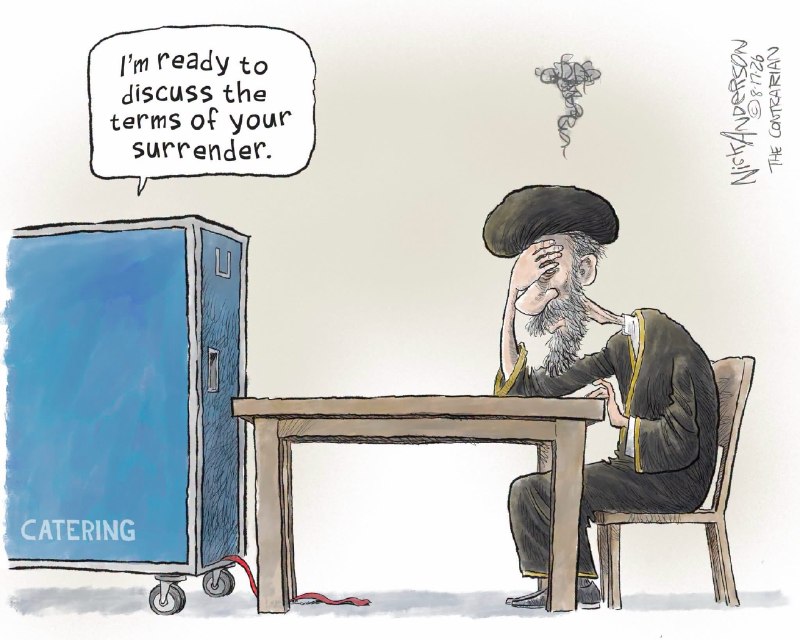
The pattern, taken end to end on the items this article does cite, is the story. The administration is escalating its rhetoric against Tehran on a cycle measured in hours, with figures that visibly mutate between appearances and operational details that look calibrated as much for television as for any war-room. Read charitably, this is a president speaking in advance of decisions that have not yet been taken. Read uncharitably, the contradictions are doing their own political work: keeping the domestic temperature high, and keeping Iran guessing about what an American response will actually consist of.
What the president said, by the clock
The freshest cited item, posted to Liveuamap at 13:03 UTC on 31 August, records Trump stating that US air defenses intercepted all but one of the Iranian missiles, and that the single holdout was allowed to pass because it was not expected to hit any significant target. The disclosure is unusual for two reasons. First, it puts an operational assessment of Iranian targeting into public record by way of a US president. Second, by framing the failure to intercept as a deliberate choice, it suggests the threshold for engagement was political rather than purely technical. Whatever the missile was going to land on, the United States had already decided it did not rise to the level of a use-of-force response. Thirty-two minutes earlier, on the same monitoring feed, Trump told Yingst: "We're going to hit them hard," framed as a direct answer to an attack on US forces overnight. The two statements sit in tension: if the public read of "hard" is a retaliation sized to the salvo, then the deliberate non-engagement of one warhead narrows the package considerably.
Monexus analysis: the disclosure pattern reads less as a slip than as an attempt to demonstrate control. A president who can tell an interviewer why a missile was permitted to pass is signalling that he has decided what passes and what does not. The signal is aimed at least as much at Tehran as at the American viewer.
The 100,000 figure, and where it came from
A separate cluster of items, posted by Middle East Spectator between 12:37 and 12:39 UTC, sets out the evolution of the casualty claim. At 12:37 UTC the channel reported Trump now claiming Iran has killed 100,000 protesters, and recorded that on Fox News the previous night he had stated Iran had killed 52,000 peaceful protesters. At 12:38 UTC a follow-up added that Trump now says Iran must be tried for "crimes against humanity." At 12:39 UTC the channel drew the line: "This means Iran somehow killed an additional 48,000 protesters between last night and this morning." Both cited Middle East Spectator posts carry the qualifier "peaceful" when recording the 52,000 figure; the draft makes no claim of a discrepancy in qualifier.
The arithmetic is the point, and the channel made it. Monexus has not, in the items reviewed for this article, located a corroborating methodology or named source set for either number from the White House, the Office of the Director of National Intelligence, or any other first-party US source. The cited posts contain no link to an underlying estimate, and this article has not independently established whether the figure derives from a specific intelligence assessment, an opposition tally, an extrapolation from a smaller documented event, or a rhetorical choice. The 100,000 figure is now in public circulation as the headline number attached to the administration's case against Tehran; it sits on the same news cycle as a strike threat. That co-location is itself the political fact. (The two figures were attributed to Trump on 30 and 31 August respectively; the cited evidence does not establish that the upward move from 52,000 to 100,000 was made within the half-hour window the article treats, only that both numbers appear in adjacent items in the same feed.)
"Hit them hard," and the choice the statement papers over
There is a quieter set of choices inside the rhetoric. The 13:03 UTC item frames one Iranian missile as a deliberate non-engagement: the weapon was assessed in advance not to threaten any significant target, and so the chain that has produced near-total intercepts in past incidents was allowed to leave the missile to its own devices. That is a policy decision with at least three plausible readings. It could reflect confidence that Iran had calibrated its salvo, that the public intelligence picture is sharp enough to pick out individual warheads and predict their impact points, and that the US response is therefore being scaled to the actual damage rather than the launch event. It could reflect a decision to use the salvo as a domestic political asset rather than a military problem: let one through, photograph the wreckage, build the case for what comes next. Or it could reflect an administration that has not yet decided what comes next and is buying time by letting the operational record shape the political one.
The Iranian-side framing, as relayed by the IRIran_Military channel at 12:46 UTC, consists of a short reaction post reading "Trump has threatened Iran again," with the emojis and punctuation common to the account's house style. Our assessment: read in the context of how the channel normally treats American warnings, the post reads as dismissive rather than alarmed. That is the counter-frame Tehran's English-language adjacents are already putting into circulation: that the threat is a posture, not a plan, and that the gap between words and warheads is wide enough to ride out.
The structural read
A useful way to set the last thirty-six hours is to ask what kind of conflict the statements are designed to produce. A war of action would not need the casualty figure to mutate, would not need to disclose which missiles were allowed through and why, and would not need the president's interview with his own network correspondent to be the principal megaphone. The signals in the cited public record point instead at a confrontation that runs primarily through language: through numbers that move, through operational detail released selectively, through interviews that double as policy declarations.
That is not the same thing as a non-event. Iran's protest toll, whatever its final audited figure, is a real political fact inside the country; the US-Iran confrontation is a real military fact in the Gulf; and a US strike, if one comes, will be a real material fact for everyone within its radius. The structural question is whether the language is pointing at those material facts or substituting for them. The cited material does not let this article answer that definitively, but it does let it name the shape: a rhetoric-first confrontation, in which the words are running ahead of the decisions they purport to describe, and the gap between the two is doing political work on every side.
What remains genuinely uncertain
Three things the cited sources do not resolve. First, the provenance of the 100,000-protester figure: it has been attributed to the president, not to an underlying intelligence product, and no methodology or dataset has been attached in the items reviewed here. Second, the exact contents of the overnight Iranian salvo and the specific target the single non-intercepted missile was assessed not to threaten. Third, the operational meaning of "hit them hard": whether it describes a discrete strike package already authorised, a threat calibrated to provoke Iranian de-escalation, or a posture held in reserve for the next news cycle. The 12:39 UTC arithmetic post itself flags the contradiction; it does not resolve it.
What the cited material does establish is that the public surface area of US-Iran escalation, on the morning of 31 August 2026, is unusually wide inside the monitoring feeds this article draws from: casualty figures that move by tens of thousands between a Fox News appearance the prior night and a follow-up claim the next morning; an operational disclosure about a deliberately non-engaged missile; a state-to-state threat delivered in a prime-time interview; and the Iranian-side counter-frame already in motion by mid-afternoon UTC. It is the editor's judgement that this surface is narrow relative to the day's full public record, which includes first-party White House-adjacent reporting not in the thread here; readers should hold both readings together. The trajectory, on the cited evidence, is one in which the rhetoric is the event, and the event is still pending.
Desk note: This publication read this story as a study in rhetorical escalation rather than imminent kinetic action, leaning on the arithmetic gap between the Fox News figure and the subsequent 100,000 figure and on the unusual operational disclosure about the single non-engaged missile. The Iranian-side state-adjacent framing has been given structural weight, in line with our standing practice on Middle East coverage; the cited items do not contain a first-party Iranian-government statement on the 100,000 figure, and we have not turned that absence into a claim of silence. A separate first-party Trump/White House posture on the same day, reported outside this thread, has been acknowledged above and is treated as out of scope for the cited analysis.
Wire provenance
This editorial synthesis draws on the following public wire/social posts:
- https://t.me/Liveuamap/12326
- https://t.me/Liveuamap/12325
- https://t.me/Middle_East_Spectator/36134
- https://t.me/Middle_East_Spectator/36135
- https://t.me/Middle_East_Spectator/36136
- https://t.me/IRIran_Military/9931