Two squeezes, one calendar: Treasury's bank move and the White House's call for press punishment land on the same day
Treasury readies a new bank designation as the President publicly demands regulators discipline an NBC correspondent, putting economic coercion abroad and rhetorical coercion at home on the same 30 August 2026 timeline.
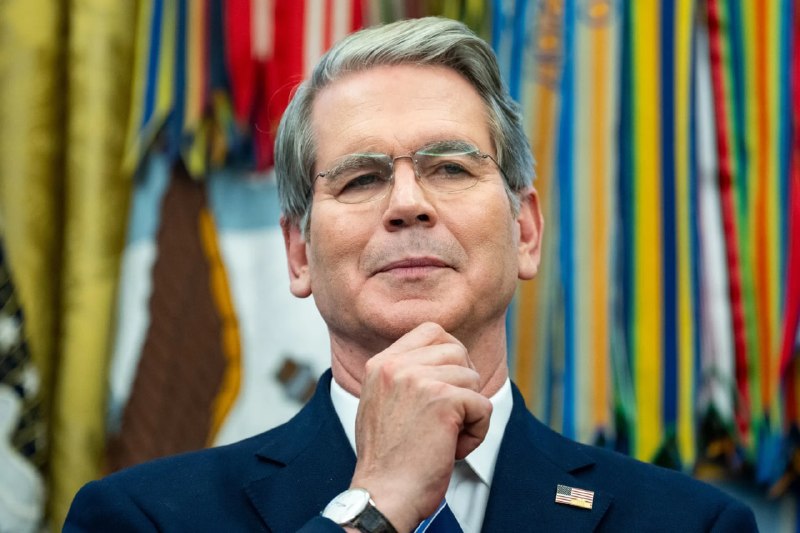
At 22:12 UTC on 30 August 2026, a Telegram channel relaying Associated Press reporting carried Treasury Secretary Scott Bessent's statement that the Trump administration will sanction another bank in the week beginning 31 August, as part of what Bessent, again per the AP relay, described as an intensifying campaign of pressure on countries still doing business with Iran. Less than an hour later, at 23:09 UTC, South China Morning Post's own Telegram channel reported that the President had publicly called for US media regulators to "punish" an NBC News correspondent. At 23:12 UTC, a separate Telegram relay of Wall Street Journal reporting added a third data point: the administration is internally trying to avoid a return to major combat with Iran because of strain on US stocks of missile interceptors and other weapons.
Three messages, one calendar. Read together, Monexus analysis finds, they describe an operating posture in which the financial squeeze on Iran's external counterparties and the rhetorical squeeze on domestic outlets doing uncomfortable reporting sit on the same operational timeline, with the military track deliberately held in reserve.
The bank move, as far as the thread evidence goes
What the source items state is narrow and specific. According to the AP report relayed by ClashReport at 22:12 UTC on 30 August 2026, Bessent said the Treasury intends to designate another bank this week as it "intensifies pressure on countries doing business with Iran," and characterised the move in financial terms. The thread evidence does not specify which bank is in scope, which jurisdiction it operates in, or what specific conduct triggered the designation. The AP framing relayed is that the action is part of an ongoing pressure campaign; the thread does not enumerate earlier designations in that campaign.
Monexus analysis: the significance of the timing is not the identity of the next target but the cadence. A weekly designation tempo, layered against an Iran whose oil revenue is already discounted and routed through non-dollar arrangements, is the kind of pressure that tightens at the margin without producing a discrete crisis event. It is the standard sanctions-as-pacing-tool approach: low drama per move, cumulative weight across the calendar.
The harder question, which the thread evidence does not answer, is how much each new designation actually moves Iranian revenue flows versus how much it accelerates the migration of those flows into yuan-, dirham-, or ruble-based clearing. The available source items do not specify that effect.
Why the military track is being held
The WSJ reporting relayed at 23:12 UTC on 30 August 2026 introduces the constraint that, in Monexus's reading, explains why the financial track is being run hard while the military track is being held. The reported concern is inventory: stocks of missile interceptors and other munitions consumed in earlier US-Iran exchanges are not at the levels the Pentagon would want before adding new combat operations.
That inventory arithmetic, as described in the WSJ relay, is the kind of constraint that does not appear in communiqués but does show up in pacing. How many targets are struck in a given week, which platforms are conserved for higher-end contingencies, and how quickly officials reach for sanctions before reaching for ordnance, all reflect the underlying supply of interceptors and munitions. Monexus assessment: when an administration publicly emphasises a financial track while privately emphasising munitions constraints, the financial track is being asked to substitute for the military track, not complement it.
For the Iranian side, the same inventory picture, as reported by the WSJ relay, points in the opposite direction. Tehran is being told, by the cadence as much as by the communiqués, that Washington would prefer to use banking access as its principal lever rather than airpower. The thread evidence does not specify how Tehran is reading that signal.
The press fight, as the thread evidence describes it
The South China Morning Post report carried by the SCMPNews Telegram channel at 23:09 UTC on 30 August 2026, and available in full at the SCMP URL in the thread, documents the President publicly calling for US media regulators to "punish" an NBC News correspondent. The thread evidence does not specify what the correspondent's questioning concerned, when the appearance took place, or which regulatory body the President named. The available reporting is the call itself.
Monexus analysis: the structural significance of calling publicly for regulatory action against an individual journalist, rather than against a network or a station, is that it puts the question of who defines a legitimate press question into the licensing regulator's orbit. Broadcast licensing in the United States sits with the Federal Communications Commission; the thread evidence does not specify that the President named the FCC or any other body, but the call for "media regulators" points in that direction. The legal bar to disciplining an individual journalist through a licensing mechanism is high; the political cost of leaning on that mechanism is lower, and the cultural signal is what travels.
Reporters inside the room read the signal whether or not the legal mechanism ever moves. Naming a reporter is the move; the regulatory follow-through is optional.
What the calendar shows
The three messages on 30 August 2026 do not, by themselves, prove coordination. They do show a single administration running three tracks on the same day with deliberately different instruments: a financial-coercion track against Iran's external counterparties, a rhetorical-coercion track against a domestic outlet doing on-air questioning, and a reported internal hold on the military track because of munitions constraints.
The counter-reading is that these are simply the cheapest available moves. The military option is constrained by inventories, as the WSJ relay reports. The diplomatic option is not described in the available source items. The financial option is being used because the Treasury has the authority and the calendar permits. The press-pressure option is being used because it costs the President nothing to issue and the regulatory follow-through, if it ever comes, is someone else's problem.
Monexus assessment: the contested bit is whether substitution is escalation in disguise. Each individual move is small. The pattern is what compounds, because each move lowers the threshold for the next, and because the legal architecture being assembled around each is being assembled in public, in real time, in front of a domestic audience and a foreign audience that both take notes.
What remains genuinely uncertain is how the banking counterparty under imminent designation will absorb the hit, which regulator (if any) the White House expects to move on a broadcast licence, and how foreign capitals read the simultaneous signalling. The source items available for this article do not specify those outcomes; they specify only the timeline on which the decisions now sit.
Desk note: Monexus framed the 30 August 2026 cluster as a single operating posture because the three source items share a calendar and a deliberate choice of instruments. The financial-action sourcing runs through ClashReport relays of AP and WSJ; the press-action sourcing runs through SCMP's own reporting and its Telegram channel. The thread evidence does not name the target bank, the regulator, or the NBC correspondent, and we have not independently verified any of those specifics. The Bessent quote is sourced via an AP relay; per standing sourcing protocol, that lowers the certainty of any claim about who said what in which venue, and we have flagged accordingly.
Wire provenance
This editorial synthesis draws on the following public wire/social posts:
- https://t.me/ClashReport/94271
- https://t.me/ClashReport/94280
- https://t.me/SCMPNews/109982
- https://www.scmp.com/news/world/united-states-canada/article/3365780/trump-calls-punishment-nbc-reporter-us-media-regulators