Trump's pharmacy pitch is a deal-making demo, not a drug-pricing fix
A bundle of drug-pricing deals and a parade of cut-the-trade arithmetic lands in the same news cycle. The arithmetic is the message, the drugs are the props.
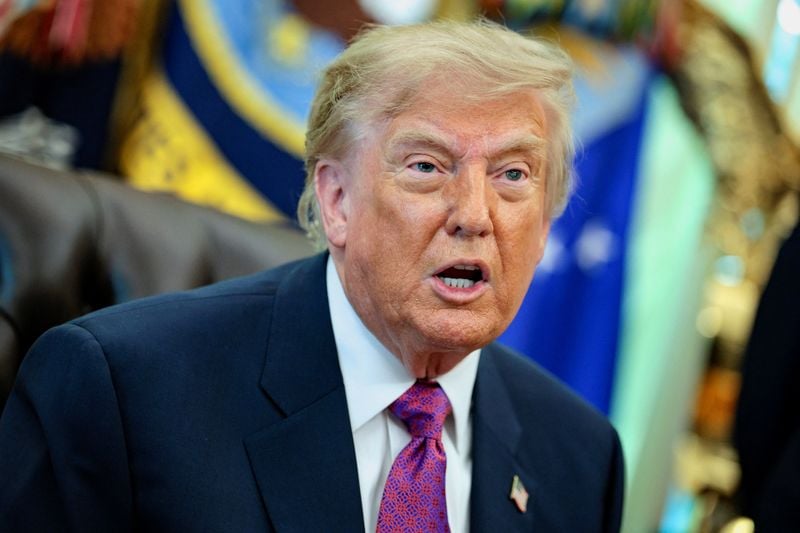
On 31 August 2026 at 16:13 UTC, Investing.com reported that the Trump administration was preparing to announce drug-pricing deals. A CNBC item published at 17:20 UTC described the prospective announcement as involving nearly a dozen drugmakers and building on an effort to connect US prices with cheaper prices abroad. The press-release frame is consumer relief. The arithmetic travelling beside it is something else.
The administration is selling two stories at once. One is a transactional win for American patients, with the White House presenting itself as the party willing to press manufacturers for lower prices. The other is a trade logic in which cutting off commerce can be counted as money gained. The stories do not contradict each other. Each lets a president fond of a printed number tell voters that leverage is victory.
The $40 billion poster child
The clearest statement of the trade logic appeared in a Telegram post at 20:20 UTC on 31 August. The post attributed to Trump the statement: "We don't need their product. So, if we cut off trade with that country, we just made $40 billion. You do a few countries like that, and we become a big money machine."
Read literally, that is a tariff-equals-revenue claim. It presents the amount associated with cutting off trade as something the United States has made. Monexus analysis: the line's political force comes from its simplicity, not from the accounting behind it. The available source item does not specify how the $40 billion figure was calculated, what trade or country it referred to, or whether it represented revenue, avoided purchases, or another measure. The claim should therefore be read as a political sales pitch, not as a settled accounting result.
Interest rates as applause meter
At 19:51 UTC on 31 August, another Telegram post carried the line: "We should have the lowest interest rates in the world." That statement supplies a second example of the administration's preferred political grammar. The claim sets a destination, not a policy mechanism. The supplied sources do not specify what steps would produce that outcome or how the president connected the demand to any particular decision.
The strongest counterpoint is that a demand for lower rates is not itself evidence that a rate cut has been secured. The source item records the demand, not an announced policy action. Monexus assessment: the phrase is best understood as a public claim about what victory would look like, rather than proof that victory has arrived.
The Kennedy exception
At 19:34 UTC, a Telegram post attributed another remark to Trump: "I didn't want to fire a Kennedy. I couldn't. The thought of firing this guy. I wasn't going to do that." The post does not identify the Kennedy, his office, or the circumstances surrounding the remark. It supports only the narrow claim that Trump made the quoted statement.
That limitation matters. Personnel decisions can carry political consequences, but the available evidence does not establish who held which position, what decision was being discussed, or what broader personnel pattern was in play. Monexus analysis: the remark is notable as a rhetorical aside, but it cannot carry a larger account of agency leadership or civil-service policy without additional sourcing.
The episode also illustrates a broader problem in the day's political presentation. Claims about money, interest rates, personnel, and drug prices are being delivered as if each is a self-contained scorecard. A quote about a Kennedy is not evidence of an administrative policy, and a claim about a $40 billion gain is not a financial statement. Conflating the two makes the spectacle louder while leaving the underlying facts less clear.
What the drug-pricing plan actually does
The available reporting says the administration planned to announce a series of drug-pricing deals with nearly a dozen manufacturers. CNBC's headline says the deals build on the administration's effort to link US drug prices to cheaper ones abroad. The supplied sources do not identify the participating companies, specify the prices or benchmarks involved, or state whether patients would see savings at the pharmacy counter.
That produces two plausible readings. The optimistic reading is that the deals represent concessions from manufacturers and could improve affordability. The skeptical reading is that the announcement offers political theatre before the operational details are public. The sources do not resolve the dispute because they report the intended announcement and its broad policy direction, not the terms or patient impact.
The difference matters. A deal is not the same thing as a lower out-of-pocket price, and an agreement with manufacturers is not automatically equivalent to a guarantee for patients. Monexus assessment: until the terms, participating companies, and implementation details are disclosed, the administration's announcement is evidence of a negotiating strategy, not proof of a measurable reduction in what patients pay.
The administration appears to be using the pharmaceutical companies as a visible counterpart in a wider argument about economic power. The claim that the United States can turn trade restrictions into national gain follows the same pattern. Each argument identifies a target, announces leverage, and presents the result as already achieved. But the source record here establishes the announcements and quotations, not the downstream economic outcomes.
There is also a genuine possibility that the administration is pursuing substantive negotiations rather than merely staging a show. Reporting that nearly a dozen drugmakers are involved suggests a broader round of talks than a single symbolic agreement. Yet the number of counterparties does not establish the value of the concessions. The central test is what changes for patients after the announcement, a point the available sources do not specify.
The remaining uncertainty is therefore not whether the White House is claiming wins. It plainly is. The uncertainty is whether the deals produce lower prices, whether the $40 billion trade arithmetic describes a real gain, and whether the interest-rate demand translates into policy. Those are separate questions. Treating them as one scoreboard obscures the work required to answer each one.
Desk note: Monexus framed this as an opinion about political presentation rather than as a health-policy analysis, because the supplied evidence establishes claims and announcements but does not establish their full terms or downstream effects.
Wire provenance
This editorial synthesis draws on the following public wire/social posts:
- https://www.cnbc.com/2026/08/31/trump-drug-pricing-deals.html
- https://www.investing.com/news/stock-market-news/trump-administration-to-announce-drug-pricing-deals-4883081
- https://t.me/ClashReport/94408
- https://t.me/ClashReport/94395
- https://t.me/ClashReport/94391