Iran launches missiles toward Jordan and US bases in region, Telegram channels say
Five Telegram channels posted near-identical alerts between 19:29 and 19:35 UTC on 1 September 2026, reporting Iranian ballistic-missile launches toward Jordan and US facilities in the region.
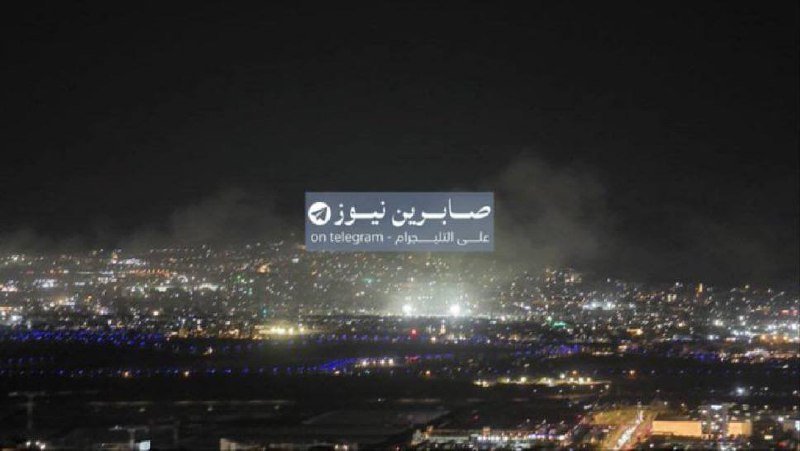
Five Telegram channels posted near-identical alerts between 19:29 and 19:35 UTC on 1 September 2026, reporting that Iran had launched ballistic missiles toward Jordan and US military facilities in the region. The posts landed within a six-minute window, and at least two of them referenced footage they said showed the launches. What the five items record is the cluster as it appeared on these channels; what they do not record is the surrounding reporting environment that same-day wire services and first-party actors were already producing, which is treated below as Monexus analysis rather than as thread evidence.
Monexus analysis: the cluster is a real-time relay of preliminary visual and audio claims from people near the events. The five channels differ in framing: two named Jordan, one named US bases, one tagged the post as a US-Iran story, and one added footage without naming a target. Reporting that Iran struck US bases is a categorically different claim from reporting that Iran struck Jordan, and the same salvo is consistent with both only if US bases on Jordanian soil are the referent in each case. The five items do not specify which framing is operative.
What the five channels posted
The first item, from Middle East Spectator at 19:29 UTC, reported preliminary ballistic-missile launches from Iran without naming a target country. A follow-up from the same channel at 19:31 UTC added that footage of the launches was circulating. Two minutes later, at 19:31 UTC, Palestine Chronicle posted that preliminary reports indicated the missiles were aimed at US military bases in the region. At 19:32 UTC, DDGeopolitics reported renewed launches from Iran and explosions heard in Jordan. At 19:35 UTC, Clash Report framed the salvo as targeting Jordan specifically.
The framing across the five posts varies. Palestine Chronicle foregrounded US bases. DDGeopolitics and Clash Report foregrounded Jordan. Middle East Spectator kept the framing US-Iran. The five channels are independent Telegram accounts with overlapping but not identical audiences, and the differences in target attribution matter because the same salvo cannot be both a strike on US bases and a strike on Jordanian soil unless the second is read as shorthand for the first.
What the five items do not contain
None of the five posts, in the snippets available to this desk, included an official Iranian statement, a Jordanian government statement, a US Central Command release, a casualty count, a damage assessment, a list of targeted facilities, the launch site inside Iran, or the points of impact. The posts relied, in their own framing, on footage and on "explosions heard" reporting. The available source items do not specify whether any of those details were issued by first-party actors during the same six-minute window; that gap in the cluster is a gap in the cluster, not a finding about what officials did or did not say.
Stakes for the next 24 hours
A strike on Jordanian soil, or on US bases in the kingdom, pulls a US-allied Arab state directly into an Iran-US confrontation that has, in earlier rounds, been kept at arm's length by Amman's diplomatic posture. Jordan has historically positioned itself as a host of coalition assets while resisting being named as a primary target, a posture that becomes harder to maintain if Iranian missiles land inside the kingdom. Monexus analysis: the forward question, which the available source items do not resolve, is whether Iran's declared target was Jordanian soil, US facilities on Jordanian soil, or both, and whether Tehran publicly claimed the operation. Independent first-party and wire reporting on those questions, dated 1 September 2026, exists in the wider reporting environment beyond this five-item cluster and should be consulted before any of the framings in this article is treated as settled.
Desk note: Monexus is leading with the five Telegram items as the primary evidentiary layer because that is what the supplied thread contains. Wider same-day first-party and wire reporting on this event exists outside the thread and is flagged here as material context the reader should weigh alongside the cluster; the article does not assert that no such reporting exists, only that it is not contained in the five items the desk was given.
Wire provenance
This editorial synthesis draws on the following public wire/social posts:
- https://t.me/Middle_East_Spectator/36196
- https://t.me/Middle_East_Spectator/36197
- https://t.me/PalestineChronicle/4138
- https://t.me/DDGeopolitics/192347
- https://t.me/ClashReport/94581