Putin's Sumy math doesn't add up, and his economy is starting to say so
Russian forces have not moved closer to Sumy since May 2025, even as Vladimir Putin claims incremental gains. The economy, meanwhile, is starting to strain under war footing.
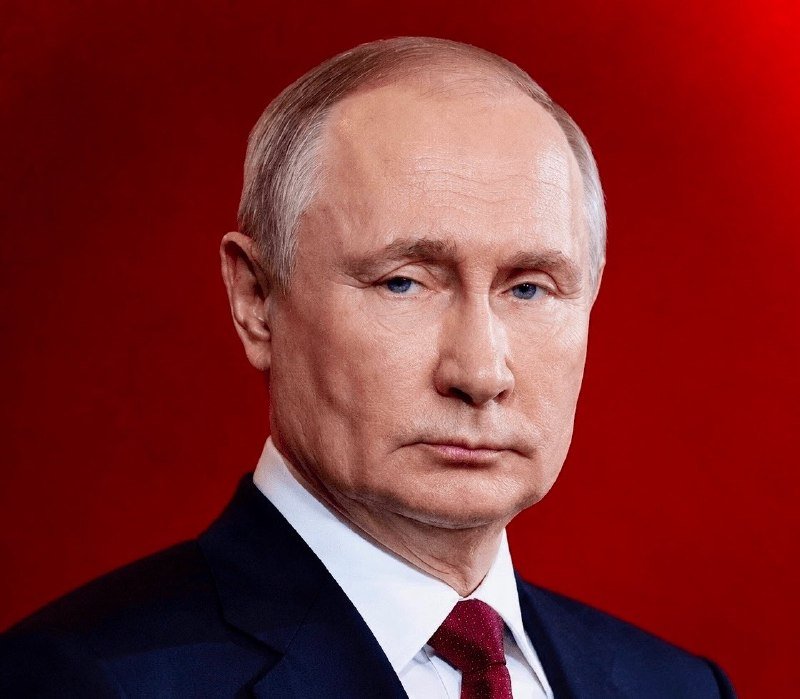
On 28 June 2026, Vladimir Putin told a Russian audience that his forces were 10.5 kilometres from the Ukrainian city of Sumy. On 1 September, he revised the figure: 12 kilometres closer than before. The arithmetic does not survive a map. According to the open-source updates compiled by the noel_reports channel, the actual distance between Russian forward positions and Sumy has held at roughly 17.5 kilometres since May 2025. The Kremlin has spent three months describing a movement that, on the ground, has not happened.
The discrepancy matters because Sumy is the political proxy for the war's next chapter. It is the northern anchor of Ukraine's Kharkiv-Sumy defensive belt, and the test case the Kremlin uses to claim that time is on its side. If the line there is stuck, the broader claim of momentum is on shakier ground than Moscow's briefings admit.
The kilometre that didn't move
The pattern is now visible across two public statements. In June, 10.5 kilometres. In September, 12. Putin's update is careful: closer to the city than the previous claim, but with no anchoring point in actual terrain. The reference geography he is offering is itself, not the front. Independent trackers place the real contact line at roughly 17.5 kilometres from Sumy's northern outskirts, a figure that has been stable for more than a year.
That gap between claimed and measured advance is small enough to be rhetorical, large enough to be structural. It implies that the line on Russian official maps has been quietly redrawn as a talking-point rather than a coordinate. Frontline reporting from the Sumy direction, including in Russian-aligned milblogger coverage the Kremlin has not disowned, has for months described a grinding positional war with limited territorial gain. The numbers being announced at the top are running ahead of the numbers the troops are producing on the ground.
An envoy tells the room what the figures already knew
The economy is starting to talk back. On 1 September, Reuters reported that a senior Kremlin envoy has privately warned that the Russian economy is going "berserk" on war footing. The phrasing is the envoy's, and the warning is unusual: it concedes, in plain economic language, that the combination of defence spending, labour shortages and sanctions pressure is producing instability rather than the steady industrial mobilisation the Kremlin has sold publicly since 2022.
Monexus analysis: read together, the Sumy figure and the envoy's warning describe a system running on two clocks that have stopped matching. The battlefield is being described in language that no longer tracks the maps. The economy is being run in a configuration that one of its own managers now calls unstable. When the political messaging and the structural reality diverge by this much, the next move is usually a fiscal or administrative emergency dressed up as a routine adjustment.
The energy lever, and what it's for
On the same day as the Sumy update, Putin ordered Russian forces to carry out massive strikes on Ukraine's energy infrastructure. Strikes on the grid are not new. What is notable is the explicit framing: ordered, large-scale, tied to the moment when the public line on the war is being recalibrated. Strikes on Ukrainian power generation have, throughout the full-scale invasion, served a strategic purpose beyond military effect. They are the lever Russia pulls when the conventional battlefield is not producing the political result Moscow wants.
Read that way, the September directive is not a tactical update. It is a signal that the Kremlin is preparing the domestic audience for a winter defined by Ukrainian hardship, not Russian advance. Strikes on the grid substitute, in the political economy of the war, for the territorial movement that the maps will not support.
What the available numbers actually license
Two facts sit on the public record as of 1 September 2026. Putin's stated distance to Sumy has shifted by 1.5 kilometres in two and a half months, while independent tracking places the real distance at 17.5 kilometres, unchanged since May 2025. A Russian envoy has described the economy, on the record to a Western wire, as "berserk." Each of those facts, taken alone, is a fragment. Taken together, they sketch a system that is being managed through public language in the absence of the underlying movement.
The most natural reading is that the Sumy figure is being adjusted to keep the political narrative alive, and that the energy strikes are being staged to compensate for what the front line is not delivering. That reading is not the only one available: it is possible that Russian forces have made localised gains the open-source record has not captured, and the envoy's warning can be read as price-of-war realism rather than systemic strain. The available sources do not specify the alternative. They do, however, specify that the gap between official language and external measurement is widening, and that one of the regime's own envoys has chosen to describe the economy in terms usually reserved for outside critics.
The forward watch is short. If the next round of frontline reporting confirms the 17.5-kilometre baseline through the autumn mud season, the Sumy claim will have to be revised again or quietly dropped. If the energy strikes deepen into October as ordered, the political cost will shift to Kyiv's grid rather than to the line on the map. Either outcome tells the same story: the instruments being used to describe the war are outrunning the war itself.
How Monexus framed this: the wire cycle on 1 September carried three Russian statements of escalating ambition and one quiet warning of strain. We read them as a single document, and flagged the divergence between claimed and measured distance as the lead rather than the envoy's quote, because the geography is harder to walk back than the language.
Wire provenance
This editorial synthesis draws on the following public wire/social posts:
- https://t.me/noel_reports/52038
- https://reut.rs/3SH6KHy
- https://x.com/Reuters/status/2094893185734492566
- https://t.me/Kyivpost_official/39302
- https://t.me/Kyivpost_official/39301