Putin pairs an energy-strike threat with a claim that Russia is absorbing, not buckling
A 1 September 2026 appearance put Vladimir Putin on both sides of the war's escalatory logic: promising an energy-strike campaign if Ukraine persists, while insisting the invaded country's pressure has cost the Kremlin roughly one percent of GDP and not a critical wound.
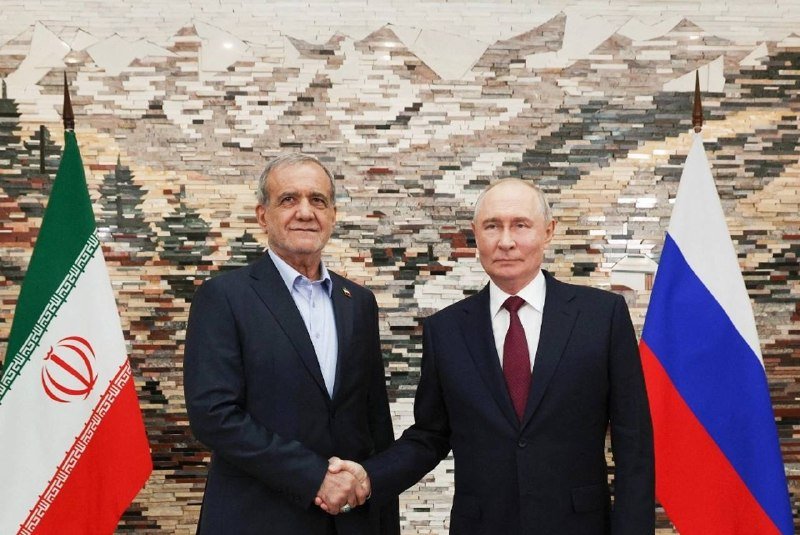
At 21:09 UTC on 1 September 2026, channels aligned with Russia's war reporting carried essentially the same sentence from Vladimir Putin, the kind of line that travels because it is meant to: the army, he said, has received orders to carry out massive attacks on Ukrainian energy infrastructure, and if Russia is attacked, the response will follow.
In the same stretch of remarks, Putin put two numbers on the cost of the war to his own side: about ten percent of damaged oil refining capacity still to repair, and roughly one percent of GDP in damage from attacks on civilian shipping in the Black and Azov Seas. He characterised both as real but not critical. He also declined, in the same setting, to give a public timeline for the war's end. The juxtaposition is the message. Moscow is signalling escalation and endurance at once, an attempt to fix the cost of continuing for Kyiv without admitting the cost Russia is paying to continue itself.
The escalatory half
The energy-order line is the operative part. Putin framed strikes on Ukrainian energy infrastructure as a conditional answer to Ukrainian attacks on Russian facilities, including shipping in the Black and Azov Seas. Channel intelslava, carrying remarks from the same appearance at 21:09 UTC on 1 September, recorded Putin adding that any military facilities in Ukraine are a legitimate target, British or otherwise, and that Russia does not strike Ukraine's leadership because, as the channel paraphrased it, Moscow needs some people to resolve issues.
That is a wider target set than the usual boilerplate. By folding energy infrastructure, military facilities of any nationality, and shipping in two seas into a single threat envelope, the Russian president is publishing, in real time, the categories of strike that follow from the next round of Ukrainian action. For European governments watching the calendar turn toward another heating season, the relevant category is power and refining capacity. The available source items do not specify a date for the threatened strikes; they specify only that the order exists.
The endurance half
The second register is the one Putin uses on his own numbers. He put the share of Russian oil refining still to be repaired at about ten percent, a high but recoverable figure, and characterised damage to civilian shipping in the Black and Azov Seas at about one percent of GDP. That is, on his telling, real money and not a critical wound. The clear implication is that the war machine is dented, not broken, and that the dent is being absorbed inside a budget that has already absorbed far worse.
Monexus analysis: these figures should be read as Putin's own characterisation of the war's cost to Russia, not as a third-party audit. The desk has not seen independent corroboration of either the ten-percent refinery claim or the one-percent-of-GDP shipping figure inside the source set. What the sources do show is how Moscow wants the durability argument priced inside Russia: the refinery stock is down, not destroyed; the Black Sea fleet is harassed, not expelled; the economy is paying, not buckling.
Timing as the lever
Putin was pressed, in the remarks relayed by the channels, on when this ends. He declined to answer publicly. The exchange is worth quoting in the form ClashReport recorded it at 21:36 UTC on 1 September: he has no doubt the enemy will crumble, the question is one of timing, and it is better not to give, or even try to give, specific timelines, because war is a brutal and difficult thing to predict.
Read against the rest of the appearance, that is not modesty. It is a negotiating posture. Refusing to name a date leaves Ukraine and its backers unable to anchor a strategy to a horizon, and it leaves Moscow free to claim a win whenever a halt is announced, on whatever terms happen to be on the table at that moment. The same refusal shows up in Putin's parallel formulation about peace: nobody is imposing anything on Russia, he said, but the position of Russia's friends is that everyone favours ending the conflict as soon as possible, preferably by peaceful means. The volition belongs to Moscow. The endpoint belongs to Moscow. Only the method is negotiable.
What changes if the threat lands
Monexus assessment: the structural read of the 1 September remarks is that Russia is committing to a winter-shaped campaign against Ukrainian energy while continuing to deny that the campaign costs it anything strategic. The two halves of the message are not contradictions; they are the same move played at two audiences. Ukrainian grid operators, transmission system operators across the ENTSO-E footprint, and European finance ministries underwriting Kyiv's budget should price in the renewed threat of large-scale strikes on generating capacity alongside the Kremlin's claim that it is absorbing rather than spending its way through the conflict.
The plausible counter-read is that the warning is theatre: orders already existed, Ukrainian energy sites are already in reach of Russian missiles and Shahed-type drones, and the public restatement changes little on the ground. The argument for taking the threat at face value is that Putin's credibility argument is now staked on Russia appearing unshaken while visibly retaliating, and credibility arguments cost the next round of escalation more than the last one. A leadership that has told its viewers Ukraine cannot hurt Russia is, by its own framing, obligated to respond when the next strike lands. The seventy-two hours after the next reported Ukrainian strike on a Russian refinery or a Black Sea port will be the test.
The source items end with the question Putin refused to answer. That is the right note to leave the analysis on. The Kremlin is signalling that the timing of the war is its to set, while declining to say what the timing actually is. Until the signal is contradicted by the calendar, it should be read as a threat and an offer at once.
Desk note: Monexus read the Putin appearance primarily through Telegram channels ClashReport and intelslava, both of which carried the same underlying remarks within minutes of each other on 1 September 2026. The ten-percent refinery figure and the one-percent-of-GDP shipping figure are Putin's own characterisation rather than audited fact, and the desk has not seen third-party corroboration inside the source set.
Wire provenance
This editorial synthesis draws on the following public wire/social posts:
- https://t.me/ClashReport/94615
- https://t.me/ClashReport/94614
- https://t.me/ClashReport/94611
- https://t.me/intelslava/93739
- https://t.me/intelslava/93737
- https://t.me/intelslava/93738
- https://t.me/intelslava/93736
- https://t.me/ClashReport/94594