London moves against settlements as West Bank food aid collapses
Britain prepares a 'comprehensive' package of measures against Israeli settlement expansion as WFP halves food assistance in the occupied West Bank, deepening a humanitarian crisis alongside the diplomatic one.
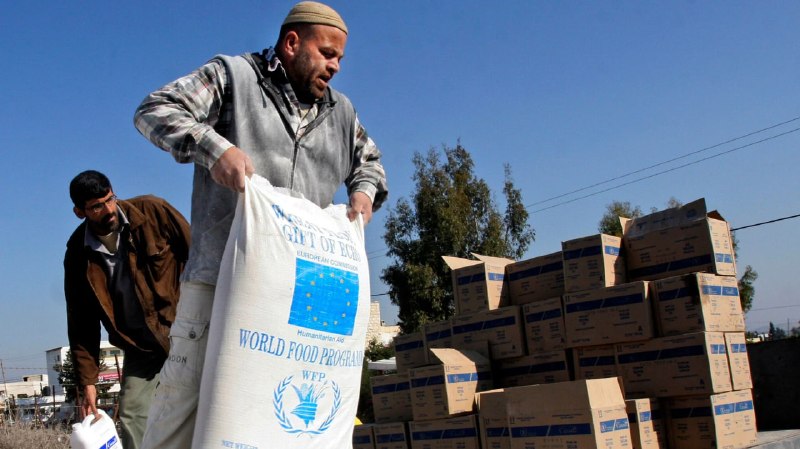
Britain is preparing what it calls a "comprehensive" package of measures against Israeli settlement expansion in the occupied West Bank, according to a Reuters report published on 1 September 2026, while the UN World Food Programme has simultaneously halved food assistance across the territory as its funding base collapses. The two announcements land within hours of each other and point to a single, accelerating fault line: the gap between Western diplomatic signalling and the humanitarian reality on the ground in the occupied territories is widening, not closing, as London's response takes shape.
The British package is the clearest sign yet that the Starmer government intends to translate rhetoric on settlements into discrete, named measures, though it is striking precisely because London has held back from doing so for most of the post-October 7 period. The WFP cut, by contrast, was not a choice at all. It was the arithmetic of a system running out of money.
What London is preparing
The Reuters report, carried on the wire at 14:20 UTC on 1 September 2026 and amplified by BRICS News on Telegram at 14:19 UTC, frames the British move as a "comprehensive" response to settlement plans, with details to be set out "in the coming weeks". The report does not, on the available text, enumerate the measures; the framing is announcement-of-an-announcement, a category that has its own weight in British foreign policy. London has previously moved in slow, telegraphed steps, and the timing of the announcement suggests an attempt to arrive at the autumn UN General Assembly high-level window with a concrete deliverable rather than another expression of concern.
What "comprehensive" can plausibly mean in a British context is bounded. It can include further travel advisories discouraging trade and tourism linked to settlements, sanctions designations against individual settlers or entities operating in the occupied territories, recognition language, downgrading of diplomatic representation, or arms-export licensing shifts. Without the text of the package, the firmest reading is the political one: a UK government that wants to register displeasure in a defined timeframe. Monexus analysis: the announcement-of-an-announcement format reads as London trying to set the diplomatic weather before UNGA rather than waiting until after it.
The aid cut, and what it is not
The WFP halving is a different kind of story, and a more brutal one in operational terms. According to a report published on 1 September 2026 by The Cradle Media and relayed via its Telegram channel at 15:03 UTC, the UN World Food Programme has cut food assistance to families in the occupied West Bank by half, with the agency pointing to a funding collapse in the broader UN relief architecture. The Cradle frames the reduction inside what it calls "Israel's campaign of ethnic cleansing", language that goes further than the wire consensus and that the mainstream Western press has not adopted in equivalent form. The framing is reported here as The Cradle's, not adopted as the desk's.
Two things can be true at once. Funding for the UN architecture has been under structural strain since the start of 2024, as traditional donor budgets have been redirected or constrained. The Israeli campaign of displacement, settlement expansion, demolitions, and movement restrictions in the West Bank has simultaneously destroyed livelihoods and pushed more families into the category that needs external food assistance to eat. The halving is therefore both a donor problem and a demand explosion. Treating it as only the first understates how many more people now require assistance; treating it as only the second lets donor governments off the hook for a fiscal decision they made.
The settlement backdrop
The British announcement is not generic. It responds to specific Israeli settlement plans, the cumulative effect of which has been to consolidate a contiguous built footprint across the central West Bank. The Reuters framing of "settlement plans" in the plural, rather than a single project, matters. The Israeli government has approved and advanced multiple plans over the past year; each individually might be presented as a routine planning decision, and the political effect is cumulative.
Israeli security concerns are legitimate and must be conveyed without dismissiveness. The British package does not, on the available reporting, challenge Israel's right to defend its population against armed attack, and there is no indication in the source material that London intends to. What it does is draw a line around one specific category of action: civilian settlement construction in territory occupied since 1967, which has not been recognised by any European government and which sits in tension with the long-standing British, EU and US rhetorical position that settlements are illegal under international law. That position is not new; what is new is the apparent willingness to act on it.
The honest limits of what London can do
The counter-narrative to the British package is straightforward and must be stated. A UK sanctions or advisory regime operates at the margins of the settlement economy, which is dominated by Israeli domestic capital, Israeli state infrastructure investment, and US-aligned financing. European coordinated action across the EU's 27 member states would shift the calculus more than any individual British move; absent that, London's measures are best read as signalling, both to a domestic audience and to partners in Washington and Brussels. The test will be whether the package is followed by analogous French and German moves before the end of the year, or whether it stands alone as a British gesture.
There is also the question of how the British measures interact with the existing UK-Israel trade and research relationship, which is non-trivial. The available source material does not enumerate the measures, and this article has not independently established which instruments London will use. The Reuters report, on the text available, does not specify the sectors touched. That absence is itself the story: the package is being pre-announced before it is fully scoped.
The WFP cut, meanwhile, is the kind of story that disappears from Western wire coverage within days because there is no quotable single actor to attach to it. The decision is distributed across a donor conference table and a UN agency budget. Its effects are not. Families in the occupied West Bank who were receiving full rations at the start of the summer are receiving half by September, on the available reporting, and a further deterioration in donor funding could push the agency toward suspending assistance entirely rather than running a sub-subsistence programme that satisfies no one. The available source items do not specify the exact number of beneficiaries affected or the precise funding gap; this article has not independently established those figures.
Stakes
If the British package is followed by European partners, and if the settlement plans it responds to continue at their current pace, the year-end picture is a more fragmented Western position on the occupied territories: a Britain and parts of the EU moving to differentiated measures, a US position that has not aligned with the European legal consensus on settlements, and an Israeli government that has so far absorbed Western criticism without changing its operational tempo in the West Bank. The diplomatic and the humanitarian tracks diverge inside that picture. The diplomatic track, on this evidence, is moving; the humanitarian track is sliding.
The single date worth watching is the UN General Assembly high-level week in late September 2026. Whether the British package is announced in full before then, and whether it is joined by partners, will tell the reader whether London is leading or going it alone. For the WFP and the families in the occupied West Bank, that timetable is its own kind of cruelty: diplomatic pace, and the pace at which an assistance budget runs dry, are not the same clock.
Desk note: Monexus framed the British announcement through Reuters, the primary Western wire on this story, and treated the WFP cut through The Cradle Media, a regional outlet that has covered the West Bank humanitarian situation in more sustained detail than the Western wires in recent months. Both pieces of information are presented as reported by their respective sources, with the language of each attributed rather than laundered into the desk's own voice.
Wire provenance
This editorial synthesis draws on the following public wire/social posts:
- https://reut.rs/4cROLVA
- https://x.com/Reuters/status/2094792481363710141
- https://t.me/bricsnews/18014
- https://t.me/thecradlemedia/67167
- https://t.me/TheCradleMedia/67167