US applies pressure on Beijing across trade, shipping and space in a single news cycle
Within a twelve-hour window on 1 September 2026, the US pressed G20 counterparts on trade imbalances, a Chinese lunar-mission slippage was reported, and a US allegation surfaced that COSCO vessels carry concealed intelligence-gathering equipment.
The United States moved against Beijing on three fronts inside a twelve-hour window on 1 September 2026. At 21:50 UTC, a Reuters post to X carried the headline that Washington is urging G20 counterparts to cut trade imbalances and to focus on China. At 20:31 UTC, Nikkei Asia reported that China has delayed an ambitious mission to land at the south pole of the moon, a setback that may hand the United States breathing room in an increasingly contested race. Earlier, at 17:38 UTC, an Unusual Whales post to X, relaying YF News, said the United States alleges China uses "concealed equipment" on COSCO ships to spy on military communications.
Read together, the three dispatches sketch a single working assumption inside the US policy machine: that pressure on Beijing lands hardest when applied simultaneously across the economic, security and high-technology domains. The cumulative effect, as Monexus analysis reads the pattern, is to harden the boundary between two rival industrial systems while leaving the diplomatic door technically open.
A G20 reframed around China
The Reuters post, timestamped 21:50 UTC on 1 September 2026, sets the diplomatic stage in headline form: the US is urging G20 counterparts to prioritise cutting trade imbalances and to focus on China. The post itself does not specify which G20 track or which ministerial gathering is intended; the available source items do not specify the venue. Monexus analysis: the headline carries the political signal, even where the institutional detail remains out of frame.
The bet, in plain terms, is that the diagnosis will travel further than the prescription. Even if a G20 communiqué declines to name China, the act of placing the imbalance question at the centre of the agenda embeds it inside the working calendar of the institution. That is how prior US administrations have used the G20 to set norms, by making the technical language harder to back away from than the political one.
The Chinese counter-reading, absent from the thread evidence but structurally obvious, runs as follows: surplus economies across Asia and Europe operate comparable export-led models, and singling out Beijing is a political choice dressed as economics. Whether Washington wins or loses the framing fight depends on language that the available sources do not specify.
COSCO and the shipping surveillance claim
The second front is operational. The Unusual Whales post to X at 17:38 UTC, citing YF News, reports that the United States says China uses "concealed equipment" on COSCO ships to spy on military communications. The post does not specify whether the allegation describes equipment for monitoring allied communications specifically, whether the accusation has been formally lodged through a US government channel, or which administration official carried the claim. The available source items do not specify those details.
If corroborated, the claim would convert part of the global merchant fleet into a signals-collection platform and place COSCO on a growing US watchlist of Chinese firms whose commercial infrastructure is treated as dual-use by design: ports, undersea cables, telecoms backbones, and now container ships, all of which sit at the intersection of civilian throughput and military reach.
The plausible counter-position is procedural. Merchant vessels have been observed carrying intelligence-collection hardware by multiple states for decades, and allied auxiliary fleets perform similar roles under their own naval commands. A finding that implicates COSCO does not change the underlying behaviour; it changes which flags the US and its partners are willing to operate alongside at sea. Monexus assesses the disclosure as a calibrated escalation rather than a forensic breakthrough: useful less for what it proves about any single voyage than for the precedent it sets about which firms are considered permissible partners in the global shipping commons.
The Chinese structural counter is direct. Beijing's longstanding position, articulated in MFA briefings and state-media editorials over years of similar disputes, holds that accusations of dual-use infrastructure levelled at Chinese firms are pretextual, and that comparable Western commercial infrastructure, from undersea cable consortia to satellite constellations, performs the same dual functions without comparable scrutiny. The available source items do not specify whether COSCO or the Chinese government has issued a statement on this specific allegation.
The lunar south pole, briefly
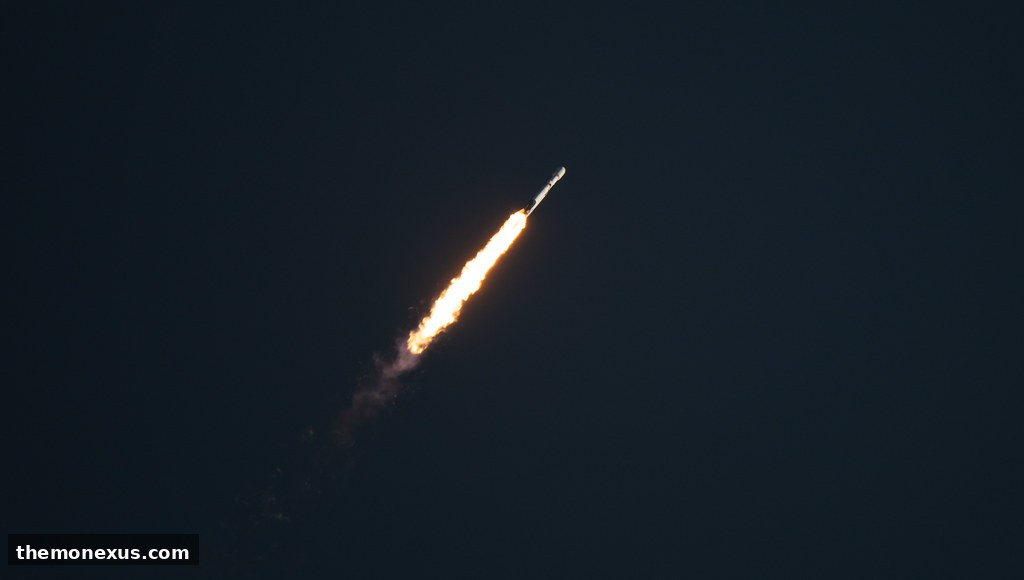
The most concrete piece of good news for US planners is, on this thread, a Chinese delay. Nikkei Asia reported at 20:31 UTC on 1 September that China has postponed an ambitious mission to land near the lunar south pole, a region both programmes consider strategically valuable. The Nikkei framing reads the delay as a setback for Beijing that hands the United States breathing room in the increasingly contested race. The thread evidence does not specify the reason for the slippage, the new launch window, or the specific Chinese programme or launcher involved.
A delay does not end the race; it compresses it. The Chinese programme, on Monexus's read, retains the capacity to slip a mission and then accelerate the next one, given the longer planning horizon and tighter internal budget cycle that outside analysts have previously described. The interesting question is what the slippage reveals about Chinese space-industrial bottlenecks, whether in heavy-lift launch capacity, deep-space tracking, or lander reliability; the thread evidence does not address those directly.
The Chinese counter-reading is straightforward. Lunar programmes, American and Chinese, have run on multi-year timelines that frequently slip; setbacks are routine, not dispositive. Beijing has, in prior reporting on Chang'e missions, framed delays as part of a deliberate engineering conservatism rather than capability shortfall. The thread evidence does not specify the official Chinese framing of this particular slippage.
What the trajectory implies
Stacked across one news cycle, the three moves suggest a doctrine of multi-domain pressure: squeeze on trade, expose on shipping, and wait out the high-technology contest where American firms still hold the lead. The US approach has the advantage of being legible to allies; it also has the disadvantage, on Monexus analysis, of foreclosing the cooperation track that prior administrations used to varying degrees to keep the bilateral relationship from sliding into outright bloc formation. A US policy that treats every Chinese commercial actor as a potential security threat will, by construction, narrow the diplomatic space in which any future administration could re-engage.
The single piece left unresolved by the day's reporting is what Beijing will do in return. The available source items do not specify any Chinese counter-announcement in the same window. The most plausible reading is that the response will arrive in clusters rather than at a single news cycle: a COSCO press statement disputing the equipment allegation, a Foreign Ministry briefing on the G20 framing, and a quiet rescheduling of the lunar programme within the quarter. Watch the next two weeks of MFA press conferences for the texture of that answer.
Monexus framed this against the wire: the three-dispatch pattern is Monexus analysis, drawn from the Reuters X post, Nikkei Asia reporting via Telegram, and the Unusual Whales relay of YF News on the COSCO allegation. The underlying events are sourced strictly to the threads listed below.
Wire provenance
This editorial synthesis draws on the following public wire/social posts:
- https://x.com/Reuters/status/2094905653554823435
- https://reut.rs/4dczeje
- https://t.me/NikkeiAsia/21560
- https://x.com/unusual_whales/status/2094842220151214218