Caracas ratifies a Trump-era oil deal as 2026 vote odds drift to 17%
Venezuela's National Assembly endorsed an oil agreement announced with the Trump administration on 1 September 2026, the same day a Polymarket contract put the odds of a 2026 Venezuelan presidential election at 17%.
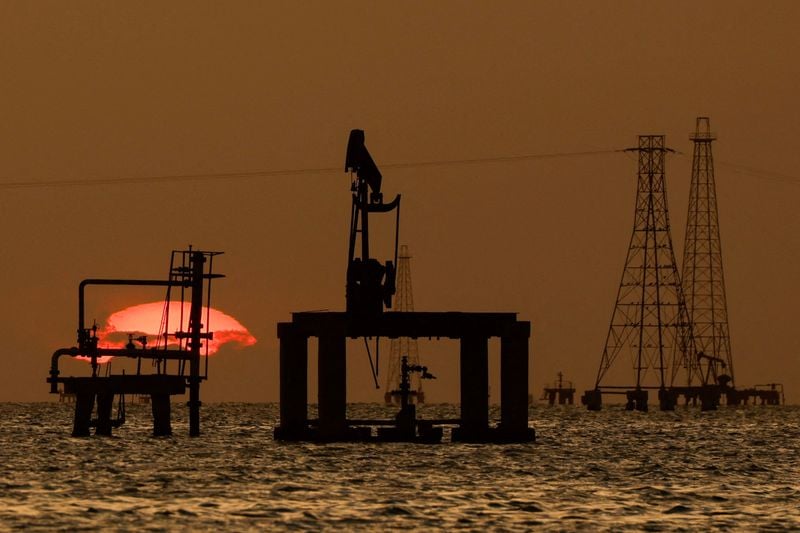
Venezuela's National Assembly on 1 September 2026 backed an oil agreement that had been announced with the Trump administration, according to a same-day report by Investing.com's commodities desk that cited the assembly's endorsement as the new development on the file [1]. A Polymarket post on the same day carried the framing "JUST IN: Venezuela officially approves landmark oil deal with the Trump administration" [2]. Reading the two posts together, the sequence on the day is: a Caracas assembly vote ratifying a US-facing oil arrangement, paired with a US-aligned market actor's broadcast confirmation of that approval.
The ratification lands against a separate, harder-to-move calendar: the question of when, and under what rules, Venezuelans next choose a president. A Polymarket contract dated 1 September 2026 put the implied probability of Venezuela scheduling a presidential election in 2026 at 17% [3]. Monexus analysis: the gap between how fast Caracas can lock in a US-facing oil arrangement and how slowly the electoral file moves is the analytically interesting feature of the week, even though both data points come from the same prediction-market feed.
What the assembly vote actually was
The Investing.com report describes the development as the National Assembly backing "the oil deal announced with U.S.", language that locates the assembly's action as a ratification of an arrangement whose announcement predates 1 September 2026, without specifying when that earlier announcement was made [1]. The Polymarket post uses the phrase "officially approves," a slightly stronger verb than "backs," and applies it to a "landmark oil deal" attributed to the Trump administration [2]. The two characterisations converge on the same event but differ in tone: assembly ratification in one, official approval in the other.
The available source items do not specify which state oil entity, whether the incumbent PdVSA or a specially created vehicle, will hold the counter-party interest, which fields will be opened first, what royalty and tax regime will apply, or what volume of barrels is in scope. They also do not name the US counterparties, the license vehicle, or the sanctions mechanism through which any relief would be delivered. Monexus assessment: until those mechanical details surface in a primary filing, "landmark" is a characterisation made by the market actor broadcasting the approval, not an editorial finding this article can independently verify.
What the 17% line does and does not say
Polymarket's contract on the Venezuelan presidential-election question, as posted on X on 1 September 2026, sits at 17% [3]. That figure is the implied probability the contract assigns to the event "Venezuela schedules a presidential election this year." It is one snapshot, taken from a single Polymarket post on the same day as the assembly vote, and the source items do not contain intraday price history or order-book depth for the contract.
That framing matters, because the figure is doing a lot of work in the regional conversation. Monexus analysis: a 17% line is consistent with two readings that point in opposite directions. The first is that Caracas is unwilling to commit to an electoral calendar while a US-facing deal is in flight, and the market is correctly pricing that reluctance. The second is that opposition actors read the same 17% line as evidence that outside observers have already discounted the chance of a near-term vote, which in turn weakens the opposition's leverage at any negotiating table. Both readings are compatible with the same number. The article does not adjudicate between them; it notes that the contract exists, what it prices, and on what date.
The political geometry around the vote
Two logics are running in parallel on the Caracas side. The first is a familiar hydrocarbon-diplomacy script: a sanctioned producer opens selected barrels to a major buyer in exchange for partial sanctions relief, with the executive in the producing country holding the visible political benefit. The assembly ratification on 1 September 2026 fits that template, and the Polymarket post's "officially approves" language is the broadcast version of it [1][2].
The second logic sits underneath: Latin American producers in this decade have been diversifying their external portfolios away from any single patron, and the United States has been re-entering the bidding. Caracas's assembly vote is one data point in that broader re-positioning. The available source items do not, on their own, establish that thesis; it is offered here as Monexus analysis, and is held lightly.
The counter-narrative, which the available items do not contradict, is that executive control over the assembly makes the vote a formality rather than a check, and that external recognition of a rubber-stamp parliament does not convert it into a credible counter-power. That read is consistent with the wire language used ("backs," "officially approves"), which describes the assembly's role as ratifying rather than scrutinising.
What to watch next
Two concrete events would move the file. First, a US-side filing, whether at Treasury, State, or via an OFAC license announcement, that translates the political endorsement in Caracas into a measurable sanctions adjustment. The available source items do not specify such a filing. Second, the publication of an electoral calendar by Venezuela's National Electoral Council, which would reprice the 17% Polymarket contract upward if it lands, or let it drift lower if it does not.
One uncertainty remains on the evidence available. The reporting on which this article rests wires the Caracas assembly's oil ratification to a Polymarket contract on the electoral calendar, but it does not specify whether the same assembly session on 1 September 2026 also moved, or refused to move, on the electoral file. The two stories are running on parallel tracks. They are not, on the evidence available, running on a collision course. Monexus analysis: the cleanest read is that Caracas can sequence a US-facing energy deal through its assembly faster than it can sequence a presidential election, and the Polymarket contract is the cleanest public price of that asymmetry.
Desk note: Monexus pairs the Investing.com confirmation of the assembly vote with Polymarket's broadcast framing and the 17% implied probability to surface a sequencing gap the wires themselves do not foreground, that a US-facing oil arrangement can clear an assembly faster than the question of when Venezuelans next vote.
Wire provenance
This editorial synthesis draws on the following public wire/social posts:
- https://www.investing.com/news/commodities-news/venezuelas-assembly-backs-oil-deal-announced-with-us-4884495
- https://x.com/Polymarket/status/2094873039137554477
- https://x.com/Polymarket/status/2094873674981499009
- https://poly.market/WqcVO82