Bond rout, G20 digital-asset language, and a 24-hour-trading roundtable land in the same 36 hours
Yields jumped to multi-decade highs on inflation fears on 2 September 2026, hours after G20 finance chiefs endorsed clearer digital-asset rules and the SEC locked in a 17 September roundtable on round-the-clock US equities.
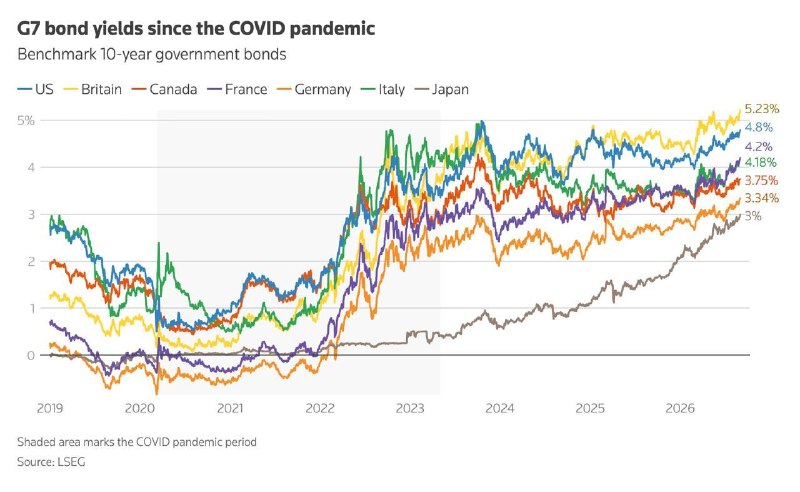
Government bonds sold off across the curve on 2 September 2026, with yields pushing to multi-decade highs on inflation fears, according to a Reuters-sourced alert relayed by Cointelegraph at 11:00 UTC. The move landed in the same 36-hour window as two other policy events that, on their face, have nothing to do with duration risk: a G20 statement formally recognising digital assets' role in economic growth and pledging clearer regulatory pathways, carried on the same wire at 01:35 UTC on 2 September; and a US Securities and Exchange Commission notice at 21:40 UTC on 1 September setting the agenda and panelists for a 17 September 2026 roundtable on preparations for 24-hour trading.
The pattern this publication reads in the timing is one of plumbing, not posture. Three rule-and-rail conversations, two of them digital and one of them continuous, are landing while the cost of old-fashioned sovereign duration is repricing in the wrong direction. That does not make them causally linked. It does make them the things a market operator has to think about on the same morning.
The selloff, in the framing the wire allows
The Reuters-sourced relay characterises the move as a push to multi-decade highs driven by inflation fear, not by any single trigger event. The available wire items do not specify individual benchmark yields, country-by-country deltas, or intraday peak levels; they confirm the direction, the framing, and the newsworthiness of the move. Independent coverage elsewhere has characterised the same kind of move as a function of oil prices and public-debt fears in addition to inflation prints, but that broader multi-driver framing is not present in the source items this article is built on, so the rest of this section sticks to the wire's own characterisation.
A bond rout that the Reuters wire flags as newsworthy on a Tuesday morning in early September is, by definition, unusual enough to merit a second look. Inflation prints that move a curve this hard are rarely one-month surprises; they tend to embed expectations of a higher terminal rate than markets have been willing to price. The wire does not specify which inflation print is doing the work, which central bank is being repriced, or whether the move is concentrated in the long end. Treat the headline characterisation as provisional until those specifics are filled in.
The G20 pivot, in the wire's own words
The G20 item is short but specific: finance chiefs formally recognised the role of digital assets in economic growth, and pledged clearer regulatory pathways and improved cross-border payment systems. That language matters because it puts the G20 on the record as treating digital-asset rails as a growth question rather than purely a risk one. The wire items do not carry the communique text and do not name the ministers who signed off; the headline-level commitment is what is sourced.
For markets, the operational question is what "clearer pathways" turns into in practice. Standard-setting bodies do the slow lift, and the next test is whether subsequent G20 working-group communiques start to point at specific bodies, specific instruments, or specific corridors. As of the wire items in front of this article, that level of detail is not present.
The SEC's 24-hour agenda, and what the relay does and does not say
The SEC's 21:40 UTC item on 1 September reads, in full, that the agency set the agenda and panelists for its 17 September 2026 roundtable on preparations for 24-hour trading. The headline language therefore entails that panelists were announced, even though the relay item itself does not enumerate them. This article has not independently identified which firms, exchanges, or trade groups are on the panel; the available wire items do not name them. Readers who need that roster should treat it as a "to be verified against the SEC's own release" item, not as something this article can supply.
A separate SEC item from the same day, carried at 16:06 UTC on 1 September, describes a proposed modernisation of transfer-agent rules to reflect electronic recordkeeping, communications, and blockchain use in securities offerings and share transfers. Read together with the roundtable, the two items point at the same direction of travel. Monexus analysis: the agency is putting the procedural pieces in place for a market that assumes electronic recordkeeping and blockchain-native settlement as a baseline. That is a reading of the two items together, not a direct quotation of either.
The shadow variable: Iran, Hormuz, and the oil channel
The 2 September bond move sits on top of an active Iran file. A Cointelegraph relay of an AP report at 16:55 UTC on 1 September says the US carried out military strikes targeting Iran as the conflict flared again. A separate item at 18:55 UTC on 31 August characterised the US posture, attributing to Trump specifically the weighing of limited strikes against Iran to curb Hormuz attacks. Neither item names the facilities struck, the Iranian response, or the formal effect on oil supply. They establish the direction of the cycle.
For the bond market, oil is the cleanest transmission channel, but the strength of that transmission is contested. Monexus analysis: a live Iran file tightens the crude-risk premium and pushes expected inflation higher, which is what rate-vol pricing at the long end would reflect. The wire evidence alone does not test that mechanism; it records only that strikes happened and that Hormuz was the named target of the earlier weighing. The deeper mechanism sits in primary-source reporting that this article has not pulled.
A 1 September item at 01:16 UTC carries a Trump quote on Fed Chair Warsh: "He'll do what he has to do, I think our interest rates are too high." The wire treats Warsh as the current Fed Chair. The Trump quote sets the political framing around the chair. The wire does not establish whether Warsh has publicly signalled a course shift, and the characterisation that "the market wants the opposite of what the White House has been asking for" is this publication's read of the rate-versus-yield tension, not a sourced market fact.
What the next 17 days actually hinge on
Three calendar items do most of the work between now and the next G20 communique cycle. The SEC's 17 September 2026 roundtable on 24-hour trading will set the procedural pace for any continuous-market rule change; the SEC's transfer-agent rule proposal will move through its own comment-clock on its own timeline; and the next leg of the Iran file, whether a further retaliation or a de-escalation, will decide whether the bond market is pricing a transitory oil shock or a structural change in the inflation regime.
The honest read is that the bond market is not yet pricing an answer. It is pricing the question.
Desk note: every primary-source attribution in this piece runs through Cointelegraph Telegram relays. Where the relay specified an upstream wire, that wire is named in line. Source items do not include direct SEC press-release URLs or G20 communique text, so the SEC roundtable panel composition and the G20 operational specifics should be re-verified against primary documents before any trading-day decision is made on them. The desk taxonomy is crypto because the G20 and SEC items are the digital-asset and continuous-trading edges of a story that is otherwise a duration repricing; the bond move itself is the spine.
Wire provenance
This editorial synthesis draws on the following public wire/social posts:
- https://t.me/cointelegraph/71899
- https://t.me/cointelegraph/71893
- https://t.me/cointelegraph/71892
- https://t.me/cointelegraph/71885
- https://t.me/cointelegraph/71873
- https://t.me/cointelegraph/71887
- https://t.me/cointelegraph/71870