Gyllenhaal in Venice: a jury president names the absence
At her first Venice jury press conference on 2 September 2026, Maggie Gyllenhaal called the absence of women directors in competition systemic. Festival director Alberto Barbera, on the same cited record, pushed back: 'there is no prejudice.'
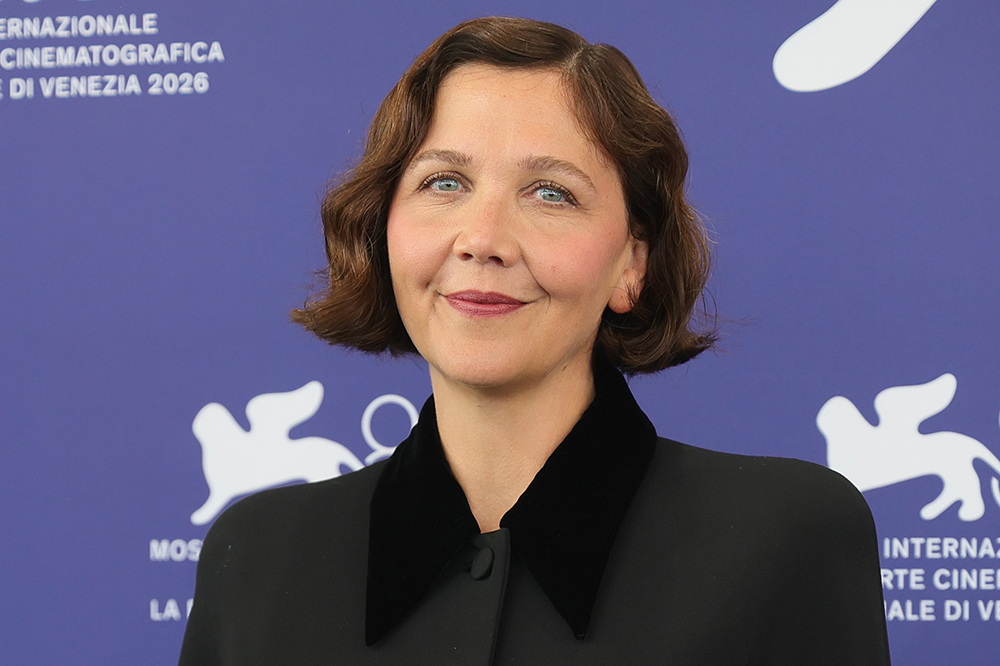
On the morning of 2 September 2026, inside the Sala Grande on the Lido, Maggie Gyllenhaal took the jury podium for her first press conference as president of the Venice Film Festival's main competition jury and put a word on what the festival's programme had conspicuously avoided. Every film in the 2026 Concorso is directed by a man. Asked about it, she did not soften the finding. "There's a systemic problem," Gyllenhaal said, per Variety's dispatch from the presser timestamped 10:49 UTC. IndieWire's 14:22 UTC write-up of the same conference carried the headline that the absence was "systemic" without qualification.
The headline write-up is the easy version of the story. The harder version asks whether a jury president is the right person to say it, whether the festival itself treats the line as a mandate or a courtesy, and what the rest of this year's programme tells us about how Venice curates when no one on the jury is watching.
The exchange, on the record
Gyllenhaal's framing did not stop at the director question. Films, she said in remarks reported by Variety, are "fundamentally, unavoidably political." That opened the room to questions about the wars in Gaza and Ukraine, which the cited Variety dispatch flags as competing for oxygen with the gender question.
Festival director Alberto Barbera was on the same cited record. According to IndieWire's 14:22 UTC wire, he responded to the female-directors question directly, telling reporters "there is no prejudice" in the selection. The two statements sit inside the same press conference. Gyllenhaal named a structural absence; Barbera denied the curatorial intent behind it. Both are first-party, on-the-record positions, and the festival has yet to publish a longer written statement on the exchange.
The politics of "unavoidably political"
A jury president's opening press conference is half photo-op, half platform. Gyllenhaal used hers for the second half. That choice is the news. The structural read, in plain terms: festival juries are the only part of the cinema economy that can publicly disagree with the people who programmed them. Programmers decide the slate in private, months in advance, under their own commercial and political constraints. The jury receives the slate as a fait accompli and can only argue, in extremis, by withholding the top prize. A president who uses the opening press conference to contest the slate's composition is, in effect, pre-positioning a critical line of fire she may not, in the end, be willing to deploy.
Gyllenhaal did not, on the cited record, name a state, a party, or a casualty count when asked about the wars; the available source material does not specify the full transcript of her answers to those follow-ups. That distinction matters. A jury president who opens the door to politics without walking through it preserves the festival's tax-advantaged cultural-status while signalling where the room's sympathies lean. Whether that posture holds across an 11-day festival, with awards given by a nine-person jury under global press gaze, is a different question from whether it made for a sharp first day.
What "systemic" commits you to
"Systemic" is the load-bearing word in both wire write-ups. It implies the absence is not a one-year miscalculation by the selection committee but a property of how the festival sources, finances, and is pitched to. If that is the claim, then the remedies lie upstream of Venice: in the agency packs financiers circulate, in the slate composition of the major sales companies, in which projects get greenlit two to three years before they reach the Lido. The festival can audit itself in the short term; the pipeline that feeds it is someone else's factory floor.
A counter-reading is straightforward and worth naming. The 2026 Concorso may simply reflect what was available and financeable. Female-directed features with the budget profile to compete at Venice are a small subset of the global annual output, and a smaller share still of those that major studios and streamers bring to the festival circuit in any given year. Under that reading, Gyllenhaal's diagnosis is correct in spirit but imprecise in target. The failure, if there is one, is not only inside Barbera's office. It is in the development pipelines he has to choose from, and in what reaches his desk with the financing, cast, and finishing in place to be eligible. Barbera's "no prejudice" line on the cited record addresses intent rather than pipeline. Whether that distinction settles the question or opens a third one is the work of the next eleven days.
What to watch before the closing ceremony
Three concrete markers will tell us whether the line was a gesture or a programme. First, whether Gyllenhaal or any jury member publicly references the Concorso's gender composition again, in any format, before the awards on 12 September 2026. Second, whether the festival's own collateral, press releases and catalogue essays, engages the question or treats the remarks as a jury-isolated view. Third, whether the festival, or Barbera personally, returns to the "no prejudice" position in writing, with the slate data to back it.
The 2026 edition, on the cited record, opened with two contradicting first-party statements inside a single press conference. One jury president named a structural absence. One festival director denied the curatorial intent behind it. The rest is the festival's response, which the available sources do not yet specify.
Monexus framed this as a curatorial and structural question rather than a celebrity quote. The wire lines from Variety and IndieWire converge on Gyllenhaal's diagnosis but carry Barbera's on-record rebuttal only in IndieWire's write-up; the harder story is what happens after the press conference doors close.
Wire provenance
This editorial synthesis draws on the following public wire/social posts:
- https://variety.com/2026/film/festivals/maggie-gyllenhaal-films-venice-film-festival-1236848746/
- https://www.indiewire.com/news/festivals/maggie-gyllenhaal-lack-female-directors-venice-2026-1235214236/
- https://t.me/indiewire/32685