Northern Israel under sirens as IDF opens investigation into unidentified aerial incursion
A drone alert in Galilee and interceptor launches overnight have exposed how thin the early-warning margin remains, and how dependent its credibility is on a still-unfinished IDF investigation.
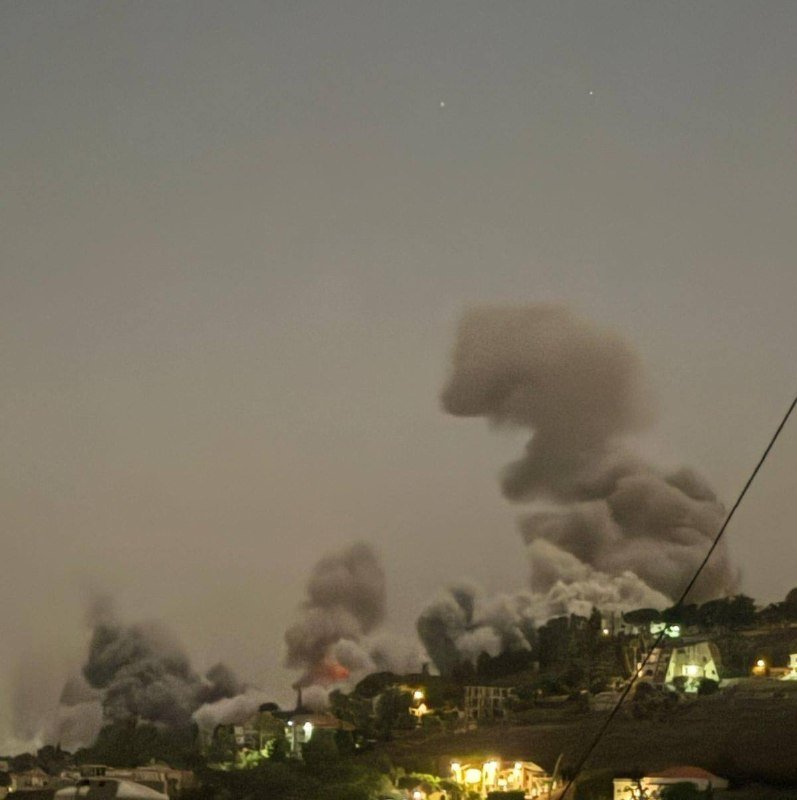
Sirens sounded across parts of Galilee in the early hours of 2 September 2026 as the IDF launched interceptors at what it described, in a statement on its official Telegram channel at 02:16 UTC, as a "suspicious aerial target" following a "hostile aircraft infiltration" warning in several areas of northern Israel. Within roughly half an hour the all-clear was issued, and the IDF announced it had opened an investigation into the incident, according to the parallel open-source wfwitness feed.
The episode is small in the arithmetic of the past year: the available source items do not specify any casualties, interceptors were fired, and a probe was announced. Its significance lies elsewhere. A drone can apparently trigger an interceptor launch and generate a multi-hour investigation before most readers have finished breakfast. That compressed window is the story.
The overnight chronology
The publicly traceable sequence began at 01:25 UTC, when wfwitness posted a drone alert for Galilee, Israel. Two minutes later, at 01:27 UTC, the same channel logged rocket alerts in Galilee, with the IDF explaining the follow-on siren activity as debris-interception warnings. At 01:31 UTC and again at 01:54 UTC, wfwitness reported Israeli jets had entered southern Lebanese airspace, the latter at low altitude. At 01:33 UTC, an Israeli airstrike was audible in southern Lebanon according to the same channel. At 02:06 UTC, the all-clear was issued and the IDF announced an investigation. At 02:16 UTC, the IDF's own Telegram account confirmed interceptors had been launched toward a suspicious aerial target, with the 02:19 UTC wfwitness post repeating the earlier debris-interception alerts for Galilee.
Monexus assessment: the timeline is unusually clean for a cross-border aerial incident, and that cleanliness is itself worth noting. The IDF's own statements on Telegram are short and procedural. The wfwitness channel, which carries visible commercial crypto-bookmaker tagline content adjacent to its posts, fills the narrative gaps. Both are partisan in different ways: the IDF has an institutional interest in demonstrating control; the open-source channel has an interest in drama. Read together, they sketch a competent response, not a triumphant one.
What "debris interceptions" actually means
The IDF language matters. The alert system appears to have fired twice in the same window: once for the incoming drone, and once for the falling interceptors. The repeated "rocket alerts" in Galilee described as "for debris interceptions" refer to the defensive munition returning to earth, not a separate attack. Confusing the two is a common reporting error, and one that overnight Telegram aggregation is particularly prone to. The available source items do not specify whether interceptor debris in fact reached the ground; the alerts describe the warning state, not a confirmed impact.
What remains unresolved is the origin and identity of the aerial target. The source items do not specify whether the drone was launched from Lebanese territory, Syrian airspace, or elsewhere, nor do they attribute it to any named actor. The IDF's reference to "interceptors launched toward a suspicious aerial target" is the operative description. Until the IDF investigation reports, the public has the word "suspicious" and not much else.
The credibility gap
Northern Israel has lived under the assumption that the air-defence envelope, layered as it is publicly understood to be, would catch anything significant before it landed. The overnight incident did not test that envelope's upper bound. It tested its lower one: a small, slow, low-altitude drone, not a barrage of rockets. Monexus analysis: these are the cases the system was always going to find hardest to discriminate, and the cases where the political consequences of an intercept failure would be the loudest.
There is a quieter pattern beneath the surface. The IDF's decision to open a formal investigation, rather than issuing a one-line all-clear, reads as an acknowledgement that something about this event did not perform to standard. The sources do not specify what.
What to watch
Three things will tell us whether the overnight alert was a near-miss or a routine interception. First, the IDF investigation's findings. Second, whether any wreckage is recovered and publicly attributed to a specific operator. Third, whether the alert tempo in Galilee returns to baseline or remains elevated over the next 72 hours.
The structural question sits underneath all three. Aerial intrusion events of this kind are now frequent enough in northern Israel that they have begun to lose their news value in the international wire, which is itself a form of risk: when sirens become ambient, the public cost of an actual strike rises. Until the IDF says more, the public ledger contains one investigation, one drone, one set of sirens, and a residue of unanswered questions.
Desk note: Monexus treated the overnight alerts as a single connected sequence sourced primarily from the IDF's own Telegram channel and a parallel open-source aggregator. Western wire desks carried the event as a brief; we extended the read by treating the IDF's own investigation announcement as a soft signal that the system did not perform as designed.
Wire provenance
This editorial synthesis draws on the following public wire/social posts:
- https://t.me/idfofficial/19147
- https://t.me/wfwitness/109402
- https://t.me/wfwitness/109400
- https://t.me/wfwitness/109394
- https://t.me/wfwitness/109393
- https://t.me/wfwitness/109387
- https://t.me/wfwitness/109386
- https://t.me/wfwitness/109385
- https://t.me/wfwitness/109384