Israeli strike kills one in Nabatieh as drone activity extends over south Lebanon and Beirut
An Israeli drone strike killed at least one person in the Ruweis neighbourhood of Nabatieh al-Fawqa on the morning of 2 September 2026, as Israeli reconnaissance UAVs were tracked simultaneously over south Lebanon and the southern suburb of Beirut.
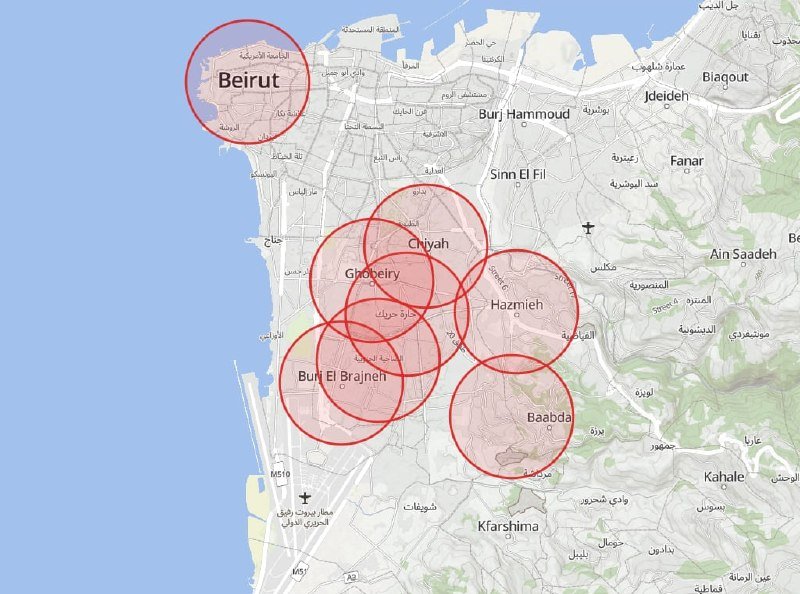
At 08:54 UTC on 2 September 2026, Beirut-based outlet The Cradle Media reported that an Israeli airstrike hit the Ruweis neighbourhood of Nabatieh al-Fawqa in south Lebanon, killing at least one person. A second Cradle-linked account surfaced at 09:51 UTC via the English-language aggregator @englishabuali, which described an Israeli UAV strike in the Al-Ruwais area of Nabatieh and reported one fatality plus one wounded. By 09:32 UTC, Cradle correspondents were logging Israeli reconnaissance drone activity as continuing across both south Lebanon and the southern suburb of Beirut.
Read together, the morning's three dispatches describe a familiar operational rhythm: a kinetic strike in a populated south Lebanese neighbourhood, persistent UAV presence over the south and over the capital's southern outskirts, and a press cycle recording each in near real time. The two strike reports appear to describe the same event with slightly different wording; the casualty figures, the timing, and the geography line up closely enough to treat them as one incident. What the available items do not record is any Israeli military statement, any Lebanese government readout, or any identification of the target.
What the morning's items show
The two strike items describe overlapping but not identical scenes. The earlier, at 08:54 UTC, frames the event as an Israeli airstrike on the Ruweis neighbourhood of Nabatieh al-Fawqa and reports one fatality. The later, at 09:51 UTC and relayed by @englishabuali, describes an Israeli UAV strike in the Al-Ruwais area of Nabatieh and reports one killed and one wounded. The available source items do not specify whether Ruweis and Al-Ruwais are the same locality written in two transliterations, or two distinct neighbourhoods, nor do they reconcile the casualty count between the two reports. The aggregator item carries the higher figure; the original Cradle alert carries only a fatality.
The third item, also from The Cradle and timestamped 09:32 UTC, describes Israeli reconnaissance drone activity as continuing across south Lebanon and over Beirut's southern suburb. The word The Cradle uses is "continuing," which Monexus reads as suggesting an extended operational window rather than a single sortie. The post does not specify the type of UAV, the mission profile, or the units involved.
The fourth item, an X post by @SprinterPress at 08:55 UTC, shows three nighttime photographs of smoke plumes rising over lit settlements in southern Lebanon. The post's caption describes heavy Israeli bombing overnight. It does not name the localities struck or the munitions used, and the photographs are not geo-tagged in the available text. The post does, however, set the operational tempo: by the time the morning's strike alerts reached Telegram channels, southern Lebanese towns had already absorbed a heavy overnight bombardment.
What the available record does not contain
The source items do not specify whether the Ruweis strike was a targeted killing, a precision strike against a specific piece of infrastructure, or an area attack. They do not name a target category, an individual, an organisation, or a structure. They do not record any Israeli military statement confirming the strike, characterising the target, or describing the operation. The Lebanese government, the Lebanese Armed Forces, the Lebanese Ministry of Public Health, and any United Nations peacekeeping presence in Lebanon are not quoted or referenced in the available items. Readers should treat the one-killed, one-wounded figure as an initial correspondent account rather than an official tally.
The available items also do not specify why the morning's tempo combined kinetic action in Nabatieh with persistent UAV overflight of the southern suburb of Beirut. Whether the two were linked operationally, or ran in parallel, is not addressed by the source set.
How to read the pattern
Monexus analysis: the items, taken together, describe a day in which at least one strike landed in a populated south Lebanese neighbourhood while Israeli reconnaissance drones maintained a sustained presence over both the south and the southern suburb of Beirut. The combination matters because drone overflight and strike packages are typically described in operational reporting as a paired activity, and the same morning produced both. The available items do not state that the drone activity was a precursor to further strikes, only that it was continuing. Treating it as such is an inference, not a reported fact.
A second read is more cautious. The Cradle's framing of the UAV activity as "continuing" may simply describe a posture that has been in place for some time rather than a posture that is being escalated. The two strike reports, on this reading, are a single incident in an ongoing operational rhythm, not the leading edge of a multi-strike day. The available items do not adjudicate between the two readings.
A third observation sits underneath both: every source item is either a Lebanon-focused outlet with documented alignment to one side of the regional political spectrum, or a social-media post by a single account. No Western wire service confirmation of the 08:54 strike is present in the available items, and no Israeli, Lebanese, or UN statement is on the record. That shapes what can and cannot be said with confidence.
What to watch next
Three developments would clarify the trajectory. First, an Israeli military statement on the strike, if issued, would state the target category and characterise the operation. Second, any Lebanese official readout, including a casualty release, would fix the figures and may name the killed or wounded. Third, the trajectory of the UAV activity over the southern suburb of Beirut is the structural indicator: whether the overflight remains at the surveillance level, or is followed by additional strike reports later in the day, will determine whether 2 September 2026 reads as a one-strike morning or the opening of a heavier cycle. The available items, on their own, do not resolve the question.
Desk note: This piece draws on Lebanon-focused Telegram channels and a single X account; the source set does not include any Western-wire confirmation of the 08:54 strike or any Israeli, Lebanese, or UN statement. Monexus treats the casualty figure as an initial correspondent account pending official confirmation and frames the drone activity as described by The Cradle, rather than as an established operational fact.
Wire provenance
This editorial synthesis draws on the following public wire/social posts:
- https://t.me/TheCradleMedia/67207
- https://t.me/englishabuali/78648
- https://t.me/TheCradleMedia/67215
- https://t.me/thecradlemedia/67207
- https://t.me/thecradlemedia/67215
- https://x.com/SprinterPress/status/2095073005768433853