Israeli strike kills one in southern Lebanon as IDF concedes likely false-target interception
An Israeli strike on the Ruweis neighbourhood of Nabatieh al-Fawqa killed at least one person on the morning of 2 September 2026, hours before the Israeli army disclosed that an earlier interception during the same cycle was likely a false target.
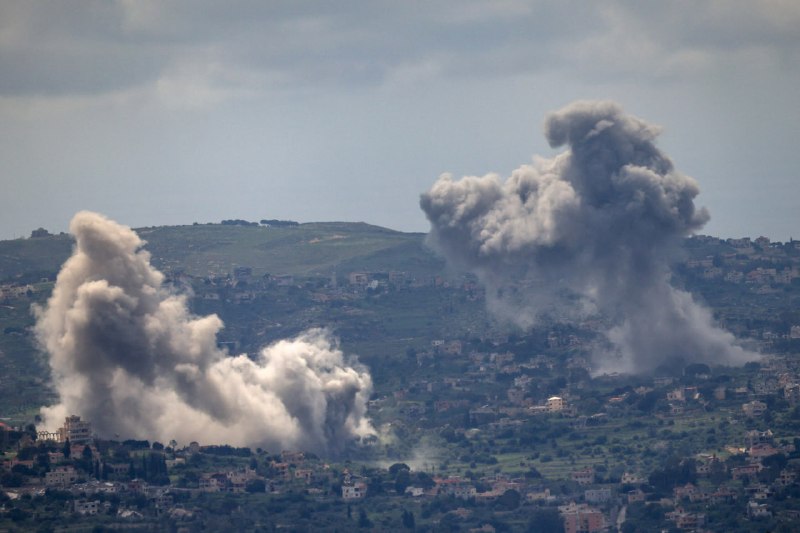
An Israeli airstrike on the Ruweis neighbourhood of south Lebanon's Nabatieh al-Fawqa killed at least one person on the morning of 2 September 2026, according to The Cradle Media. The Cradle reported the strike at 08:54 UTC, and the same morning the Israeli army conceded, via Middle East Eye at 10:07 UTC, that an earlier interception during the same operational cycle had likely been a false target. The two items land in a six-hour window in which Israeli reconnaissance drones were tracked continuously over south Lebanon and over Beirut's southern suburb.
Lebanon is not a new front, but the morning's reporting puts three distinct Israeli military signals side by side: a named kinetic strike, a sustained surveillance posture, and an institutional concession of error. Read together, they describe an operational day on a border that has not gone quiet, and a public-claims standard that, on this evidence, is being adjusted in real time.
A strike, then a clarification
The sequence on 2 September 2026 reads cleanly when laid out chronologically. At 08:54 UTC, The Cradle Media reported that at least one person was killed after an Israeli airstrike targeted the Ruweis neighbourhood of Nabatieh al-Fawqa. At 08:55 UTC, Sprinter Press posted three nighttime photographs of smoke plumes rising over lit settlements in southern Lebanon, captioned as the aftermath of Israeli bombardment. At 09:32 UTC, The Cradle Media reported continued Israeli reconnaissance drone activity across south Lebanon and over Beirut's southern suburb. At 10:07 UTC, Middle East Eye relayed an Israeli army statement that an earlier interception during the cycle was likely a false target.
Read in order, the four items describe an operational night in which Israel struck a named village, kept drones overhead through the morning, and within hours conceded that at least one of its defensive reads had probably been wrong. The concession is small in isolation. Read against the strike on Nabatieh al-Fawqa, it raises a question the day's reporting does not resolve: whether the false-target admission was a routine technical correction or a quiet walk-back of a more dramatic public claim. The cited posts do not specify which.
What The Cradle and Sprinter are showing
The Cradle Media is the primary wire on the morning's kinetic events. Its 08:54 UTC item is the source for the fatality in Ruweis, and its 09:32 UTC item is the source for the continuing drone activity over the southern suburb and the south. Both items are short, location-specific, and consistent with each other in tone. Sprinter Press's contribution is photographic rather than narrative: three nighttime frames of smoke plumes above lit settlements, posted at 08:55 UTC, captioned as the aftermath of Israeli bombing in southern Lebanon. The two outlets do not conflict, but they do different work. The Cradle names places; Sprinter Press shows what the strikes left behind.
Middle East Eye sits in a different lane. Its 10:07 UTC item, sourced from the Israeli army, is the only entry in the day's wire that records an Israeli institutional voice conceding error. The concession is framed in the phrasing the military uses when an air-defence intercept turns out to have engaged nothing: likely a false target. The cited Middle East Eye post does not specify which interception, in which venue, at which hour, the IDF was referring to, and Monexus has not independently established those details.
What the day's signals add up to
Three signals are visible in the cited items, and they cut in different directions. The first is kinetic: at least one Israeli airstrike on a named south-Lebanese village, with at least one confirmed fatality, in the early morning of 2 September 2026. The second is surveillance: persistent Israeli reconnaissance drone activity over both south Lebanon and Beirut's southern suburb through at least 09:32 UTC. The third is institutional: an Israeli army statement, relayed the same morning, conceding that an earlier interception was likely a false target.
Monexus analysis: the third signal is the one most worth sitting with. Israeli public statements about interceptions are not usually retracted in real time. When they are, the reason is typically a piece of post-strike forensics that has been run quickly enough to embarrass the spokesperson's office. The pattern, if it continues, points to a tightening of the Israeli military's public-claims standard rather than to a lessening of operational tempo. The strike on Ruweis and the drone presence over the southern suburb suggest tempo is not, in fact, lessening.
What remains unresolved
The day's cited items do not specify several things that a fuller picture would require. The Cradle Media's 08:54 UTC post gives a fatality figure of at least one but does not name the deceased or specify whether others were wounded. The Israeli army's statement on the false target does not specify which interception, in which airspace, the IDF was walking back. The Sprinter Press photographs are captioned but not independently geo-located in the cited post. None of the four cited items identifies the specific armed-group activity, if any, that the Israeli operations overnight were responding to. The pattern is consistent with a daily operational rhythm along the Blue Line, but the cited sources do not specify whether the events of 2 September 2026 mark an escalation within that rhythm or a continuation of it. The honest reading is that this article cannot answer that question from the materials in hand.
What is verifiable from the cited items is narrower and more useful: one named strike, one named fatality, one named concession of error, one sustained drone presence over two named geographies. Read in that order, 2 September 2026 looks less like a discrete escalation and more like a working day on a front that has not gone quiet.
Desk note: Monexus carried the day's south-Lebanon reporting without the wire's usual reliance on anonymous Israeli military sources, because the cited items name a place (Nabatieh al-Fawqa), a fatality count (at least one), and an Israeli institutional concession (the false-target admission) at first hand. We have not independently verified the strike beyond the cited posts and have said so.
Wire provenance
This editorial synthesis draws on the following public wire/social posts:
- https://t.me/thecradlemedia/67207
- https://x.com/SprinterPress/status/2095073005768433853
- https://t.me/thecradlemedia/67215
- https://t.me/TheCradleMedia/67215
- https://x.com/MiddleEastEye/status/2095091356842475941
- https://t.me/TheCradleMedia/67207