Shells on Kfar Romman, a quote on capitalism: two stories, one frame
Israeli artillery hammered the Dawhat neighbourhood of Kfar Romman on the evening of 2 September 2026, while a Telegram channel surfaced a quote from Vivek Ramaswamy calling antisemitism 'an attack on capitalism.' The two items make a single frame.
At 19:14 UTC on 2 September 2026, the Telegram monitor @wfwitness logged continuous and heavy Israeli artillery fire on the Dawhat neighbourhood of Kfar Romman, a village in southern Lebanon. The same channel tracked renewed bombardment of the same neighbourhood at 20:45 UTC, 20:49 UTC, and 20:50 UTC, and reported Israeli artillery fire on the nearby village of Qantara at 20:55 UTC. At 20:54 UTC, @WarMonitors, citing an Al-Manar correspondent, said Israeli artillery shelling had resumed on Kafrman, just across the ridgeline. One neighbourhood, four pulses of fire inside ninety minutes, with adjacent villages caught in the same window.
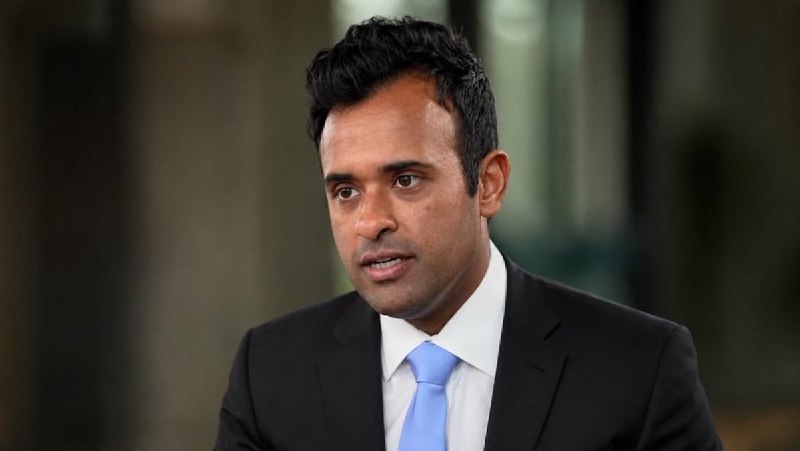
In the same minute, 20:54 UTC, the Telegram channel @WarMonitors carried a line attributed to Republican presidential contender Vivek Ramaswamy: antisemitism is "an attack on capitalism." The available source items do not specify when or where Ramaswamy uttered the remark; the only timestamp is the channel post itself. The proximity is the story this publication is reading, not a confirmed synchronisation: a southern Lebanese village under continuous shellfire, and a US political figure's words about Jewish safety framed in the vocabulary of markets.
Two frames, one anxiety
The Ramaswamy quote, as relayed by @WarMonitors, lands inside a long American tradition of rebranding prejudice as something else: racism as colour-blindness, nativism as economic anxiety, bigotry as class snobbery. There is a tactical logic to the formulation. It makes the defence of Jews legible to a populist base that does not much like other minorities. There is also a cost. When antisemitism is mapped onto a defence of markets, the violence Jews actually face, from synagogue attacks to online harassment to the cross-border fire that has hit Lebanese border villages for decades, is folded into a portfolio metaphor. Jewish safety becomes a line item. The remark is provocative less for what it says than for what it lets the speaker avoid saying.
The Hezbollah question nobody asks
The Lebanon frame carries its own evasion. Western wire reporting on the northern border has, for the better part of two years, presented Israeli fire as a response to Hezbollah-initiated violations of the November 2024 arrangement. The available reporting on the Kfar Romman barrage, drawn from @wfwitness and the Al-Manar correspondent cited by @WarMonitors, does not specify whether the Israeli fire was preceded by a Hezbollah rocket, anti-tank missile, or drone. The cited posts contain no antecedent militant action, and this article has not independently established whether one occurred. The dominant framing in English-language coverage will nonetheless read "retaliation." That framing deserves its weight: Israel has a legitimate security interest in policing its northern frontier, and a non-state army on its border is a real problem. But a frame that treats every artillery pulse as response, rather than as itself an event with causes, lets the underlying escalation dynamic vanish from the picture. Hezbollah's rocket and drone inventory, the slow UNIFIL drawdown, the political vacuum in Beirut: these are the inputs. Pulse for pulse, both sides fire, and the dossier grows.
Reading Ramaswamy in plain language
Strip the rhetoric and what is being sold is a familiar American deal: moral concern, repackaged as commercial interest. The pitch works because American conservatism has spent forty years learning to speak in the language of returns. It also fails in the same place every such repackaging fails, which is that prejudice does not need a thesis to travel. A man who shoots up a synagogue does not reach for a balance sheet. He reaches for a rifle. An economic framing of antisemitism may play well at donor dinners, but it tells the people most at risk nothing they did not already know: that the societies they live in will sometimes protect them, and sometimes not, and that the difference between those two is rarely a matter of policy.
Stakes
The combined effect of these two items is a particular kind of political weather. On one border, the shells keep falling, and the rhythm of falling shells becomes the rhythm of normal life. On a US stage, the vocabulary of normal life absorbs another category of harm. Both moves narrow the available language for describing what is actually happening. A family in Kfar Romman does not experience Israeli fire as an abstraction; they experience it as a hole in their roof. A Jewish family in an American suburb does not experience antisemitism as a market signal; they experience it as a name on a list. The deeper problem with Wednesday's two stories is not that they are wrong, exactly. It is that they are evasive in ways that suit the people telling them, and costly in ways that fall on the people living inside them.
Monexus framed Wednesday's events as a single news weather pattern: cross-border fire in southern Lebanon and a US political figure's framing of antisemitism as a market question, posted to Telegram in the same minute. Western wires tend to separate these desks. We joined them.
Wire provenance
This editorial synthesis draws on the following public wire/social posts:
- https://t.me/wfwitness/109530
- https://t.me/wfwitness/109549
- https://t.me/wfwitness/109550
- https://t.me/wfwitness/109551
- https://t.me/WarMonitors/45443
- https://t.me/WarMonitors/45442
- https://t.me/wfwitness/109552