Oil jumps $4 on renewed US-Iran fighting; equities and bonds sell off into Asia
Oil settled more than $4 a barrel higher after renewed US-Iran fighting, sending Asian equities lower and pushing sovereign bond yields higher into Tuesday's session.
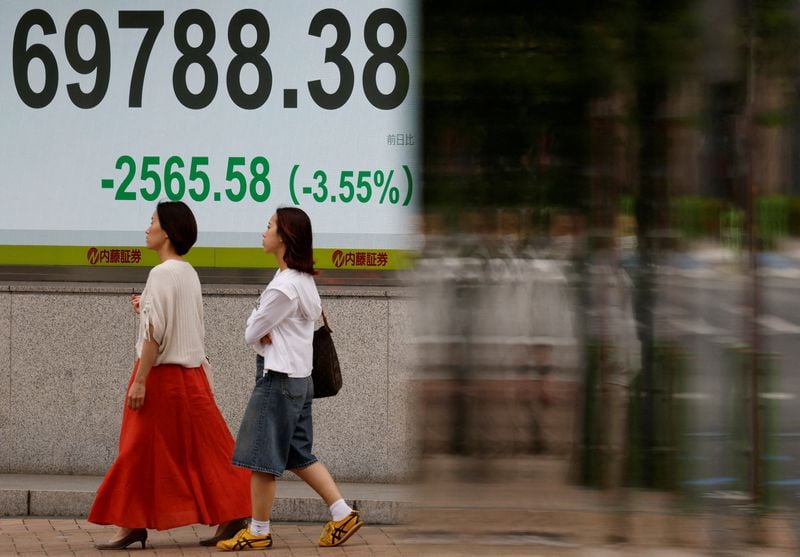
Oil settled more than $4 a barrel higher on 1 September 2026 after renewed US-Iran fighting pulled the energy complex sharply off its summer range, and Asian markets opened 2 September paying for it. Asian equities traded broadly lower, US equity futures were muted, and benchmark sovereign bond yields climbed as traders priced a fresh dollop of geopolitical risk premium into everything from copper to credit, according to an Asian-session wrap from Investing.com timestamped 00:48 UTC on 2 September 2026.
The proximate story is a kinetic one. Reporting on 1 September 2026, captured in Investing.com's commodities wrap at 19:48 UTC, logged more than $4 of upside on the session with US-Iran fighting cited as the driver. US President Donald Trump framed the moment in escalationist terms on Fox, summarised by the Unusual Whales account on X at 21:32 UTC on 1 September 2026: "Iran could be wiped out as a country." That combination, kinetic action plus maximalist rhetoric, is what moved the tape, not speculation.
The money already moved
By the time Asian desks opened on 2 September 2026, the pass-through was visible across asset classes. The Investing.com Asian-session wrap at 00:48 UTC logged a coordinated sell-off in regional equities alongside the bid in oil and the sell-off in duration. The US futures coverage at 00:14 UTC the same day described the tape as "muted" on the surface, with rate-jitter and additional Iran strikes both still in play. The bond leg is the one to watch. Higher yields at the front end of the curve tend to pull the US dollar stronger, which historically tightens dollar-funding conditions for emerging-market borrowers carrying unhedged USD liabilities. Even without a fresh headline, the carry-channel from higher yields into EM balance sheets is live again.
The pattern matches the August playbook: each round of escalation lifts the front end and the dollar, and each round of de-escalation fades it. The question for the next 48 to 72 hours is whether the latest set of strikes produces a fresh round of risk-off, or whether Tehran's reported measured response draws the premium back down. Monexus analysis: this is not a one-off spike but a return of conflict premium into an oil market that spent the summer trading as if geopolitical risk had been priced out.
What the wire is and isn't telling you
The mainstream wire coverage is, for now, narrowly framed: a strike, a market move, a quote from the president. Less visible is the second-order question of what the strikes are doing inside Iran, where coverage is harder to verify independently. A 2 September 2026 Telegram post from the Middle East Spectator channel at 00:20 UTC claimed that "in exchange for bombing a wedding, 5+ U.S. bases got boinked" and that "this is simply not sustainable for Trump." The post is partisan, anonymous, and unverified, and the source material available does not independently corroborate the wedding strike or the number of US bases reportedly hit. Treat it as a counter-frame worth naming, not as a finding.
That asymmetry in sourcing is the story. Western wire services cover the US action with on-record US sourcing and named US officials. Iranian state media and aligned regional channels carry the counter-frame. Both sets of inputs are legitimate to cite, but neither substitutes for the on-the-ground verification that an actual ceasefire or escalation would require. The source material does not specify the precise Iranian retaliation pattern, the number of US facilities reportedly affected, or the identity of the wedding reportedly struck. Right now, the available reporting describes movement, not direction.
The structural read
Monexus analysis: a $4 upward settle on oil is roughly 4-5% of price, enough on its own to flip systematic books that had run positioning close to neutral through August. The bigger structural point is that the marginal barrel is once again being set in Washington and Tehran rather than in OPEC+ ministerial meetings, a meaningful shift from the 2023-2025 regime. It also pulls the dollar story back in. Higher oil imports raise the US trade deficit mechanically; the offset is whether dollar-strength from the bond move is enough to keep the greenback bid.
For Asian central banks, particularly the Bank of Japan and the PBOC, the calculus is uncomfortable. A stronger dollar plus higher oil imports raises imported-inflation risk at exactly the moment core inflation was starting to look contained. Expect quiet FX-intervention chatter to pick up if USDJPY pushes back toward the 160 handle or if USDCNH breaches 7.30 again. Those are desk expectations, not sourced facts.
What to watch next
Three dated checkpoints will tell us whether this is a one-day risk-off or the start of a trend. First, the next round of Iranian retaliation: the source items do not specify the timing or form, but the regional reporting flagged above suggests escalation is ongoing. Second, any Trump administration read-out via Fox or the White House press secretary clarifying whether the "wiped out" remark was rhetorical or operational. Third, the US CPI print scheduled for 5 September 2026, which will determine whether the bond move is purely geopolitical or whether inflation expectations are starting to leak higher on their own. Monexus does not have visibility on the first two from the source material, but traders will price all three.
The asymmetry of information remains the trade. US actions are visible within minutes; Iranian responses take longer to verify; the market prints the visible move first and re-prices the response after. That is how the last several rounds have gone, and the source material gives no reason to think this one is different.
Desk note: Monexus framed this as a market-structure story (oil pass-through, bond yields, dollar funding, EM carry) anchored in the wire reporting from Investing.com and the named Trump quote via Unusual Whales, rather than as a politics-of-the-strike story. The partisan Telegram counter-frame is named as a counter-frame, not elevated to a finding. The source items do not specify the precise Iranian retaliation pattern, the number of US facilities reportedly affected, or the identity of the wedding reportedly struck; those claims are flagged in line.
Wire provenance
This editorial synthesis draws on the following public wire/social posts:
- https://www.investing.com/news/commodities-news/oil-prices-settle-up-more-than-4-a-barrel-on-renewed-usiran-fighting-4884526
- https://www.investing.com/news/economy-news/asian-markets-tumble-as-usiran-fighting-lifts-oil-and-bond-yields-4885230
- https://www.investing.com/news/stock-market-news/us-futures-muted-as-markets-parse-rate-jitters-more-iran-strikes-4885211
- https://x.com/unusual_whales/status/2094901108418257162
- https://t.me/Middle_East_Spectator/36245
- https://www.investing.com/news/commodities-news/oil-prices-settle-up-more-than-4-a-barrel-on-renewed-usiran-fighting-4884526
- https://www.investing.com/news/economy-news/asian-markets-tumble-as-usiran-fighting-lifts-oil-and-bond-yields-4885230
- https://www.investing.com/news/stock-market-news/us-futures-muted-as-markets-parse-rate-jitters-more-iran-strikes-4885211
- https://x.com/unusual_whales/status/2094901108418257162
- https://t.me/Middle_East_Spectator/36245