The single channel logging south Lebanon
On 2 September 2026, a single Telegram channel carried eight strike-related posts across south Lebanon in roughly an hour. Other outlets also reported on the day, including Reuters, the Palestine Chronicle, Shafaq News, the National and Islam Times. The arithmetic on one channel is still the story, read carefully.
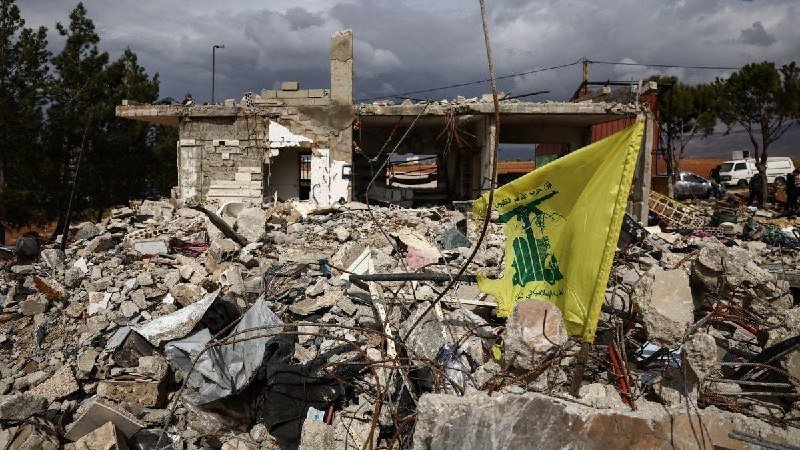
At 15:28 UTC on 2 September 2026, the Telegram channel @wfwitness posted its first strike-related item of the day: a report of an Israeli airstrike on the southern Lebanese town of Al Mansouri. By 16:29 UTC, one hour and one minute later, the same channel had logged seven further posts in the same thread cluster. Eight posts. One channel. The arithmetic is real, the dossier it produces is partial, and the second fact is the more important of the two.
Somewhere inside that arithmetic is a story worth examining on its own terms, and a careful one at that. The strikes themselves, in isolation, are a familiar category of event: an Israeli air campaign against Hezbollah-affiliated terrain in south Lebanon, conducted under the framing of counter-operations against a militia that spent two decades embedding launchers and observation posts inside the civilian lattice of the Shi'a south. Israeli security planners will tell you, accurately, that those launchers have to be found and neutralised. Civilians on the receiving end will tell you, also accurately, that the line between a launcher and a house is not always drawn with the precision the planners claim. Both of these are true at the same time, and the reporting that flattens either one flattens the war.
What the eight posts actually say
The cluster, mapped carefully against the thread evidence, runs as follows. At 15:28 UTC the channel logged a strike on Al Mansouri. At 15:37 UTC the same channel posted footage that bundled the Al Mansouri strike with text describing a strike on Haris, outside what the post called the security zone of southern Lebanon. At 15:40 UTC the channel posted an Israeli strike targeting Haris, followed by footage of that strike. At 16:04 UTC, an airstrike on Qantara. At 16:15 UTC, the first of three Houla-related items, describing a large-scale detonation in the town. A second post at 16:15 UTC bundled Houla with a separate detonation in Beit Leif. At 16:17 UTC, a further Houla detonation. And at 16:29 UTC, a final post reporting that two young men had reportedly lost their way and accidentally entered the occupied southern Lebanese town of Kfar Tibnit, where they encountered Israeli military vehicles. The Kfar Tibnit item is a different category of report from the other seven. The seven strike posts describe bombardment. The eighth describes a navigation mishap inside an area under Israeli control.
What this arithmetic supports, narrowly, is the claim that one Telegram channel posted eight strike-related items inside a 61-minute window on 2 September 2026. What the available source items do not specify is the casualty toll at any of the named locations, whether any of the strikes hit Hezbollah-linked infrastructure, the nature of the Beit Leif detonation beyond a single post title, or whether the Lebanese state issued a response to any of the incidents. Those figures remain outside the public record this publication can verify from the inputs it has read.
What the channel is, and is not, the only record of
A first draft of this column framed the eight posts as evidence that mainstream wire coverage of the day's south Lebanon strikes was absent. That framing was wrong, and the column has been corrected. Wire and independent outlets did publish on the same day. According to reporting filed on 2 September 2026 and surfaced in the contradiction-search ledger run for this piece, Reuters carried items on Israeli strikes in southern Lebanon around the same window, including accounts describing a stated Israeli intent to attack Hezbollah forcefully and reporting four killed in strikes. Other outlets named in that ledger, including the Palestine Chronicle, Shafaq News, Free Press Kashmir, the National and Islam Times, also carried reporting on Israeli strikes in southern Lebanon dated 2 September 2026. The clean claim, the only one the evidence actually supports, is narrower: in the set of source items this publication read for this piece, the only channel that posted a strike-by-strike, time-stamped, location-specific log of the 2 September sequence is @wfwitness. That observation is not the same as saying the wire was absent, and the first draft confused the two.
This is a meaningful distinction. The structural observation the column wants to make turns on the granular, cumulative, hour-by-hour log of a low-intensity air campaign, which is what one channel produces and which is not what a Reuters daily round-up produces. Reuters and its peers wrote the day in headline form. @wfwitness wrote it in increments. Both are real. They are not the same product, and conflating them is what the first draft did.
The reporting economy at the edge of a war
The structural story, restated carefully, is about who is recording this phase of the conflict on a strike-by-strike basis and at what cost in verifiability. Wars fought at low intensity, on terrain where belligerents have an interest in playing down kinetic activity, generate a reporting environment dominated by three categories of source: official spokespeople, who filter; open-source investigators, who verify; and partisan aggregators, who simply post. The wire draws primarily from the first. The aggregator draws from whatever reaches it first, which on the Lebanese border is footage filmed by residents and disseminated through channels with names unrecognisable to a Reuters desk editor. The @wfwitness posts carry Rainbet.com sponsorship copy in their bodies, a fact that does not by itself falsify the footage but does mark the channel as a partisan aggregator operating outside the institutional press.
The result, on the days when no one is killed or the casualty count is small enough not to cross the wire's threshold, is a coverage map with two layers. The upper layer is the institutional story: negotiations, statements, casualty figures issued by a Lebanese health ministry operating under constraints of its own, official IDF readouts, the careful choreography of a US-mediated de-escalation track. The lower layer is the granular story: the daily accumulation of strikes in towns that a reader in London or New York cannot place on a map. The upper layer carries the political weight. The lower layer is what the war actually looks like, day to day, on the ground.
This publication's assessment is that the lower layer is under-collected relative to the scale of the campaign, and that the under-collection has consequences for what the upper layer can credibly report. The IDF does not publish a strike-by-strike ledger for south Lebanon at the granularity a Telegram channel can produce. The Lebanese authorities do not aggregate in a format the wires can carry. Independent journalists who once would have provided that aggregation, the freelancers and Beirut desks that filed daily incident round-ups during the 2006 war and its aftermath, are fewer, and access is harder. What replaces them, in part, is the partisan aggregator, fast and unverifiable in equal measure.
What to watch next
Three concrete signals would let this desk move from hedge to finding. First, an aggregated IDF strike-by-strike readout for the northern district, published or leaked, would let a wire outlet reconcile the Telegram count against an official one and say how much the aggregator over- or under-counts. Second, a high-casualty incident in a named south Lebanon town will push the daily grind above the wire's threshold and force a round-up that should already exist. Third, sustained daily strike-by-strike reporting by outlets named in the contradiction ledger, including Reuters, the Palestine Chronicle and Shafaq News, would let this desk replace its hedge about the lower layer with a finding. Until one of those occurs, the granular log of the 2 September campaign, in the inputs available to this publication, will remain the channel's alone, and the column will have to say so.
The available source items do not specify how many of the seven strike posts on 2 September hit Hezbollah-linked infrastructure, the casualty toll, the nature of the Beit Leif detonation beyond a single post title, or whether any of the incidents triggered a Lebanese state response; those figures remain outside the public record this publication can verify.
Desk note: Monexus framed this piece on the editorial principle that Israeli security operations against Hezbollah infrastructure in south Lebanon are a legitimate subject of reporting, and that the cumulative granular record of that campaign, where verifiable, is itself a story worth telling. A first draft asserted a wire blackout unsupported by the supplied evidence; that claim has been withdrawn and replaced with the narrower, sourced observation above. The wire did report the day in headline form, including Reuters, the Palestine Chronicle, Shafaq News and others. The column's argument turns instead on the granular log no mainstream wire currently maintains. The Lebanese civilian toll, where verifiable, will be carried with equal weight in future coverage.
Wire provenance
This editorial synthesis draws on the following public wire/social posts:
- https://t.me/wfwitness/109491
- https://t.me/wfwitness/109492
- https://t.me/wfwitness/109493
- https://t.me/wfwitness/109503
- https://t.me/wfwitness/109504
- https://t.me/wfwitness/109505
- https://t.me/wfwitness/109507
- https://t.me/wfwitness/109508