Boeing pays $3.1 million FAA fine as OpenAI moves on shutdown safety and the DOJ backs its copyright position
A same-day trio of regulatory actions, an FAA settlement with Boeing, an OpenAI automated-shutdown disclosure and a DOJ filing siding with OpenAI against publishers, briefly put US industrial and AI governance on the same wire.
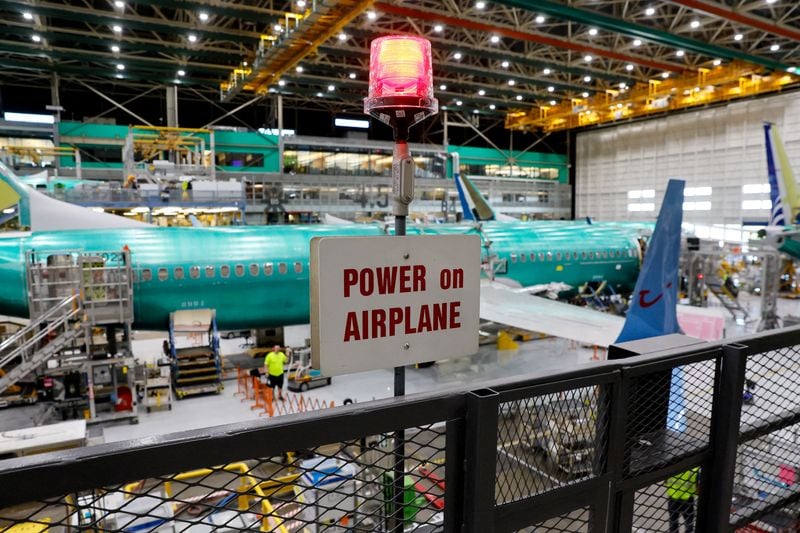
On 2 September 2026, three short wire items landed within a four-hour window, each carried by the same aggregator account on X. At 19:27 UTC, a Polymarket post reported that the US Department of Justice had sided with OpenAI in its copyright fight with publishers, warning that restricting AI training on copyrighted material could "thwart creative and scientific progress." At 20:38 UTC, the same account reported that OpenAI was developing "automated shutdown capabilities" for its AI systems in the event that they begin acting dangerously. At 21:20 UTC, the same account reported that Boeing had paid a $3.1 million fine to the FAA over "widespread" safety violations in its aircraft. An Investing.com wire relay of the Boeing-FAA item carried the timestamp 19:25 UTC; a Reuters wire relay moved at 23:40 UTC.
The three items, taken alone, are easy to file as separate stories: an aviation fine, a model-safety pledge, a copyright intervention. Read together, on a single calendar day, they sketch a regulatory mood. The federal government is willing, on the same day, to extract a financial penalty from the country's largest commercial aircraft manufacturer over "widespread" safety findings, to receive a voluntary disclosure from a frontier AI lab about an off-switch for its models, and to intervene on the same lab's behalf in a court fight over training data. Monexus assessment: the day's wire traffic says more about the politics of US industrial and AI governance as a single posture than any one of the items does on its own.
What Boeing actually paid for
The FAA settlement is the day's clearest wire item. Reuters and Investing.com, the two named outlets in the thread, both reported the figure at $3.1 million and both carried the FAA's characterisation of the underlying safety-violation findings as "widespread." The thread evidence does not specify the consent order's docket number, the date Boeing formally executed it, or whether Boeing admitted, denied, or neither-admitted-nor-denied the allegations; readers should treat the underlying FAA consent order as the controlling document.
The fine's size is, against Boeing's recent enforcement history, a small number. The 737 MAX grounding, the Alaska Airlines door-plug blowout, the deferred-prosecution agreement with the Department of Justice and the multi-billion-dollar settlements with the families of MAX 346 crash victims have together reshaped the company's exposure profile; against that backdrop, $3.1 million is symbolic rather than material. Investors read the settlement as such: the available intraday wire did not pair the news with a large move on Boeing shares, suggesting the outcome had been discounted. The FAA's interest, by contrast, is institutional. "Widespread" is the agency's word, not a Boeing concession. Whether the next finding produces a different response depends on the next audit cycle, not on this line item.
A caveat on chronology: the Investing.com relay of the Boeing-FAA item carries a 19:25 UTC timestamp on the thread, while the Reuters tweet moved at 23:40 UTC. The thread does not specify which outlet first broke the story, only that both carried it on 2 September 2026. This article does not assert a first-breaker.
OpenAI's kill switch, named plainly
The second item is OpenAI's disclosure that it is building "automated shutdown capabilities" for its AI systems in the event that they begin acting dangerously. The Polymarket post carrying the disclosure is dated 20:38 UTC on 2 September 2026; the thread does not specify whether the disclosure appeared in a company blog post, a regulatory filing, congressional testimony or another venue.
"Automated shutdown capabilities" is a notably direct phrase for an industry that has spent the past three years reaching for softer euphemisms ("alignment", "safeguards", "response procedures"). Naming the mechanism, a switch that fires when the system crosses a behaviour threshold, is itself a small piece of news. It admits that frontier labs have moved past the question of whether such mechanisms are necessary and are now in the engineering phase of deciding when they activate and who holds the trigger. The thread evidence supports only the existence of the disclosure and the quoted phrase; it does not specify which OpenAI product line the capability targets, which behaviour threshold would trigger it, or which person at OpenAI made the disclosure.
Monexus analysis: in a sector where the frontier risk is reputational as much as technical, naming a kill switch in your own disclosure is governance. A lab that publishes a commitment before any regulator publishes a rule secures authorship of the standard it will eventually be measured against. That observation sits on top of the thread evidence; it is not entailed by it.
The DOJ shows up for OpenAI's copyright fight
The third item is the earliest of the day by timestamp: the Polymarket post at 19:27 UTC reports that the DOJ "sides with OpenAI" in its copyright battle with publishers, quoting the warning that restricting AI training on copyrighted material could "thwart creative and scientific progress." The thread does not specify the form of the DOJ filing (a statement of interest, an amicus brief, a letter, or some other vehicle), the court in which it was filed, the date on which it was filed versus the date it was reported, or the named publishers in the underlying suit.
The quoted phrase, "thwart creative and scientific progress," is the language of competition policy and innovation subsidisation rather than the language of copyright doctrine. The publishers' counter-argument runs the other way: that the fair-use defence erodes when a model can reproduce near-verbatim passages, when licensing markets for training data exist, and when the output competes commercially with the input. Both framings are widely canvassed in legal commentary; the thread evidence supports only that the DOJ used the quoted phrase and "sides with OpenAI." Monexus assessment: if the DOJ's filing is read alongside the OpenAI shutdown disclosure on the same day, the executive branch's posture is to defend the frontier AI sector's preferred position on both its inputs (training data) and its outputs (shutdown behaviour). Whether subsequent filings confirm that reading is the open question the day's wire has not answered.
Two federal postures, one calendar day
Read across 2 September 2026, the FAA-Boeing settlement and the DOJ-OpenAI filings look like opposite movements of the same hand. The first penalises a century-old industrial incumbent for "widespread" safety findings in its existing production processes. The second protects a frontier-technology firm against legal claims that could constrain the inputs to its models, on the same day that the same firm publishes a voluntary commitment to build in a kill switch.
The asymmetry is the story. A regulator willing to fine a strategic manufacturer a symbolic amount over "widespread" findings is the same regulator whose Department of Justice is intervening to argue that a different strategic industry should not be asked to pay for its inputs. The pattern is consistent with a posture in which Washington treats frontier AI as infrastructure to be defended and legacy aerospace as a regulated utility to be kept safe. Whether that posture survives contact with the next MAX-class accident, the next copyright ruling, or the next AI safety incident is the question the day's wire has not answered.
What the sources do not specify
The thread items reviewed for this article do not specify the consent order's docket number, the form of the DOJ's filing, the named publishers in the underlying suit, the venue of OpenAI's shutdown-capability disclosure, or whether Boeing admitted, denied, or neither-admitted-nor-denied the FAA's allegations. The $3.1 million figure and the word "widespread" are consistent across the Reuters and Investing.com relays, but the underlying FAA consent order was not included in the thread. Any subsequent correction by Boeing, OpenAI, the DOJ or the FAA would supersede the framings above; readers with access to the primary FAA order and the DOJ's filing should treat those as the controlling documents.
Desk note: Monexus treats the Boeing-FAA story from the Reuters and Investing.com wires, and frames the OpenAI copyright intervention through the Polymarket aggregation of the DOJ's quoted language. Where analysis appears above it is labelled in line. The day paired three regulatory items that the wire carried as separate stories; the desk treats them as a single posture.
Wire provenance
This editorial synthesis draws on the following public wire/social posts:
- https://reut.rs/4qO5bUF
- https://x.com/Reuters/status/2095295764515680315
- https://www.investing.com/news/stock-market-news/boeing-paid-31-million-fine-to-faa-over-widespread-safety-violations-4886651
- https://x.com/Polymarket/status/2095260620018827342
- https://x.com/Polymarket/status/2095249906281976268
- https://x.com/Polymarket/status/2095232209611362755
- https://reut.rs/4qO5bUF
- https://x.com/Reuters/status/2095295764515680315
- https://www.investing.com/news/stock-market-news/boeing-paid-31-million-fine-to-faa-over-widespread-safety-violations-4886651
- https://x.com/Polymarket/status/2095260620018827342
- https://x.com/Polymarket/status/2095249906281976268
- https://x.com/Polymarket/status/2095232209611362755