The energy-strike moratorium nobody will own
In a single New York evening, three leaders converged on the same idea: stop hitting each other's power grid. Each is selling it differently, and the gap is the story.
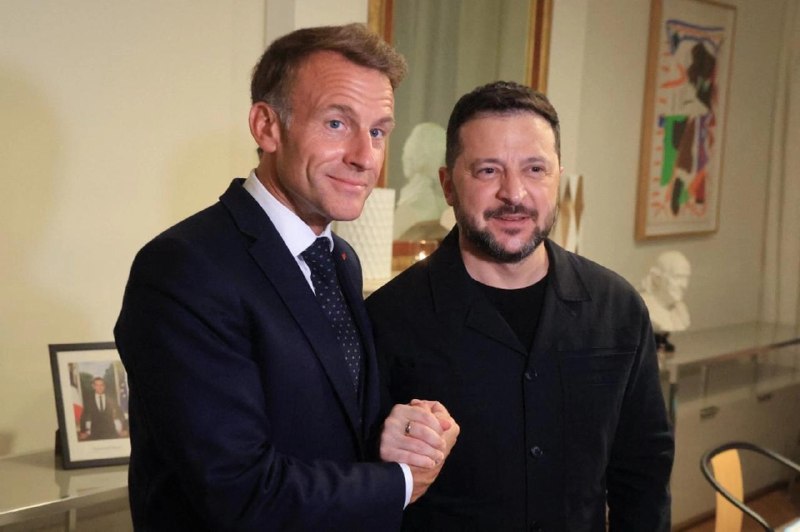
Three leaders met in three overlapping New York sessions on the eve of the 81st UN General Assembly, and by the early hours of 22 September a single proposal had surfaced in the readouts: explore a mutual moratorium on energy strikes. The idea was raised between Emmanuel Macron and Donald Trump, who also discussed accelerating defensive arms deliveries to Ukraine, particularly interceptor missiles (Kyiv Post, 22 September 2026, 06:35 UTC). Volodymyr Zelensky and Macron then met late on Monday, with the energy-strike question and a broader winter-defence package on the agenda, including additional SAMP/T air-defence systems procured via the EU loan and progress on co-producing interceptors (Kyiv Post, 22 September 2026, 06:54 UTC; Kyiv Post, 22 September 2026, 06:44 UTC).
The moratorium is the kind of arrangement everyone can describe in two sentences and nobody wants to sign on the record. Monexus assessment: the proposal works politically precisely because it is deniable. Each principal can claim credit for floating the idea; none has to admit what conceding it would cost.
Three leaders, three framings
Read the readouts side by side and the framing gaps are stark. Macron's line, as relayed by Kyiv Post, is the air-defence picture. The French focus is on accelerating deliveries, especially interceptor missiles, and on procuring additional SAMP/T systems through the EU loan facility (Kyiv Post, 22 September 2026, 06:35 UTC; Kyiv Post, 22 September 2026, 06:54 UTC). The Ukrainian readout adds two specifics the French version softens: progress on co-producing interceptors and a joint industrial workstream that ties Ukraine's defence factories into the European supply base (Kyiv Post, 22 September 2026, 06:54 UTC). Both readouts describe the same Macron-Zelensky meeting; both treat the energy-strike question as one item in a longer winter-preparation list.
Trump's framing sits elsewhere. Per the Kyiv Post relay, Macron urged Trump to speed defensive deliveries and the two leaders explored a potential mutual moratorium on energy strikes (Kyiv Post, 22 September 2026, 06:35 UTC). The available reporting does not specify what Trump's response was, nor whether the US side has signed on to the moratorium in principle. That asymmetry matters: a European-brokered pause on grid strikes is a different diplomatic object from a US-brokered one, and the readouts reflect it.
The harder question under the headline
Air defence is the headline. The structural problem is energy. Russia has spent recent winters degrading Ukraine's thermal generation and transformer capacity; Ukraine, increasingly, has reciprocated against Russian grid infrastructure. A moratorium on energy strikes is, functionally, an admission that the war's centre of gravity has shifted to the substations, and that the side which keeps the lights on through February holds the initiative on the ground.
This is where the French industrial angle starts to bite. SAMP/T is the Franco-Italian surface-to-air system Ukraine has been receiving in tranches. The Ukrainian readout emphasises co-production of interceptors, a workstream that ties Kyiv's factories to European primes and gives Paris a domestic-industrial reason to keep the pipeline open (Kyiv Post, 22 September 2026, 06:54 UTC). Monexus assessment: the air-defence package is being sold in New York less as charity and more as a production-sharing arrangement, with the moratorium discussion sitting on top as a confidence-building complement.
What a moratorium would and would not do
Stripped to its operational content, a mutual energy-strike pause does three things. It freezes the most visible humanitarian lever of the war (civilian heating through winter). It denies Russia one of its cheapest escalation tools, and denies Ukraine the retaliatory option it has refined in kind. It frees up air-defence interceptors, currently the scarcest commodity in Ukraine, for use against missiles and drones aimed at population centres rather than at power infrastructure.
It does not freeze the war. It does not address ground operations, mobilisation, or the southern front. It does not bind third parties. North Korean munitions, Iranian-designed Shahed-type drones, and the missile-production tempo in Russia all sit outside the bilateral frame. A pause is a winter instrument, not a peace instrument, and the readouts in New York describe it in winter terms.
The diplomatic geometry of UNGA week
The 81st UN General Assembly is the venue, and the symbolism of holding this conversation in New York rather than Brussels or Kyiv is itself a signal. The Ukrainian delegation arrived with roughly twenty high-level meetings planned, the Drone Deal and air-defence reinforcement the two named priorities (Kyiv Post, 22 September 2026, 06:44 UTC). Macron's separate push to Trump on interceptor deliveries suggests the French see the Trump administration not as an obstacle but as a procurement channel they can route through.
The sources do not specify whether any Russian envoy has been engaged on the moratorium idea, nor whether the Kremlin would receive such a proposal on terms Kyiv and Paris would accept. That absence in the reporting is the most consequential unknown in the file. A moratorium that excludes the party doing the striking is not a moratorium; it is a unilateral restraint, and unilateral restraint has a poor historical record of surviving a Ukrainian winter.
What to watch this week
Three markers will tell us whether this proposal has substance or is simply UNGA theatre. First, a public read-out from the Trump side on the moratorium discussion; the available reporting does not specify one. Second, a Ukrainian statement on co-production timelines for interceptors; the readout flags progress but not dates (Kyiv Post, 22 September 2026, 06:54 UTC). Third, the language used about SAMP/T deliveries in any joint communiqué; that is the test of whether the French industrial angle is a real workstream or a press-release flourish.
The bigger question, the one New York is being asked to host without anyone wanting to ask it aloud, is whether a winter pause is a prelude to a broader arrangement or a substitute for one. The readouts suggest the former; the diplomatic geometry, with twenty meetings and two named deals on the table, suggests the participants are not yet ready to choose.
Desk note: Monexus framed this around the divergence between the Macron, Zelensky, and Trump readouts of the same Monday session, treating the energy-strike moratorium as a working hypothesis rather than a fait accompli. The wire has so far treated the proposal as one item in a longer UNGA package; we treat it as the diplomatic instrument most likely to be tested first.
Wire provenance
This editorial synthesis draws on the following public wire/social posts:
- https://t.me/Kyivpost_official/40086
- https://t.me/Kyivpost_official/40085
- https://t.me/Kyivpost_official/40084
- https://t.me/Kyivpost_official/40081
- https://t.me/ClashReport/97532
Follow the event.
These dated source records provide context. They do not retrospectively verify this archive article.
A dated voting record is evidence of one decision. Use the original UN record before turning it into an alignment label.
Visual explainer · historical vote of 2022-03-02 →