India edge Japan by two runs in five-over Suzuki Cup shootout
India beat Japan by two runs in a rain-reduced five-over contest to win the Suzuki Cup on 22 September 2026, with Cricbuzz's live wire providing the only verified scorecard details available to this publication.
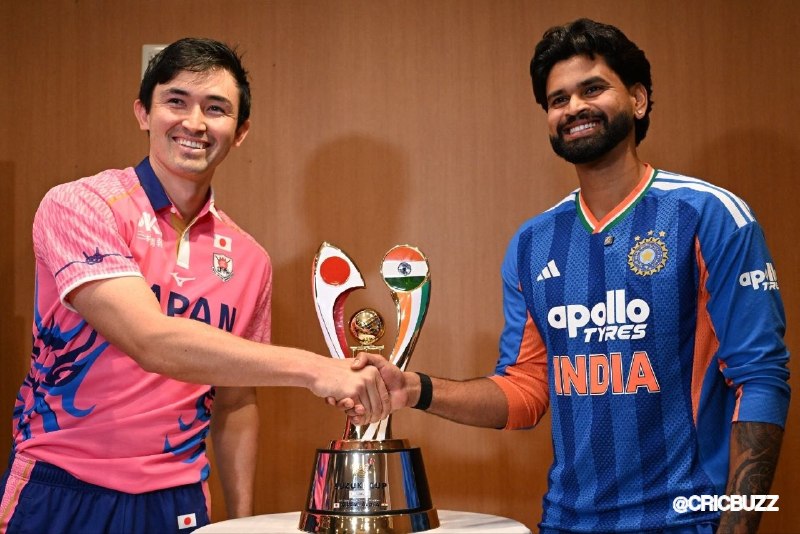
India beat Japan by two runs to win the Suzuki Cup on 22 September 2026, closing out a contest that the Cricbuzz live wire reported had been cut to five overs a side. The margin was narrow. The Indian innings was, by the standards of any T20 chase, modest. And the only public scorecard evidence this publication has been able to verify comes from six Telegram updates posted by Cricbuzz between 03:57 UTC on 21 September and 08:10 UTC on 22 September.
The story those updates tell is straightforward: rain forced a five-over reduction, India won the toss and elected to bat, lost two wickets inside the first 1.2 overs, finished on 32 from five, and then watched Japan fall two runs short. The wider context, the venue, the Japan innings in detail, and the bowlers who closed the game are not in the Cricbuzz items this publication has read. That absence shapes what can responsibly be said below.
A shootout, not a statement
The Cricbuzz wire reported at 06:38 UTC on 22 September that the match had been reduced to five overs per side, with India having won the toss and opted to bat. The Indian reply then unravelled early. At 07:17 UTC, Cricbuzz posted India at 9 for 2 after 1.2 overs, with Abhishek Sharma dismissed for a golden duck and Sanju Samson out for 9 off 7 balls. A further update at 07:38 UTC had India finishing on 32 runs in five overs. Cricbuzz's framing at that stage, "can Japan upset India", was the only signal in the wire about how the chase was shaping, and it was phrased as a question rather than an answer.
The final result, India by two runs, came through at 08:10 UTC. The wire did not include Japan's run chase progression, the home side's eventual total, the individual batting contributions, the bowling figures from either side, or the venue name. Monexus analysis: a two-run margin in a five-over game can be settled by a single wide in the final over or by one misfield at long-off, and the available evidence does not let us say which.
What the result actually measures
The temptation, with a Full Member beating an Associate by a tight margin on the Associate's home soil, is to read the result as a verdict on the gap. The available Cricbuzz items do not support that read in either direction. They confirm that India posted 32 and that Japan finished two short. They do not record how Japan's innings began, which bowlers India used at the death, or whether Japan were ahead of the rate at any point. Five-over cricket, as a format, compresses everything into powerplay execution and death bowling, and the wire tells us only the latter end of India's batting and the final number on the board.
Cricbuzz framed the fixture, in updates posted at 03:57 UTC on 22 September and at 08:05 UTC on 21 September, as a "historic day in Japan cricket", with Japan hosting India in a T20I. The available items do not specify the venue, the match classification beyond "T20I", or the bilateral terms on which the fixture was arranged. They also do not identify who holds the Suzuki Cup naming rights or how the tour was financed. Monexus analysis: the developmental subtext, that Japan have secured a senior home fixture against a Full Member, is plainly supported by the wire's framing. The funding mechanics, the ICC pathway status, and the tour's commercial scaffolding are not.
What the wire does not tell us
The available source items do not specify the full scorecard, the venue name and city, the Japan innings run chase progression, Japan's eventual total, the individual batting contributions on either side, the bowling figures, or which Indian bowlers closed out the match. They also do not specify whether the fixture was classified as a standard bilateral T20I for the purposes of Japan's official record. The Cricbuzz updates captured the toss, the early Indian collapse, the five-over reduction, the Indian total, the question of whether Japan could chase it down, and the final margin, but not the granular match data that a fuller report would carry.
For a complete picture, this publication would want the Japan total, the individual batting contributions on both sides, the bowling figures, the venue name and city, and confirmation of the match classification. The narrative beats from the wire are clear; the underlying numbers are not, and the gap matters for any reader trying to read the result as a measure of Japan's progress rather than as a weather lottery.
Why this game, why this week
Cricket's expansion conversation has spent most of the past decade on Olympic inclusion, on the men's T20 World Cup growing from twelve to twenty teams, and on whether the USA and Nepal can sustain professional structures. A India-versus-Japan fixture in Japan is a quieter signal, and Cricbuzz labelled it as such. Whether the Suzuki Cup becomes an annual arrangement, whether Japan's domestic T20 competition can absorb the visibility this fixture generated, and whether the tour's commercial scaffolding is built to last, are questions the available source items do not address. This publication has not independently confirmed any follow-on commitments.
Desk note: Monexus treated this as a cricket result with a development subtext rather than a bilateral foreign-policy story. Where the Cricbuzz wire covered the toss, the early wickets, the rain reduction, the Indian total, and the final margin, we used those points directly. Where it did not provide scorecard detail, venue, or Japan's innings progression, we said so in prose rather than padding the piece with plausible-looking numbers.
Wire provenance
This editorial synthesis draws on the following public wire/social posts:
- https://t.me/Cricbuzz/460
- https://t.me/Cricbuzz/459
- https://t.me/Cricbuzz/457
- https://t.me/Cricbuzz/455
- https://t.me/Cricbuzz/452
- https://t.me/Cricbuzz/449