Explosions in the Strait of Hormuz: what the first hour of reporting actually shows
Iranian anti-ship cruise missiles were reportedly launched toward the Strait of Hormuz on 22 September 2026, with three explosions logged inside an hour. The available reporting is thin, partisan-coded, and almost entirely Telegram-fed. Here is what can be said from the source items and what cannot.
At 21:30 UTC on 22 September 2026, the Telegram channel IntelSlava posted that two Iranian anti-ship cruise missiles had been launched toward the Strait of Hormuz. Three minutes later, at 21:33 UTC, the channel GeoPWatch framed the same activity as an Iranian launch toward the waterway. By 21:54 UTC, GeoPWatch was logging what it called a third anti-ship attack inside the same hour, with explosions still audible from the waterway.
The thinness of the sourcing is itself the story. Every consequential claim in this article traces back to two Telegram channels, IntelSlava and GeoPWatch, both of which aggregate conflict-zone flash traffic and neither of which has been corroborated by a Tier-1 wire in the source items reviewed. The early reporting pattern is a familiar one: open-source intelligence accounts compress rumour into headline, and the headline moves faster than any embassy can confirm or deny.
What the source items actually say
Read end to end, the five source items describe a sequence, not a confirmed engagement. The first post, from IntelSlava at 21:30 UTC on 22 September, states that "two Iranian anti-ship cruise missiles were launched toward the Strait of Hormuz." GeoPWatch then posts at 21:31 UTC that "explosions" had been heard from the Strait of Hormuz, without specifying a missile or an origin. At 21:33 UTC GeoPWatch adds the anti-ship-cruise-missile framing, the language IntelSlava had used three minutes earlier. The 21:54 UTC GeoPWatch post goes furthest, characterising the activity as three "anti-ship attack[s] launched by Iran within the last hour."
None of the source items names a specific vessel, a specific naval formation, or a confirmed hit. None quotes an Iranian, US, Gulf-state, or Iranian-state-media outlet on the record. None provides radar tracks, satellite imagery, or interception evidence. The reporting is, at this stage, a stack of claims sourced from channels whose primary value is speed, not verification.
The diplomatic backdrop nobody is naming in the flash traffic
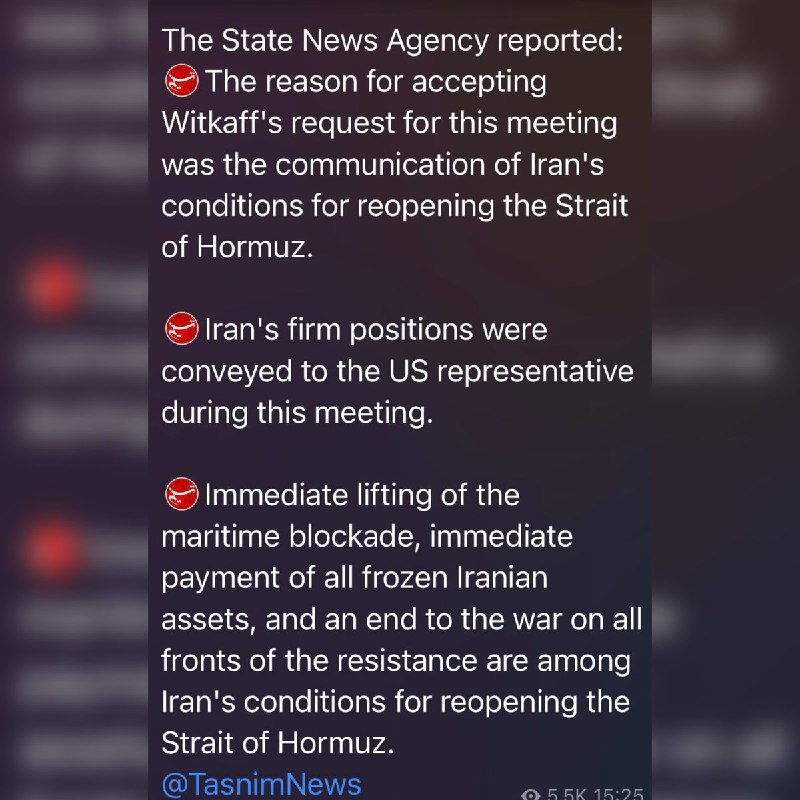
Four hours before the missile-launch posts, OSINTdefender, cited via the osintlive Telegram channel at 20:01 UTC on 22 September, summarised a separate development: the first direct US-Iran meeting since the memorandum-of-understanding framework collapsed. Per the post, Iranian news outlets confirmed the meeting and described "the preconditions for the reopening of the St[rait]" being discussed. The source item does not name which Iranian outlets reported the meeting or which officials attended.
The juxtaposition is the analytical point. A diplomatic track on reopening the Strait and a military track on firing missiles into it ran in parallel on the same calendar day. That is not, on its own, evidence of bad faith on either side: Iran's negotiating posture has historically used Strait-of-Hormuz pressure as leverage, and the US negotiating posture has historically discounted that leverage until tanker traffic actually slows. But the two streams need to be read together, because the same Iranian state apparatus is responsible for both.
Monexus analysis: what the pattern in the feed suggests
The framing in the Telegram posts leans adversarial, with the three GeoPWatch posts in this thread opening with the crossed-flags Iran/US emoji pair that the same channel uses to signal confrontation. That is a coding choice by the channel operators, not a fact about Iran's intent. It does, however, raise a known epistemic problem: the audience for these channels is global and the channels themselves compete on speed, so initial frames tend toward the conflictual pole even when later reporting narrows toward a misfire, a warning launch, or an unmanned-target drill.
Monexus assessment: the responsible reading at 22:00 UTC on 22 September 2026 is that something was fired or detonated in or near the Strait of Hormuz, that Iranian-aligned channels attribute the launches to Iran, and that no counter-claim, denial, or independent wire confirmation has entered the public record in the source items reviewed. The geo-strategic importance of the Strait is structural and well documented elsewhere; this article does not establish a share figure from the source items, and any reader interested in throughput volumes should consult primary maritime statistics rather than the Telegram feed.
What the source items do not specify
The available reporting does not name the firing platform, the missile type, the targeted vessel or formation, or the outcome of the launches. The source items do not specify whether the US Fifth Fleet, the Iranian Revolutionary Guard Corps Navy, or any Gulf-state coastguard has commented. The source items do not specify whether commercial traffic through the Strait has been suspended, rerouted, or insurance-war-risk-rated. The source items do not contain any direct quote from an Iranian official, a US official, or a shipping-industry spokesperson. Claims of any of those details would, at this stage, be fabrication.
What to watch in the next 24 hours
Three verifiable signals will move this story from Telegram rumour into something a desk can stand behind. First, a Tier-1 wire confirmation from Reuters, AP, AFP, or the BBC of either a launch, an interception, or a strike outcome. Second, an official Iranian or US statement, ideally on the record, from a named spokesperson. Third, any movement on tanker insurance war-risk premia or commercial-vessel AIS tracks through the Strait, both of which are publicly observable and would let a careful reader verify the traffic-disruption claim without relying on the Telegram accounts.
Until at least one of those three signals lands, the prudent editorial position is the one this article holds: something was reported, two channels agree on the broad shape of the event, and the rest of the world has not yet corroborated in the source items reviewed.
Desk note: Monexus is running this as a staff-writer piece because the source ledger is, at the time of writing, two Telegram channels and one aggregator post. Mike Poncana's byline is reserved for pieces where at least one Tier-1 wire or primary-document source anchors the claim set; that threshold is not yet met here. We will update this article, or replace it, as wire confirmation arrives.
Wire provenance
This editorial synthesis draws on the following public wire/social posts:
- https://t.me/GeoPWatch/40146
- https://t.me/GeoPWatch/40145
- https://t.me/GeoPWatch/40144
- https://t.me/intelslava/95115
- https://t.me/osintlive/574586