Meta puts a personal AI on your keychain, and the device question gets louder
At Meta Connect 2026, Mark Zuckerberg briefly showed off Muse Charm, a 5G-capable keychain device that talks to Meta's Muse AI agent without a phone. The hardware bet rewrites the platform question: who owns the surface between you and the model.
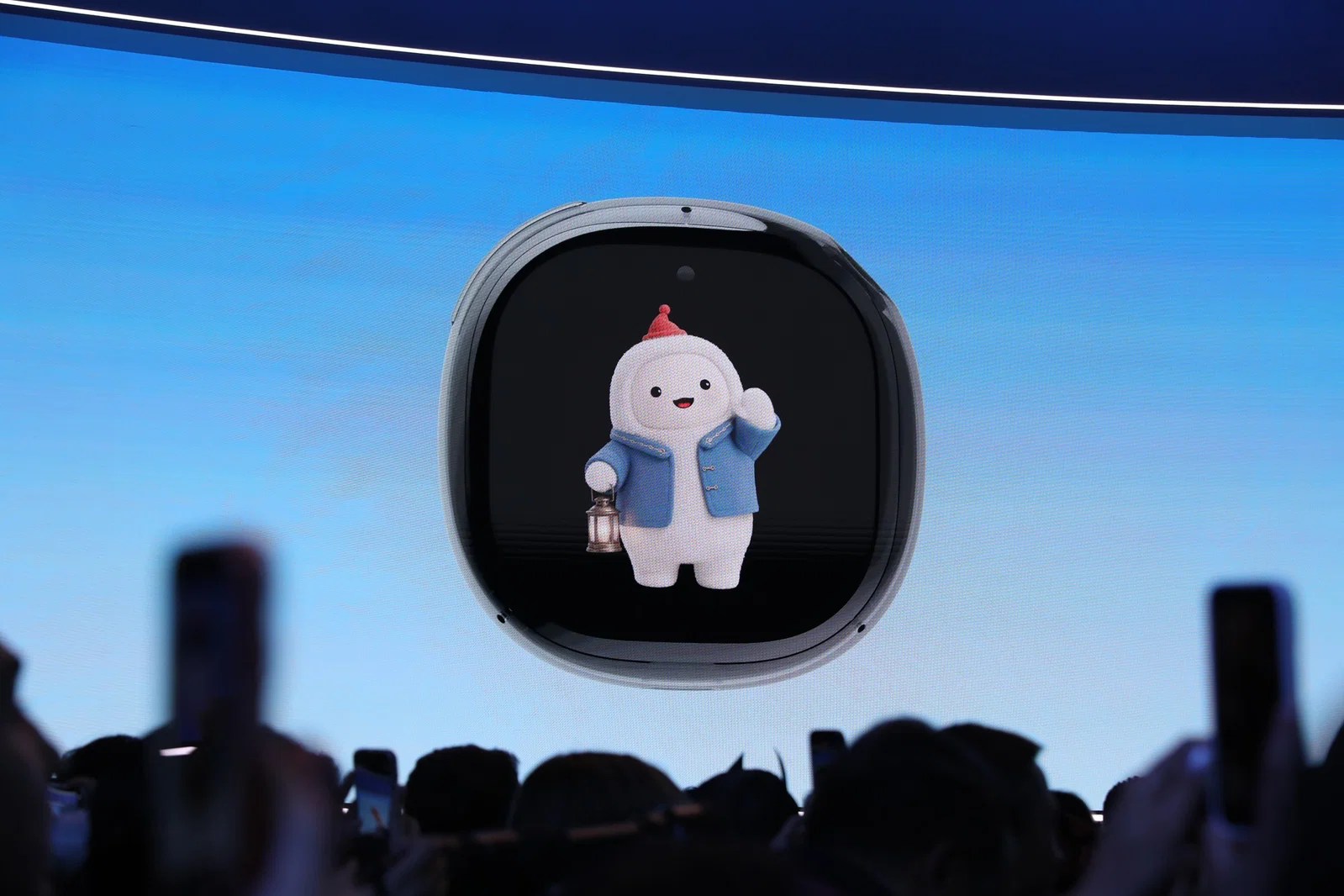
Mark Zuckerberg closed the Meta Connect 2026 keynote with a hardware tease that put a new device called Muse Charm on stage. The Verge reported the reveal on 24 September 2026 at 00:15 UTC: a palm-sized gadget that Meta describes as a dedicated hardware home for its Muse AI agent, separate from the company's glasses and Ray-Ban lines (The Verge, 24 September 2026, 00:15 UTC). Ars Technica confirmed the ship timing the following morning, putting consumer availability in December (Ars Technica, 24 September 2026, 14:03 UTC).
The pitch is simple enough to fit on a slide. The implication is not. Meta is asking consumers to put a dedicated surface for an AI agent on their body, with a microphone, a cellular radio, and a direct line to a model the company controls end to end. The frame is not "another smart device." It is a contest over who owns the conversational surface between a person and their AI.
A gadget in search of a job
Muse Charm's form factor borrows from the late-1990s Tamagotchi playbook: a small, persistent companion that lives with you rather than in your pocket. The Verge's live blog from Meta Connect 2026 in Menlo Park describes the device as briefly shown by Zuckerberg at the close of his keynote, with Meta positioning it as a standalone home for the new Muse agent rather than an accessory to a phone (The Verge live blog, 23 September 2026, 22:30 UTC). Telegram channel aipost, summarising Meta's own announcement language, framed the device as "a personal AI agent on your keychain" that lets users talk to Meta's Muse without a phone, computer, or glasses in the loop, and described it as a "palm-sized 5G gadget" (Telegram: aipost, 24 September 2026, 16:27 UTC).
What the announcements do not yet specify is the price, the on-device compute, the carrier arrangement behind any cellular link, the battery life, or what happens when the network drops. The available source items do not confirm that 5G is the specific radio path used to reach the Muse agent, only that Meta is marketing the device as a "5G gadget." Those details will determine whether Muse Charm reads as a deliberate platform move or a holiday-season curiosity.
The skeptical read is straightforward. Hardware tie-ins to AI agents have a mixed recent record: Humane's Ai Pin and the Rabbit R1 both arrived to tepid reviews, and both companies ran into the same problem the moment users took them home, namely that the agent on the device was less capable than the agent already in their pocket. Meta's answer, on the evidence in the public material so far, is to lean into voice and presence rather than a novelty screen. The supporting evidence in the launch coverage is thin.
The counter-narrative: a phone on a lanyard
The charitable read is that Meta is doing what Apple did with the iPod in 2001, namely taking a single-purpose device, doing it well, and letting the use-case compound. The Muse Charm's value proposition, on this telling, is not "AI away from your phone." It is "AI without the friction of unlocking one." A keychain device you raise to your mouth in a checkout line, in a car, or while your phone is across the room has a different interaction cost than pulling a slab of glass out of a pocket.
The Verge's standalone-hardware write-up frames Muse Charm explicitly as a dedicated hardware device for the Muse agent, distinct from Meta's glasses and Ray-Ban lines (The Verge, 24 September 2026, 00:15 UTC). That is a deliberate line. Meta's smart-glasses business has been the company's most credible hardware story of recent years, and putting an AI agent on the face has worked in part because glasses are socially legible in a way a pendant or wrist-strap is not. A keychain is a third path: less visible than glasses, more present than a phone.
The available source items do not specify pricing, carriers, or the underlying model's training data, so any comparison to prior AI-hardware launches is editorial inference rather than confirmed positioning. The thing that is confirmed is the ship date: December 2026, per Ars Technica's report (Ars Technica, 24 September 2026, 14:03 UTC).
What Meta is actually buying
Monexus analysis: the more interesting question is not whether people will carry a Muse Charm but what Meta learns if they do. A persistent, body-worn device that talks to a first-party AI agent produces a stream of voice context that no phone-based assistant can match. Wake words are a coarse filter; conversational context is a fine one. Whoever owns that surface owns the training data, the default routing, and the relationship with the model.
That is the structural frame in plain terms. The conversational AI market has, until now, been fought over at the model layer, with OpenAI, Anthropic, Google, and Meta all selling roughly equivalent access to capable models through APIs and apps. The next layer down is the device that mediates the conversation. Phones are a bad surface for that fight because Apple and Google tax every interaction through their stores. A first-party keychain device, distributed through Meta's own channels and tied to a Meta-controlled model, sidesteps that tax entirely.
This is also why a December ship date matters more than the gadget itself. Meta is signalling that it can move from keynote reveal to consumer hardware inside the same calendar quarter, a pace that suggests the device is closer to a rebranded reference design than a from-scratch industrial project. If that reading is right, the margins on the hardware will be thin and the margins on the data and the default-routing will not be.
The stakes, and what to watch
Three things to watch in the next 90 days. First, the developer story: whether third parties can build Muse Charm-native experiences, or whether Meta keeps the agent surface closed. Second, the privacy disclosures that accompany any always-on microphone, particularly around how voice snippets are retained and whether they feed model training. Third, the carrier arrangement, which will tell us whether Meta is paying telecom operators for cellular connectivity or has structured the device to route through Wi-Fi first.
The audience for Muse Charm at launch will be small. The audience for the question it raises is not. If the conversational surface migrates from the phone screen to a wearable, the platforms that lose are the ones that never owned a body-worn device. The platforms that gain are the ones that did. Meta is betting it can put the second body on the consumer's body, and that the agent on it will be the one people keep talking to.
Desk note: Monexus framed the Connect reveal as a platform-strategy story rather than a gadget review. The wire coverage, led by The Verge and Ars Technica, focused on the product; our analysis treats Muse Charm as a move in the surface-layer contest between Meta, Apple, and Google over who mediates the conversation between users and their AI.
Wire provenance
This editorial synthesis draws on the following public wire/social posts:
- https://www.theverge.com/tech/999750/muse-charm-meta-ai-hardware
- https://arstechnica.com/ai/2026/09/meta-puts-its-ai-assistant-on-a-keychain/
- https://www.theverge.com/tech/998457/meta-connect-2026-live-blog-mark-zuckerberg-keynote
- https://t.me/theverge_news/9096
- https://t.me/theverge_news/9088
- https://t.me/aipost/8247
- https://www.theverge.com/tech/999750/muse-charm-meta-ai-hardware
- https://arstechnica.com/ai/2026/09/meta-puts-its-ai-assistant-on-a-keychain/
- https://www.theverge.com/tech/998457/meta-connect-2026-live-blog-mark-zuckerberg-keynote
- https://t.me/theverge_news/9096
- https://t.me/theverge_news/9088
- https://t.me/aipost/8247