Two capitals, one AI question: Trump and Xi converge on the absence of guardrails
Hours before the Trump–Xi call, Beijing confirmed the first formal US–China AI dialogue and Trump posted that the two sides oppose new guardrails. The headline is symmetry; the evidence is one-sided, and that asymmetry is the story.
At 09:40 UTC on 24 September 2026, with President Xi Jinping hours away from a scheduled call with Donald Trump, Beijing confirmed what months of shuttle diplomacy had hinted at: the first formal United States–China AI dialogue has taken place (CNBC, 24 Sep 2026, 09:40 UTC). Just under two hours later, at 11:29 UTC, Trump posted on Truth Social that "Super Intelligence (SI) will be a big topic of discussion, but I want to leave it exactly where it is. That is China's position also. Our guardrail is the D…" (Truth Social via ClashReport, 24 Sep 2026, 11:29 UTC; the same lines were relayed by WF Witness at 11:50 UTC).\n Read in isolation, the two items point in the same direction. Read in sequence, they tell a more uncomfortable story. The Chinese-language confirmation is a procedural release: talks happened, more may follow. The American-language post is a substantive policy claim: both governments, Trump asserts, are opposed to new AI guardrails. Only one of those two claims has a directly attributable speaker, and the more far-reaching of the two is the one with no on-the-record Chinese counter-evidence in the available record.
What the wire actually says
The Insider Paper wire summary framed the US position bluntly: "Trump says China, US both opposed to new AI guardrails ahead of Xi summit" (Insider Paper, 24 Sep 2026, 12:18 UTC). The verb is "says." The summary is not a joint statement; it is a characterisation of the US position. The Chinese-language release covered by CNBC confirms a procedural fact, that the first AI dialogue round has been held and that Beijing hinted at a trade-truce extension, without, on the available evidence, using the word "guardrails" or endorsing a joint no-new-rules framing.
That distinction is not pedantic. It is the difference between a symmetrical bilateral position, which would be a genuine shift in the frontier-AI debate, and a US-side announcement that invites readers to assume symmetry. Monexus's read: this article treats the convergence claim as a Trump assertion, not a settled fact, until Beijing's own language catches up.
The trade scaffolding around the AI conversation
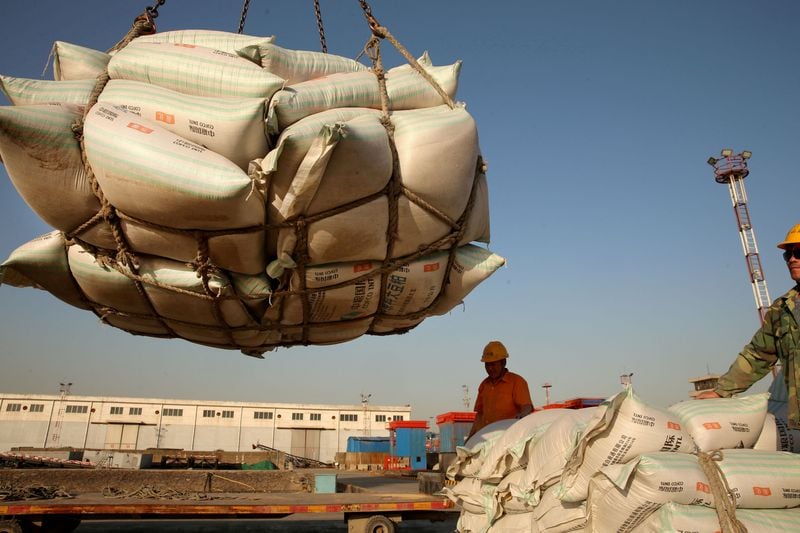
The trade scaffolding around the AI conversation is doing more work than the AI conversation itself. American agricultural producers were pushing, in the days leading into the call, for China to commit to fresh soybean, sorghum and pork import commitments (Investing.com, 24 Sep 2026, 10:07 UTC). Beijing's hints of a trade-truce extension, delivered alongside confirmation of the AI talks, points to a swap: agricultural market access in exchange for compute-export forbearance.
If that swap holds, it solves a near-term problem for both governments. For Trump, it gives a domestic win to a farm belt that has carried the cost of tariff retaliation. For Xi, it gives cover for proceeding with the domestic accelerator build-out without an immediate licensing crackdown. The AI dialogue is the politically safer piece of the package; the agriculture piece is the politically necessary one.
Monexus analysis: the most natural reading of the dual announcement is that the working group has decoupled process from product. Process, talks, working groups, summit readouts, moves at the speed of diplomacy. Product, chips, model weights, talent flows, moves at the speed of the next quarter's earnings call. Treat the dialogue as the easier milestone, and treat the guardrails question as a separate, unresolved one until both sides speak on the record in their own words.
Why the symmetry claim deserves scrutiny
Three years of US–China tech competition have produced a thick body of bilateral accusations, over chip export controls, model deployment and compute access, that any joint "no new guardrails" position would have to overcome. A statement that rules out, by name, an OECD- or UN-style instrument constraining frontier model deployment is a substantive policy choice, not a procedural one. It would have to be made in both capitals' own language.
The available evidence gives readers Trump's framing and Beijing's procedural confirmation. It does not, on the cited posts, give readers Beijing's framing of the guardrails question. A reader who treats the two as equivalent is taking Trump's characterisation on faith. The history of bilateral summits suggests that the joint readout, when it arrives, will use more guarded language than either pre-summit post; the live question is how wide the gap between the American framing and the Chinese framing turns out to be.
What to watch into the autumn
Three dates will test whether the no-new-guardrails line is a US negotiating posture, a genuinely shared position, or a framing that one side will quietly walk back. First, the formal readout from the Trump–Xi call and any joint statement on frontier AI: the language will reveal whether "guardrails" is a shared term or a contested one. Second, any revision of the US compute-export licensing list, which has been the practical guardrail all along; a freeze would be the operational equivalent of a tacit accord. Third, a confirmed date for the second round of US–China AI talks; the cadence, more than the communique, will signal intent (CNBC, 24 Sep 2026, 09:40 UTC).
Until those data points land, the responsible framing is the conservative one: one government has spoken, on the record, against new guardrails. The other has confirmed it is talking. Equating the two, however tempting the symmetry, would be reading past the evidence.
Desk note: Monexus framed this as a US-side assertion awaiting Chinese confirmation rather than a settled bilateral position, because the available wire reporting, CNBC on Beijing's procedural release, Investing.com on the farm-belt pressure, and the relayed Truth Social posts, gives readers Trump's framing of the guardrails question but not Beijing's own. Where sources stop, this article says so.
Wire provenance
This editorial synthesis draws on the following public wire/social posts:
- https://www.cnbc.com/2026/09/24/china-confirms-first-ai-talks-with-us-have-taken-place-hints-at-trade-truce-extension.html
- https://www.investing.com/news/commodities-news/us-farmers-push-for-china-commitments-on-imports-as-trump-and-xi-talk-trade-4914836
- https://t.me/ClashReport/98132
- https://t.me/wfwitness/112883
- https://t.me/insiderpaper/44791
- https://www.cnbc.com/2026/09/24/china-confirms-first-ai-talks-with-us-have-taken-place-hints-at-trade-truce-extension.html
- https://www.investing.com/news/commodities-news/us-farmers-push-for-china-commitments-on-imports-as-trump-and-xi-talk-trade-4914836
- https://t.me/ClashReport/98132
- https://t.me/wfwitness/112883
- https://t.me/insiderpaper/44791