Two months, no reset: how the US-China truce turned a summit into a holding pattern
Xi and Trump met on a red carpet in Washington while negotiators quietly renewed a tariff freeze. The substance was in the extension, not the pageantry.
At 13:09 UTC on 24 September 2026, China's leader walked a red carpet in Washington for the first meeting between Xi Jinping and Donald Trump of the president's second term. The ceremony was the day. The substance was the two months the two governments had just agreed to buy themselves.
Hours earlier, US and Chinese negotiators had confirmed a two-month extension of the tariff truce that has kept bilateral duties from snapping back to the levels threatened in early 2025. The summit's photographs were for the constituencies back home. The paperwork, such as it was, was for the treasuries, the soybean belt and the chip foundries who need a number to plan against.
This Monexus assessment is that what is unfolding is not a détente. It is a managed postponement inside a competitive relationship that neither side can afford to escalate and neither side can afford to settle. The truce is the equilibrium. The summit is the photo-op.
A red carpet, and a tariff freeze
The optics were choreographed with the precision both governments now treat as table stakes. Rubio, defending the visit to a domestic audience uneasy about engagement with Beijing, framed the meeting as a defensive necessity rather than a concession, according to South China Morning Post's rolling coverage of day one of the summit. Trump received Xi with the formal honours that previous administrations reserved for treaty partners, a deliberate signal that the transactional vocabulary of 2025 has been shelved, at least for the day.
Beneath the choreography, the operative document is the trade truce itself. SCMP's 12:55 UTC dispatch on 24 September confirms the two-month extension was agreed in advance of the summit, a sequencing designed to ensure that the leaders met under the cover of a working agreement rather than over the wreckage of a tariff collapse. The extension covers the regime of mutual duties that had been set to revert at the end of the calendar quarter; without it, importers on both sides of the Pacific would have faced duty schedules last seen in the early phase of the trade war.
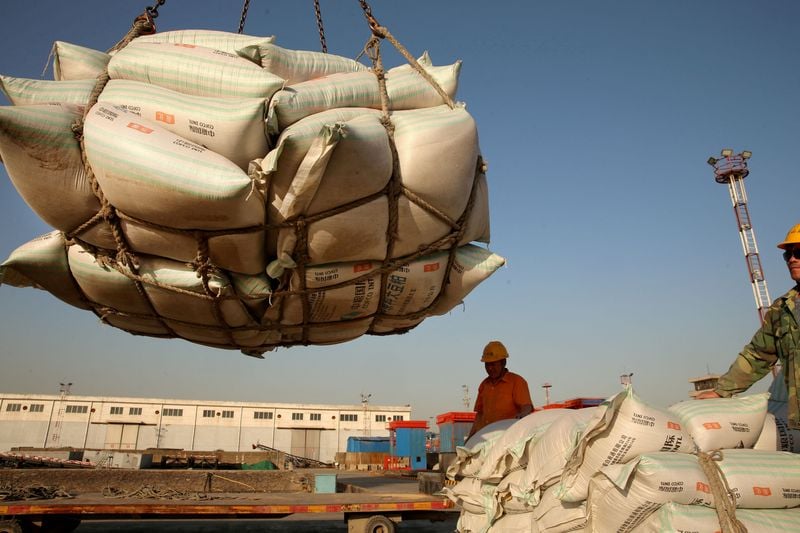
For American farmers, the calculation is immediate. US producers have spent three years asking Beijing for binding commitments on agricultural purchases rather than the spot-market, retaliatory pattern that followed each round of escalation. The 24 September Investing.com dispatch on the US-China trade talks notes that American farm groups used the run-up to the summit to press for those commitments, framing the truce as necessary but insufficient. The Chinese side, for its part, has used the same window to argue that agricultural purchases should track commercial logic, not political timetable.
The AI race, with the cameras on
What made this summit different from the 2025 Mar-a-Lago meeting is the second front that opened alongside trade. The BBC's 24 September write-up of the Trump-Xi face-to-face foregrounds the artificial intelligence race: the United States and China are not merely trading with each other, they are competing to set the terms under which the next industrial substrate is built and exported. The meeting occurred against the backdrop of competing export-control regimes, rival subsidy programmes and a shared interest in keeping the most advanced systems out of each other's hands.
This is the front on which the truce is most fragile and most consequential. Trade in soy and semiconductors can be paused with a phone call. Trade in compute, model weights and the manufacturing equipment that produces both cannot. The 24 September summit produced no visible AI-specific deliverable, a silence that is itself a tell: neither government is prepared to treat the AI contest as ripe for negotiation while the underlying balance of capability is still moving.
The framing both governments use for that contest is revealing. Washington describes the rivalry as one the United States intends to win, with export controls framed as defensive measures against the militarisation of civilian AI. Beijing describes the same contest as one of unilateral containment that requires countermeasures; Chinese official readouts, as relayed by South China Morning Post, position the United States as the actor disrupting a global trading system rather than responding to one.
Who actually has the upper hand
The most useful question the summit raised is the one SCMP's 24 September opinion column put at its centre: who has the upper hand in financial markets, the United States or China? The piece's structural argument is that the answer depends on which market, which timeframe and which definition of leverage the questioner uses. In sovereign debt and reserve currency composition, the dollar's centrality remains intact, and the recent expansion of dollar-stablecoin usage, in particular, has reinforced rather than eroded that position over the past eighteen months. In industrial supply chains, particularly the rare earths, batteries and pharmaceutical precursors on which both economies now depend, China's leverage is greater than the Western commentariat routinely admits.
Monexus analysis: the truce extension is best read not as evidence that either side is winning, but as evidence that both sides have calculated the cost of escalation in 2026 to exceed the cost of patience. That calculation is contingent. It depends on Chinese growth holding above the threshold at which domestic political pressure forces more aggressive export behaviour. It depends on US monetary policy not tightening in a way that forces a recession before the next round of negotiations. It depends on the AI race not producing a single visible breakthrough that one side believes gives it a durable advantage. Any one of those pivots could collapse the equilibrium.
The structural frame, in plain terms, is that the United States and China have moved from the crisis-management phase of their trade relationship into the equilibrium-management phase. Crisis management ended when both sides accepted that the alternative to negotiation was a mutual recession neither could politically absorb. Equilibrium management begins when both sides accept that the alternative to a continuing truce is not a better deal but a worse one. That is a different kind of relationship, more stable on the surface and more dangerous underneath, because it removes the sense of urgency that drove the original compromises.
What the truce does not cover
A two-month extension is, by construction, a delay. It defers rather than resolves the underlying disagreements on industrial subsidies, market access for Chinese firms, the treatment of TikTok's US operations, the status of advanced chip sales to Chinese hyperscalers and the long-running question of whether Chinese ships, solar panels and electric vehicles are priced in a way that requires defensive tariffs outside the truce window.
The farm lobby's ask on the eve of the summit, as reported by Investing.com, was for commitments rather than extensions. That distinction matters. An extension preserves the status quo for sixty days. A commitment would lock in purchase volumes, product categories and a dispute mechanism for non-delivery. The Chinese side has historically resisted that level of specificity on the grounds that agricultural purchases are commercial decisions that should not be politicised. The American side has historically insisted on specificity on the grounds that unverified Chinese promises are the proximate cause of every previous collapse.
Neither position is wrong, and neither side, on the evidence of the 24 September coverage, has moved. The two-month extension is the political price both sides have agreed to pay for not having to relitigate that argument under summit klieg lights.
What to watch over the next sixty days
The truce resets the clock; it does not move the ball. The forward calendar is dense. By the end of the extension window, both governments will need to decide whether to extend again, negotiate a narrower deal that addresses a subset of the disputes, or accept the reversion to the pre-truce tariff schedule that the extension was designed to prevent. Each of those outcomes is now plausible.
The proximate triggers to monitor are the US Treasury's foreign exchange report in the autumn, the quarterly read of Chinese export data, the next round of advanced chip export-license decisions, and any visible movement on the TikTok divestiture file. None of these is, on its own, decisive. Together, they will determine whether the equilibrium management of 2026 produces a deal or a managed deterioration.
The most natural reading of the 24 September summit is that both leaders got the photograph they needed. Xi got the red carpet, which is a signal to audiences in Beijing, Brussels and the Global South that the relationship has been normalised. Trump got the extension, which is a signal to US bond markets and farm-state legislators that the administration is delivering predictability. The summit, in that sense, was a success. The question is whether the next sixty days are.
Desk note: where US wires led with the AI race and the trade truce as separate stories, Monexus reads them as a single negotiation about the terms under which two great powers share an industrial substrate. The Chinese position, as relayed through SCMP's summit coverage, treats the truce and the AI controls as linked trade-security items; the US position treats them as separable, with trade the deliverable and AI the constraint. Both framings are present in the body of this piece.
Wire provenance
This editorial synthesis draws on the following public wire/social posts:
- https://www.scmp.com/news/china/diplomacy/article/3368686/xi-trump-summit-day-1-highlights-red-carpet-chinas-leader-rubio-defends-visit-and-more
- https://www.scmp.com/plus/news/china/diplomacy/article/3368652/us-china-agree-two-month-trade-truce-extension-ahead-summit
- https://www.scmp.com/opinion/china-opinion/article/3368593/who-has-upper-hand-financial-markets-us-or-china
- https://t.me/BBCWorldoffl/79791
- https://www.investing.com/news/commodities-news/us-farmers-push-for-china-commitments-on-imports-as-trump-and-xi-talk-trade-4914836
- https://t.me/SCMPNews/111219
- https://t.me/SCMPNews/111205
- https://t.me/SCMPNews/111197
- https://www.scmp.com/news/china/diplomacy/article/3368686/xi-trump-summit-day-1-highlights-red-carpet-chinas-leader-rubio-defends-visit-and-more
- https://www.scmp.com/plus/news/china/diplomacy/article/3368652/us-china-agree-two-month-trade-truce-extension-ahead-summit
- https://www.scmp.com/opinion/china-opinion/article/3368593/who-has-upper-hand-financial-markets-us-or-china
- https://t.me/BBCWorldoffl/79791
- https://www.investing.com/news/commodities-news/us-farmers-push-for-china-commitments-on-imports-as-trump-and-xi-talk-trade-4914836
- https://t.me/SCMPNews/111219
- https://t.me/SCMPNews/111205
- https://t.me/SCMPNews/111197