Musgraves Brings Dolly Parton's 'I Will Always Love You' to the 2026 VMAs
A month after Dolly Parton's death, Kacey Musgraves carried her signature ballad onto the MTV Video Music Awards stage, threading an ongoing tour tribute into primetime television.
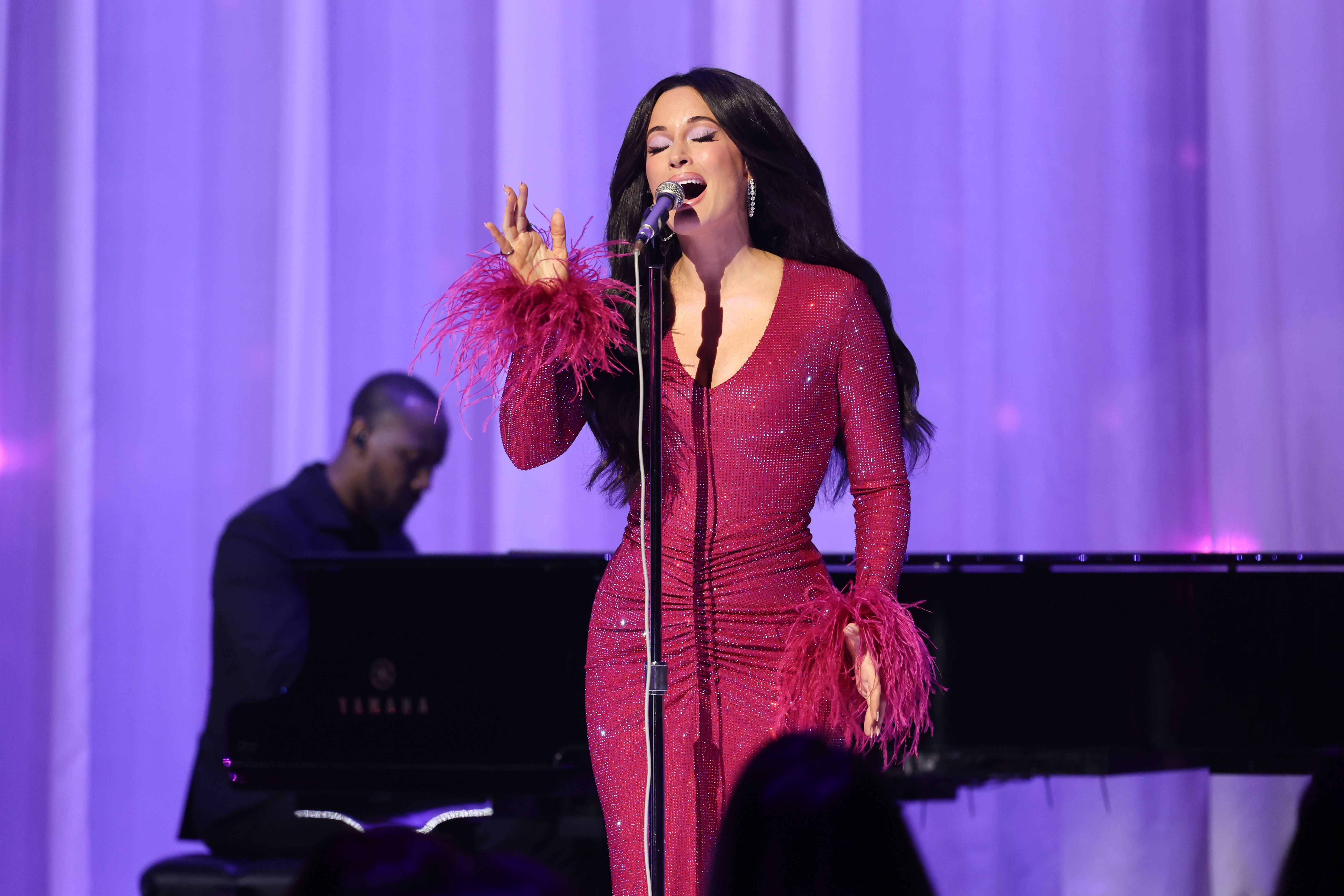
Kacey Musgraves took the stage at the MTV Video Music Awards, set aside her own catalogue for the evening, and sang Dolly Parton's "I Will Always Love You." Variety's report on the performance, timestamped 00:38 UTC on 28 September 2026, framed the segment as a tribute to "the late country icon just a month after her death." Pitchfork's parallel write-up, timestamped 01:39 UTC on 28 September, made the connection explicit: the VMA performance was an extension of an ongoing tour programme in which Musgraves has been covering Parton's songs. Two outlets, one performance, and a handoff ceremony staged for a primetime audience.
The VMAs have spent two decades treating country music as a guest in their own building. On this occasion it sat down at the piano and sang the quietest song in the room.
A tour set list meets a telecast
The Variety dispatch described Musgraves's VMA appearance as a "touching tribute" calibrated to honour Parton "just a month after her death." The Pitchfork report, distributed via Telegram at 01:39 UTC, layered in a second fact: Musgraves had already been working Parton's material into her live shows, and the VMA slot was an extension of that road-tested programme, not a cold commission. The pairing was deliberate. Variety's headline made the linkage explicit, branding the segment a Parton tribute rather than a Musgraves showcase.
What stood out, according to both write-ups, was the staging. There was no comedy bit, no costume change, no pyro. There was a microphone, a piano, and a lyric that almost everybody in the building already knew by heart. The cameras stayed on her face.
What the song carries
"I Will Always Love You" is the cleanest specimen of Parton's instinct for songs that survive every context they enter. Variety's account notes the song's long afterlife in its current framing, and Pitchfork's piece treats the cover as the obvious choice, in part because the ballad has drifted so far into the standard repertoire that audiences no longer remember who they first heard it from. Whitney Houston's 1992 reading, for Variety's audience and Pitchfork's, remains the reference point that made the song inescapable. According to the Variety excerpt, the song is identified there as "the classic 1974 tune"; the available thread evidence does not specify the original release year beyond that reference, and the thread sources do not independently corroborate the 1973 release date. Where the evidence thins, this article does not sharpen.
Musgraves's reading on Sunday leaned into that ambiguity, according to the Variety dispatch: a tribute, but also a statement that the song still has working life in it. Country music, like every genre, is a relay. The handover gets awkward when the runners stop agreeing on who is in the race. Parton's death forced that conversation into the open. The VMAs simply gave it a camera.
The structural read
A music industry built on streaming royalties and short promotional windows treats any artist who sells at scale as a museum piece within a decade of their last hit. Parton never quite fit that arc, in part because she never stopped writing and in part because her catalogue kept finding second lives through sync deals, covers, and judicious licensing. That is the same pattern the industry will now try to repeat with a small cohort of younger writers.
The VMA moment matters less for what Musgraves sang than for where she sang it. A network that built an entire evening around video as spectacle handed three minutes of camera time to a ballad with no video, no choreography, and no stunt. The audience vote had already been cast. What was left was the show.
Stakes, and what to watch
The next test of the tribute economy arrives when the Country Music Association Awards convene in November, and again when Musgraves's tour logs its next arena date. Each of those moments will draw a quiet comparison: was the VMA a one-off salute, or the first frame of an extended Parton memorial that runs through the rest of the broadcast calendar? Performers and producers tend to copy what registers; the risk is a glut of tribute slots that strip the gesture of weight.
For Musgraves, the calculation is sharper. She has spent a decade building a sound. Holding Parton's ballad in her throat on primetime television signals where her artistic centre of gravity sits in 2026. The audience saw what they came to see. The industry will be watching what she does next, and whether the songbook she carries from here belongs to her or to the woman who taught her the chords.
How Monexus framed this vs the wire: the Variety and Pitchfork write-ups cover the VMA performance as a tribute story and a tour extension respectively. This piece treats the same event as a hinge moment in country music's succession planning, with the telecast's camera framing as part of the story.
Wire provenance
This editorial synthesis draws on the following public wire/social posts:
- https://variety.com/2026/music/awards/kacey-musgraves-dolly-parton-tribute-mtv-vmas-performance-1236876461/
- https://pitchfork.com/story/watch-kacey-musgraves-sing-dolly-partons-i-will-always-love-you-at-the-2026-vmas/
- https://t.me/pitchfork/29558