Carly Rae Jepsen bets on the long, slow pop album, again
A two-record release and a Kia Forum/Madison Square Garden routing put Carly Rae Jepsen back in the arena tier, in a streaming era that rarely rewards either move.
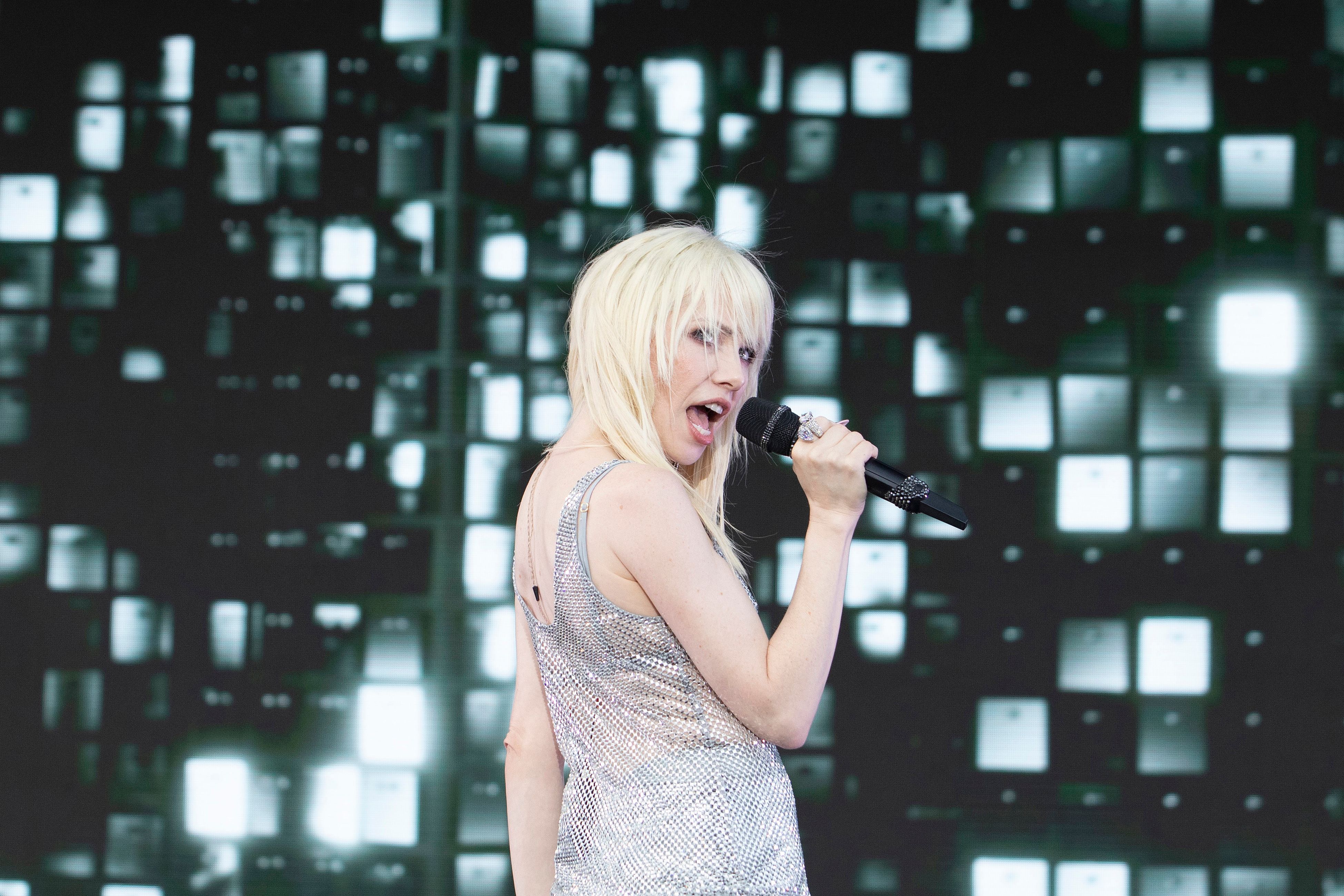
Carly Rae Jepsen announced on 1 October 2026 a North American arena tour for spring 2027, routing the run behind a new double album titled Day and Night through Los Angeles' Kia Forum and New York's Madison Square Garden, with the leg kicking off in April. The routing and the format are, on their face, an unfashionable combination: a long album at a moment the industry treats the album as a promotional vehicle for singles, and rooms large enough to make a songwriter who built her reputation on mid-tempo synth-pop look small on a poster.
The bet, in other words, is that fans will still sit for the version of Jepsen that has spent a decade refusing to trade up. Both moves are deliberate, and the announcement lands the same week the album cycle opens. According to Variety's 1 October 2026 report, the Kia Forum and Madison Square Garden are the marquee stops on the itinerary, and the trek is positioned in support of her eighth album. Pitchfork's same-day write-up frames the run as a North American kickoff in April built around the two-record set.
What the routing signals
Kia Forum and Madison Square Garden are not the rooms a heritage pop act takes to prove she can still fill a theatre. They are the rooms a heritage pop act takes to prove she can fill an arena, on a weeknight, in a market that has spent the last five years quietly de-rating the album. Promoting a double album through a Madison Square Garden date, rather than a long theatre residency, is a deliberate step up in the kind of room the catalog is being asked to carry.
It is also a structurally unusual one. Industry coverage of the 2020s touring market has fixated on legacy acts pricing into the largest possible rooms and on newer pop stars routing around amphitheatres; the mid-career pop artist who treats the arena as a destination rather than a default is a thinner cohort. Monexus analysis: Jepsen's play reads as closer to the slow-burn catalog model than to the per-cycle blockbuster model: a small loyal audience, an expensive production, and an explicit refusal to chase every release window.
The double album, in context
A double album in 2026 is rarely a commercial decision and almost always an artistic one. The format taxes streaming-era listening habits, where completion metrics on long releases trail shorter ones, and it complicates the radio and playlisting economy that still rewards three-to-four-song runs of material. The trade-off is catalog depth: a two-record set raises the floor on the next tour and the next licensing cycle, and it gives a writer of Jepsen's disposition room to range between tempos and palettes without compressing the record into a sequence of singles.
This is Jepsen's eighth studio album, per Variety, and the announcement describes the set as a double. The choice is also a positioning move. The pop albums that age best in the 2020s are the ones that arrive as discrete objects, not as feed entries. A double album, released in one cycle, pushed through an arena run, is closer to that object-status than a 35-minute EP and a string of features.
The counter-narrative, taken seriously
The honest read is that this is also a high-cost gamble. Arena runs priced for the upper tier of the pop market carry fixed costs that scale harshly when a tour underperforms, and the Jepsen catalog, deep as it is, has not produced a Madison Square Garden-headlining single in the way that would make a promoter write the deposit without a question. The available source items do not specify on-sale velocity, second-leg routing, or supporting acts, and the album's track listing has not been disclosed in the materials reviewed for this article.
There is also a streaming-era counter-argument. Album-equivalent units have stabilised for legacy pop acts with strong physical and vinyl sales, but the median tour announcement in 2026 still leans on catalogue floor rather than current-cycle heat. If Day and Night does not produce a track with the cross-platform reach of the early hits, the arena routing will read, in retrospect, as a bet the catalog could not carry.
What to watch between now and April 2027
Three concrete signals will indicate whether the bet is paying off. First, the second-leg and international routing, which typically extends 90 to 120 days after a North American announcement; the depth of that extension will be a cleaner read on demand than the marquee dates themselves. Second, the singles rollout: whether the campaign pushes one song across radio, streaming, and playlisting for a full quarter, or rotates two or three, will say something about the label's read on the catalog. Third, on-sale velocity on the Madison Square Garden and Kia Forum dates, which a promoter will read in the first 48 hours of public sale.
The available source items do not specify on-sale dates, second-leg routing, or supporting acts, and the album's track listing has not been disclosed in the materials reviewed for this article. Those details will determine the gap between an announcement that reads as ambition and an announcement that reads as a misjudged scale. For now, Jepsen has staked the next twelve months on the proposition that the patient version of pop still has rooms large enough to fill.
Desk note: Monexus framed this as a structural bet on album-as-object in a streaming era that usually punishes that bet, rather than as a tour announcement; the wire ledes treated it as a routing story. The available source items do not specify the on-sale date, the second-leg routing, or the album's track listing.
Wire provenance
This editorial synthesis draws on the following public wire/social posts:
- https://variety.com/2026/music/news/carly-rae-jepsen-day-and-night-2027-tour-dates-1236894169/
- https://pitchfork.com/story/carly-rae-jepsen-to-tour-day-and-night-in-2027/
- https://t.me/pitchfork/29579
- https://ift.tt/L7QRCT8