China's fuel freeze lands on the same week Nike discovers China is no longer buying
Beijing is hoarding diesel to refill stockpiles drained by years of discount-selling. Nike is posting its fifth consecutive quarter of declining China sales. The timing is not a coincidence; it is the same story told in two ledgers.
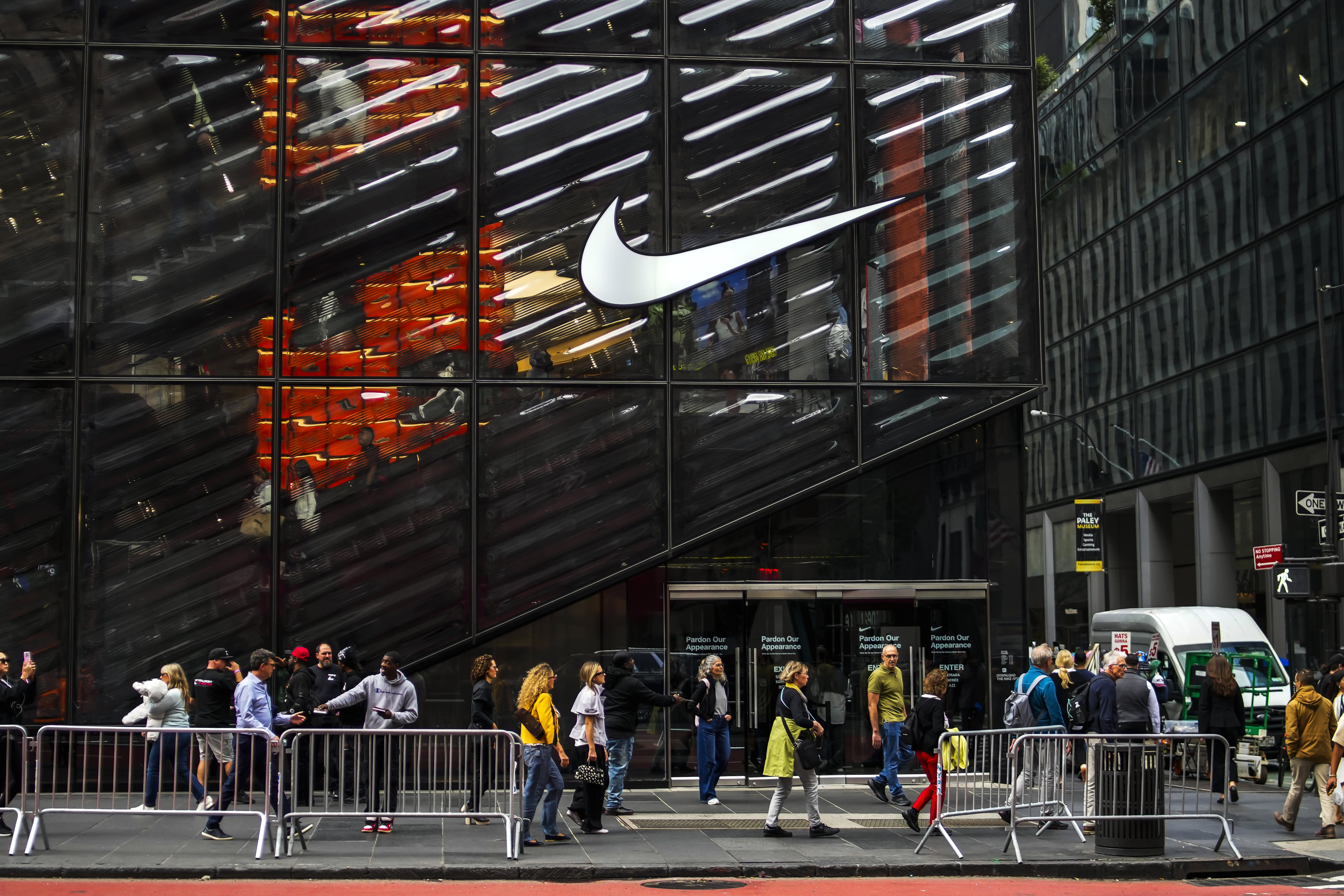
At 21:32 UTC on 1 October 2026, The Cradle carried a single line out of Beijing that deserves more attention than it has received: China has frozen October fuel exports to restock domestic diesel and gasoil inventories, with commercial stocks roughly 20 million barrels short of pre-war levels [1]. Hours earlier, on the same calendar day, Nike disclosed quarterly sales that missed Wall Street estimates, with China weakness again identified as a primary drag [2][3][4]. CNBC, previewing the print at 16:00 UTC, told readers to expect "another quarter of declining sales" as the company works to "regain growth in China" [5]. The two stories arrived in different sections of the business press. They belong in the same paragraph.
The thesis here is not that a sneaker company lost a quarter because Beijing decided to keep some diesel. The thesis is that both data points are downstream of the same structural shift: a Chinese consumer and industrial economy that is no longer functioning as the world's marginal buyer of last resort, and a state that is actively rebuilding the reserves it spent down while it was playing that role.
What Beijing just signalled
A freeze on October fuel exports is, on its face, a domestic supply story. China has run down commercial diesel and gasoil inventories by roughly 20 million barrels from pre-war baselines, per The Cradle's reporting [1]. Export quotas are the cheapest marginal lever a government has to refill those stocks without bidding against itself in the domestic market. That lever has now been pulled.
Two readings compete. The first is the polite one: Beijing is doing routine stockpile management after a period of unusually heavy discounted outbound shipments. The second is the less polite one, and it is more consistent with the evidence. The export freeze arrives at a moment when China's industrial engine is being deliberately recalibrated toward internal demand, energy security, and strategic reserve adequacy. Domestic refining margins, not export arbitrage, are once again the priority. That is a regime change, not housekeeping.
What Nike just discovered
Nike's revenue miss is the other face of that coin. CNBC's pre-print noted "another quarter of declining sales" and the company's continued struggle to "regain growth in China" [5]. After the bell, MarketWatch wrote that "the company's troubles are mounting" and flagged both China and the broader sneaker business as the pressure points [2]. Investing.com's two wire items called out "China weakness" and "competition" as the dominant overhangs [3][4]. This is now a pattern, not a print: Nike has been losing ground in its third-largest market for years, and the post-pandemic Chinese consumer has not returned on Western-brand terms.
There are two ways to read Nike's China problem. The dominant framing treats it as company-specific execution: the wrong product mix, a brand-coolness deficit against local challengers, a wholesale-versus-direct reckoning years overdue. That reading has real merit and is consistent with what the wires reported. But there is a structural read that the company-specific framing obscures. Nike is a high-velocity discretionary import that depends on a Chinese consumer who still wants imported sneakers at premium prices and still trusts Western brands as the standard-bearer for athletic aspiration. That consumer is smaller, on average younger and more price-sensitive, and is buying more from domestic competitors who have closed the technical gap. The macro story and the brand story are now the same story.
The pattern in plain prose
For roughly a decade, the implicit arrangement was that China would run the world's factory, sell into Western consumer markets, and absorb Western brands back into its own consumer economy as a downstream benefit. That arrangement required three things to keep working: cheap energy for the factory floor, a consumer with rising real wages, and a foreign-brand premium that domestic competitors had not yet eroded. The first condition is being actively restored, as the October fuel freeze shows. The second has been under pressure since the property sector began contracting. The third has collapsed in categories Nike happens to dominate. The Cradle's dispatch and MarketWatch's earnings write-up, read side by side, are not two stories. They are two simultaneous prints from a single underlying tape: an economy rebalancing inward, and a Western incumbent discovering the cost of having built a decade of growth on top of it.
The stakes, plainly stated
If this trajectory continues, three things follow. China's refiners capture more domestic margin because they are not leaking barrels into export markets; Chinese consumers, already tilting toward domestic brands in apparel and footwear, get more of the upstream surplus. Western consumer-discretionary names with heavy China exposure face a multi-quarter reset rather than a single bad print. And the global oil complex loses a swing supplier it had grown used to treating as the default. None of this requires Chinese policymaking to be hostile to the West. It only requires Beijing to act in its own supply-security interest, which is exactly what an export freeze during a stockpile rebuild is.
The honest uncertainty is this: the cited sources do not specify the duration of the export freeze or the precise stock-rebuild target. Nike's earnings transcript and forward guidance will matter as much as the headline miss, and those details were not in the source items reviewed for this article. What is in them is enough to say that the fuel freeze and the sneaker miss landed on the same day for a reason, and the reason is not coincidence.
Monexus framed these two dispatches together because the wires filed them in separate sections and the underlying story is one story. Standard consumer-descretionary coverage treats China's role as a market for Western brands; standard energy coverage treats China's export behaviour as a marginal-supply story. Both framings are correct and both are incomplete. The connection is the lede.
Wire provenance
This editorial synthesis draws on the following public wire/social posts:
- https://t.me/TheCradleMedia/68743
- https://www.marketwatch.com/story/nikes-troubles-are-mounting-and-sales-could-fall-further-2c19699d?mod=mw_rss_topstories
- https://www.investing.com/news/stock-market-news/nike-quarterly-sales-miss-estimates-as-china-weakness-competition-weigh-4928306
- https://www.investing.com/news/stock-market-news/nike-falls-as-revenue-miss-overshadows-earnings-beat-4928309
- https://www.cnbc.com/2026/10/01/nike-nke-q1-2027-earnings.html
- https://t.me/TheCradleMedia/68743
- https://www.marketwatch.com/story/nikes-troubles-are-mounting-and-sales-could-fall-further-2c19699d?mod=mw_rss_topstories
- https://www.investing.com/news/stock-market-news/nike-quarterly-sales-miss-estimates-as-china-weakness-competition-weigh-4928306
- https://www.investing.com/news/stock-market-news/nike-falls-as-revenue-miss-overshadows-earnings-beat-4928309
- https://www.cnbc.com/2026/10/01/nike-nke-q1-2027-earnings.html