Syria and Hezbollah open a channel in Turkey, with Ankara in the chair
Senior officials from Syria's new government and Hezbollah met in Turkey in September in the first face-to-face contact since Assad's fall, Reuters reports, with Ankara pushing a process that, per the wire, advanced reciprocal pledges on Lebanon, smuggling and non-interference.
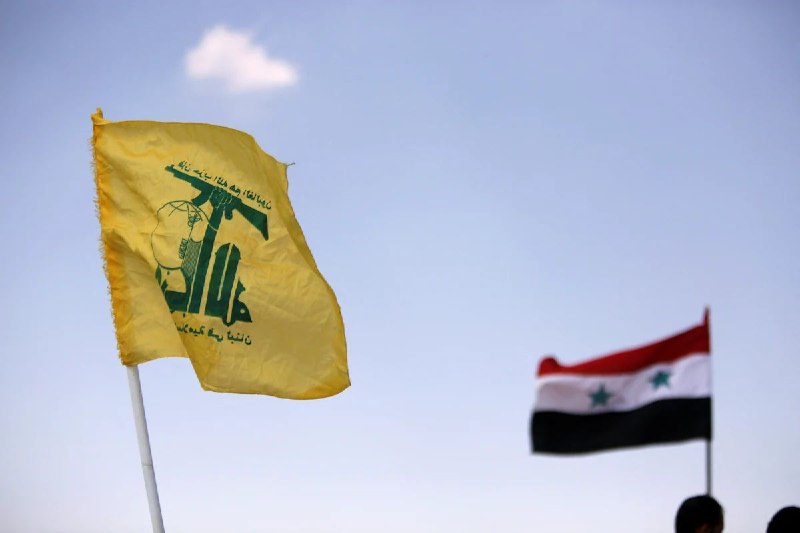
Senior officials from Syria's new government and Hezbollah held face-to-face talks in Turkey in September, in the first known contact between the two sides since the fall of Bashar al-Assad, Reuters reported on 1 October 2026. Reuters cited six sources familiar with the meeting and said Turkish mediation pushed the process, and three Telegram monitoring channels relayed the wire story in the same window (Field witness at 10:07 UTC, Open Source Intel at 10:04 UTC, and Clash Report at 09:42 UTC).
The contact matters because it converts a reordering of the Levant from declaration into operational detail. For years, the Syrian state and the Lebanese armed movement were welded together inside an Iranian-aligned axis that ran through Damascus and Beirut. The new authorities in Damascus have framed the break with that axis as a stated priority. A chaperoned sit-down in Turkish airspace, in which each side offered the other specific pledges, is, on the Reuters reporting as relayed, the most concrete signal yet that the reordering is being negotiated rather than merely announced.
What the relays were saying as a group
The four Telegram items above do not, in the material we have, present three specific reciprocal pledges: they were truncated before the substantive content of the Reuters report. The first Open Source Intel post says "according to Reuters" and stops short of the three-pledge detail, the second Open Source Intel post is similarly truncated, the Field witness relay paraphrases and stops, and the Clash Report relay does not detail the pledges. What we can say, from the four items as written, is that the meeting happened, that Turkish mediation pushed it, and that progress was made; the three-pledge framework is reported in the underlying Reuters wire that the four items relay. We have not independently verified the three pledges; they are attributed to it here, and they should be read as Reuters' reporting, not as our own.
What the wire reports were saying
Per the Reuters wire as carried by the relays, the contact was unusually detailed for a first encounter. The Syrian side used the meeting to assure Hezbollah that the new government in Damascus would not intervene militarily in Lebanon. In return, Syria asked Hezbollah to halt cross-border arms smuggling into Syrian territory and to dismantle sleeper cells that had operated there. Hezbollah, for its part, pledged not to interfere in Syrian internal affairs. The available source items do not specify whether the Syrian no-intervention pledge was directed at Lebanese politics broadly or at a specific Syrian-aligned armed faction.
Read that way, the three items sketch a working arrangement rather than a reconciliation ceremony. They map directly onto the live irritants between the two sides: the Syrian state wants its border policed and its sovereignty uncontested; the Lebanese movement wants a Damascus that does not turn its army, or the armed factions now embedded in the new security order, against Hezbollah's rear. Each side gave the other something it could deliver. Neither side gave away the larger political question of what the post-Assad regional order looks like.
Why Turkey, and why now
Ankara's role as facilitator is the load-bearing fact of the story. The Reuters report says the talks were pushed by Turkish mediation, and that fits a pattern visible across Syria's post-Assad trajectory: Turkey has hosted the new leadership and kept a working relationship with the Gulf states that have reopened funding taps to Damascus. Putting a Syria-Hezbollah channel inside Turkish territory is consistent with that posture.
The geographic logic is hard to miss. A channel brokered in Turkey sits in a different security geometry than one hosted in Iraq or in the Gulf. It puts the meeting inside NATO airspace, under Turkish intelligence oversight, and at several hours' drive and flight from Damascus and Beirut. For Damascus, that distance is a feature: it lets the new government engage Hezbollah without becoming a Hezbollah client. For Hezbollah, the same distance is a constraint: any commitments made in Ankara are commitments made in front of a Turkish audience with its own equities on the Syrian border.
What this is not
Read carefully, the Reuters report as relayed does not describe a reconciliation, a ceasefire, a prisoner exchange or a border arrangement. It describes a first contact at which three specific pledges were, per the wire, exchanged. A counter-reading is worth taking seriously: a first meeting with explicit, deliverable items can be staged for the cameras of the region's news cycle without being a process. Both sides have reasons to want the contact on the record. The new Syrian authorities can show domestic and Western audiences that their foreign policy is no longer a tributary of Tehran's. Hezbollah can demonstrate to its own constituency that it still has a line into a state that now controls its logistical hinterland. Monexus assessment: the September sit-down is best read as a chaperoned opening with concrete terms, not a diplomatic shift; the terms themselves are easier for Damascus to claim credit for than for Hezbollah to publicly own.
What to watch next
The near-term question is whether the September meeting produces a second encounter, and whether that second encounter is held at a higher level, addresses the larger political questions left open this time, or produces a public joint statement. A second sit-down before the end of 2026 would convert the contact from anecdote into process. A public joint statement of any kind would convert it into a regional event. Until either happens, this is one meeting in one Turkish city, brokered by a NATO member, at which, per Reuters, a new Syrian government and a weakened Lebanese armed movement exchanged three specific pledges and left the bigger questions for later.
The available source items do not specify whether the meeting was held before or after the most recent Israeli operations on Lebanese territory, whether any third state attended, or whether the contact was coordinated with Washington, Riyadh or Tehran. Those details will determine whether the channel is a Turkish solo production or part of a wider back-channel the United States and the Gulf are willing to underwrite.
Desk note: the wire reporting on this story is unusually detailed for a first contact, naming, per Reuters, three reciprocal pledges, and three of the four relays we are working from restate the same Reuters feed. Monexus has read the contact as a chaperoned opening with concrete terms rather than a diplomatic shift because no signed document, public statement or named participant beyond institutional roles is in the available reporting, and because Turkey's role as host constrains how far either side can move in a single sitting.
Wire provenance
This editorial synthesis draws on the following public wire/social posts:
- https://t.me/wfwitness/113974
- https://t.me/osintlive/577172
- https://t.me/osintlive/577171
- https://t.me/ClashReport/99172