Meta's open-source Muse hits a permissions wall at Apple, with South African science funding caught in the cross-fire
Apple says it will flag AI-driven requests for Mac data after Meta opens its Muse agent to third-party hardware. South Africa braces for the loss of R2.5 billion in US-funded research as the same week exposes how thinly the country's science base is insulated.
At 23:03 UTC on 2 October 2026, Ars Technica reported that Apple has begun reshaping the way third-party software accesses a Mac's full filesystem, tightening the permission regime that has governed macOS for nearly a decade. The change was framed in public-facing copy as an anti-abuse measure aimed at AI agents, not at human users. Within hours, the company confirmed through a wire filing that it would begin explicitly flagging requests for Mac data that originate from AI agents, after Meta's open-source Muse assistant generated a wave of developer complaints. The two decisions, taken together, amount to the first sustained attempt by a tier-one platform owner to draw a permissions line around agentic software on the desktop.
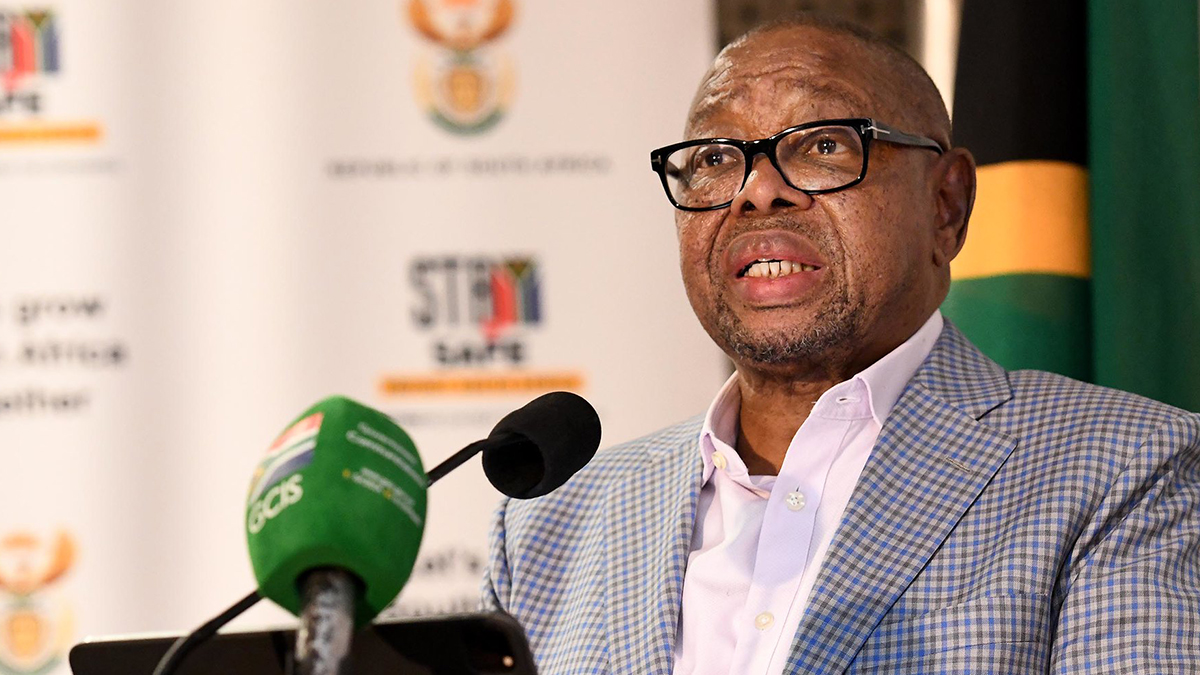
The same week opened a second, less photogenic fault: on 1 October, South Africa's ITWeb reported that US funding cuts had put R2.5 billion in science, technology and innovation research activity at risk. Higher Education Minister Dr. Blade Nzimande's warning, carried by ITWeb, framed the exposure as a structural vulnerability in how South African labs, telescopes and clinical trials are paid for. Read together, the Muse permissions row and the science-funding rupture point to the same underlying story: platform owners and state funders are rewriting the rules of who gets access to what, and countries that have built research and consumer-tech ecosystems on top of someone else's infrastructure are now absorbing the shock.
A permissions fight with no clean villain
Apple's move, as Ars Technica detailed, is a tightening of Full Disk Access, the macOS privilege that lets a process read user files across the standard sandbox boundary. For years the permission was granted to apps and to developers on a relatively flat plane; an app either had FDA or it didn't. Ars Technica's reporting indicated that AI agents were the proximate trigger: as more software shipped with autonomous loops that read documents, screens and message histories in the background, the existing permission model began to look indistinguishable from wholesale data extraction. Meta publicly argued that the existing FDA regime is not sufficient to stop Muse from reading messages, a position Apple has publicly rejected, the report reads.
The follow-up wire filing, dated 2 October 2026, formalised the response. Apple said it would flag AI requests for Mac data after Meta's Muse drew complaints. The mechanism, as described in the filing, surfaces a prompt to the user whenever a process identified as an AI agent attempts to read protected directories. The framing matters: Apple is not blocking Muse outright, nor is it forcing Meta to remove the agent. It is inserting a consent layer between the user and the agent. For developers, that is a meaningful new constraint on how agentic software can ship into the macOS ecosystem; for users, it is a consent UX that may, in time, look as routine as a microphone permission dialog.
The choice of Muse as the test case is harder to ignore. Muse is Meta's open-source assistant, released to operators for free, as TechCrunch reported on 2 October, with Meta publicly stating that it wants Muse inside televisions, toasters and third-party gadgets. Meta has publicly argued that FDA alone is not sufficient to govern agentic software; Apple has publicly rejected that read. The asymmetry is stark. One company is making a privacy-and-permissions case for keeping its desktop closed; the other is making an open-source case for pushing agentic code into every connected device in the house.
Muse without the south
Meta's smart glasses are officially coming to South Africa, TechCentral reported on 2 October. Ray-Ban Meta and Oakley Meta glasses will get an official local launch, but without Muse. The omission is the kind of detail that gets buried under the launch marketing but speaks loudly when read against the week's other news: a tier-one US platform has shipped its flagship AI agent to third-party hardware on three continents but not to the country where its smart glasses are about to go on sale.
South African buyers of the new glasses will get the camera, the audio, the Meta AI integrations Meta has shipped elsewhere, and the same firmware update cadence as every other market. They will not, however, get the agentic layer that Apple is now rewriting macOS to constrain. The available source items do not specify the precise technical or regulatory reason for the gap, but the optics are worth naming plainly. A market that is commercially viable enough for the glasses but not commercially viable enough for the agent is a market being treated as a peripheral consumer.
R2.5 billion and the cost of a foreign funder leaving
The science-funding story landed on 1 October with the particular flatness of a departmental press release. ITWeb's reporting put the exposure at nearly R2.5 billion in research activities at risk. The framing from Nzimande's office, as carried by ITWeb, was direct: the US funding cuts expose the fact that South Africa's science, technology and innovation funding model is not sufficiently resilient. The figure is not a one-year cut. It is the accumulated weight of grants, cooperative agreements and multi-year programmes that were structured around the assumption that US agencies, primarily through PEPFAR-adjacent and National Institutes of Health-adjacent channels, would continue to honour long-running commitments.
The structural reading is uncomfortable but worth stating in plain prose. A research system that depends on a single foreign funder for a quarter of its activity is a research system that is, by definition, a client of that funder's policy cycle. When US appropriations are stable, the system looks functional; when they are not, the system has no circuit breaker. The Nzimande warning is, in effect, an admission that the resilience question is no longer theoretical. Whether South Africa can replace the lost dollars with redirected domestic budget, with BRICS-bank facilities, with private philanthropy or with EU framework participation is the open policy question the cuts have now forced.
Monexus analysis: the Apple-Meta dispute and the South African science-funding rupture look like different beats, but they share a structural shape. In each case, a tier-one US platform or funder has rewritten the terms on which access is granted. Apple has rewritten macOS access rules to say Open does not mean Unpermissioned. The US Congress has rewritten appropriations to say Partner does not mean Permanent. South African researchers and South African consumers are, in both cases, downstream of decisions made elsewhere, and the margin for surprise is smaller than it was a month ago.
What the counter-narrative would say
The cleanest counter-narrative is the one Meta is already pushing in public. On Meta's telling, Muse is open-source because the future of consumer software is open, and any platform owner that constrains agents in the name of safety is, in practice, constraining the next wave of consumer choice. There is a version of that argument that is true: macOS has spent four years under sustained criticism from security researchers for permission UX that confuses users, and Apple's response is being read in the developer community as further closure of the platform, not opening.
There is also a counter-narrative for the funding story. US science funders can reasonably argue that domestic taxpayers should not be underwriting research in middle-income countries indefinitely, and that any honest conversation about resilience has to begin with the premise that a foreign grant is a privilege, not an entitlement. Read that way, the cuts are a forcing function for South African fiscal prioritisation that successive administrations avoided. The counter-narrative does not erase the R2.5 billion exposure, but it does say the exposure was always there and is only now being priced.
The dominant framing holds because the evidence does. Apple has not blocked Muse; it has wrapped it in a new consent layer. The US has not ended science cooperation with South Africa; it has narrowed it. Both decisions are real-allocations, with the costs falling disproportionately on the side that did not write the rules.
Stakes and what to watch
Three dates will determine whether this week is a turning point or a weather event. First, the macOS permission rollout: if Apple ships the new flagging regime in the next point release without a public developer backlash, the precedent is set and every other tier-one platform will be measured against it. Second, Muse's release roadmap: if Meta pushes Muse to additional consumer hardware categories on the same open-source terms, the conflict with Apple's permission regime will harden into a sustained fight rather than a single news cycle. Third, the South African budget process: if Nzimande's office secures a delayed, multi-year replacement for the lost US funding through BRICS-bank facilities, EU Horizon participation or redirected domestic budget, the R2.5 billion exposure is contained; if not, the cuts become the first instalment of a multi-year contraction in the country's research base.
The deeper pattern is the one this article has tried to name without academic scaffolding. Platform owners and state funders are rewriting the rules of who gets access to what, and the countries that built research and consumer-tech ecosystems on top of someone else's infrastructure are now absorbing the shock. The R2.5 billion and the Apple permission flag are, in that sense, the same story.
Desk note: Monexus framed this as a permissions-and-procurement story with structural weight, rather than as either a pure Apple-versus-Meta privacy dispute or a pure South African funding crisis. The two beats share an editorial spine, and reading them together surfaces a pattern neither tells alone.
Wire provenance
This editorial synthesis draws on the following public wire/social posts:
- https://arstechnica.com/security/2026/10/apple-changes-full-disk-access-permissions-to-curb-abuse-from-ai-agents/
- https://www.investing.com/news/company-news/apple-to-flag-ai-requests-for-mac-data-after-metas-muse-complaints-4930526
- https://www.investing.com/news/stock-market-news/apple-says-it-will-flag-ai-requests-for-mac-data-after-metas-muse-draws-complaints-4930505
- https://techcrunch.com/2026/10/02/meta-wants-you-to-build-your-own-muse-gadget/
- https://techcentral.co.za/meta-smart-glasses-south-africa-launch/286809/
- https://www.itweb.co.za/article/us-funding-cuts-put-r25bn-sa-sci-tech-research-at-risk/dgp45vaBQly7X9l8
- https://arstechnica.com/security/2026/10/apple-changes-full-disk-access-permissions-to-curb-abuse-from-ai-agents/
- https://www.investing.com/news/company-news/apple-to-flag-ai-requests-for-mac-data-after-metas-muse-complaints-4930526
- https://www.investing.com/news/stock-market-news/apple-says-it-will-flag-ai-requests-for-mac-data-after-metas-muse-draws-complaints-4930505
- https://techcrunch.com/2026/10/02/meta-wants-you-to-build-your-own-muse-gadget/
- https://techcentral.co.za/meta-smart-glasses-south-africa-launch/286809/
- https://www.itweb.co.za/article/us-funding-cuts-put-r25bn-sa-sci-tech-research-at-risk/dgp45vaBQly7X9l8