Israel marks three years since October 7 with tributes and Gaza strikes, as election-year politics close in
Silent tributes at sites across Israel marked the third anniversary of the 7 October 2023 Hamas attack, as the military pressed strikes in Gaza and campaigning intensified ahead of elections.
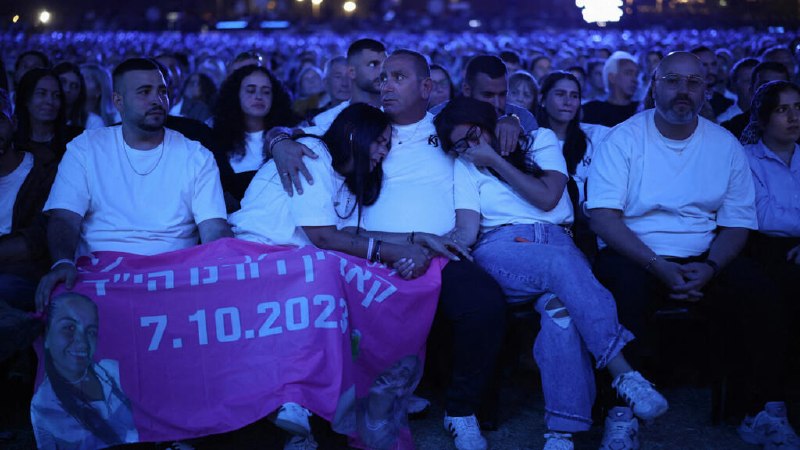
On Wednesday 7 October 2026, Israel marked the third anniversary of the Hamas attack with silent tributes at sites across the country, as the military pressed strikes in Gaza and political debate sharpened ahead of elections. France 24's English wire reported that families gathered at locations tied to the assault, that the commemorations were observed with moments of silence, and that Israeli operations in Gaza continued the same day. The juxtaposition, mourning at home and bombardment next door, is now an established feature of the date.
Three years on, the political weight of the morning has not diminished. The ceremonies in southern Israel coincided with a campaign season already crowded with arguments over hostage diplomacy, the shape of any post-war administration of Gaza, and the political future of Prime Minister Benjamin Netanyahu. The hostage question, unresolved since late 2023, sits at the centre of both the grief and the electoral arithmetic.
A country at the sites
The commemorations were reported in deliberate civic register. France 24's French service framed the day as a tribute built around nostalgia, resilience and moments of silence, with vigils held at sites associated with the assault and at kibbutzim in the Gaza envelope. Survivors' testimonies were broadcast on Israeli television and threaded through the formal programme. The English-language wire described silent tributes and renewed strikes on Gaza on the same day, with families gathered as the hour arrived.
Below the choreography, the political undercurrents were harder to miss. The English dispatch noted that the anniversary fell ahead of elections, with debate intensifying over the conduct of the war and over negotiations to secure the release of the remaining captives held in Gaza. Anniversaries in Israel are not neutral occasions; they are read for what leaders say, and what they conspicuously decline to say. The hostage families, a small but politically potent constituency, have made themselves impossible to bypass.
The ceasefire that the wire named
Inside Gaza, 7 October 2026 looked different. The France 24 English wire reported that Gaza officials said strikes killed five people "despite a year-old ceasefire agreement". The wire thus frames the day's military action as occurring in the context of an existing ceasefire arrangement, a year old at the time of the anniversary, rather than as part of an open-ended ground campaign. The specific targets, the operational scope, and the wider casualty toll from the day's action are not detailed in the available source material.
The asymmetry of the day's symbolism was visible from either side of the border. In Israel, a national pause, organised and largely civilian in tone. In Gaza, what the wire characterises as a violation of a year-old ceasefire arrangement, with at least five deaths reported by Gaza officials and renewed Israeli strikes acknowledged. One population mourns a loss that has shaped every policy debate for three years; the other lives inside the military operation that loss was used to justify, and inside the diplomatic architecture the operation was supposed to end.
The arithmetic of the ballot
The proximate political fact is the ballot. The anniversary landed in the middle of an election cycle in which Netanyahu's coalition faces pressure from multiple directions, from hostage families demanding a deal, from constituencies demanding the annexation of more of Gaza, from a security establishment warning of the cost of indefinite operations, and from an opposition that has been comparatively quiet on the war but vocal on the hostage file. Monexus assessment: the October 7 anniversary functions as a kind of national stress test, one that every contender must answer whether they want to or not. Silence is itself a position.
The domestic political geometry also reshapes the diplomatic geometry. A government negotiating under the eyes of hostage families negotiates differently from one negotiating in private. A government preparing for a campaign cannot afford to look soft on Hamas, but it also cannot afford to preside over the indefinite collapse of a ceasefire framework, or the appearance of doing so, without paying a price. The arithmetic favours movement, in some form, before voters go to the polls.
What the wire does not specify
The available source material does not specify the precise number of hostages still held, the state of indirect negotiations via Egyptian or Qatari mediators, the casualty toll from the day's Israeli strikes on Gaza beyond the five deaths reported by Gaza officials, or the specific electoral calendar. The wire does not specify which sites the families gathered at beyond a general reference to locations tied to the assault, and does not name a specific start time for the commemorations. What is clear from the available reporting is that three years on, the political and military questions raised on the morning of 7 October 2023 have not been answered. They have multiplied. The hostage question remains the load-bearing pillar of Israeli politics. The Gaza question, now filtered through the existence of a year-old ceasefire arrangement that the wire says was violated on the very day the country mourned, has acquired a sharper diplomatic edge. The regional question, about what a postwar settlement looks like and who has a seat at it, remains unanswered on every front.
For now, the country marked the morning with the rituals it knew how to perform. The harder rituals, the ones that will determine what 7 October 2027 looks like, are still being negotiated in rooms the cameras did not enter.
Desk note: Monexus framed this as a political story grounded in the commemoration wire, keeping the Gaza ceasefire context in view because the wire itself named it. The hostage file is foregrounded because the wire repeatedly circled back to it, and because it is the most concrete pressure point in the immediate electoral cycle. We did not assign blame or rank suffering; we noted the asymmetry of the day as the sources reported it, and flagged what the sources do not specify.
Wire provenance
This editorial synthesis draws on the following public wire/social posts:
- https://www.france24.com/en/middle-east/20261007-israel-three-years-october-7-attack-elections
- https://f24.my/CCqN.g
- https://t.me/france24_en/18902
- https://f24.my/CCqM.g
- https://t.me/france24_fr/23473