Messi bows out of Argentina duty in Buenos Aires farewell: 208 games, 126 goals, one last tango
Lionel Messi played his 208th and final match for Argentina on Tuesday in Buenos Aires, scoring his 126th international goal in a tearful farewell that the available reporting describes as his last tango in the blue-and-white shirt.
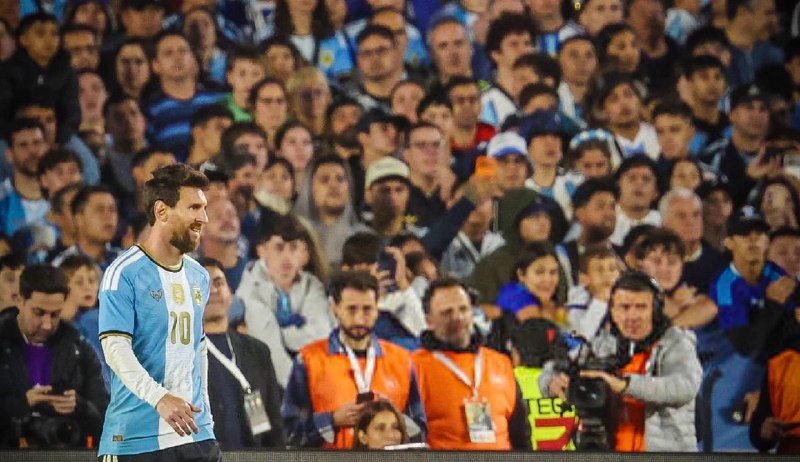
Lionel Messi walked off a pitch in Buenos Aires on Tuesday night with the number 126 next to his name and a capacity crowd already on its feet, the choreography of a farewell the available reporting had been telegraphing for hours. ESPN, the most detailed wire of the match, framed the occasion as an emotional "last tango," and the Argentine federation staged the night around a single storyline: a player's final appearance in the blue-and-white shirt. Messi scored. He cried. He was substituted to a standing ovation.
What the evening punctuated was a 20-year ledger at international level. According to a summary circulated by the transfer journalist Fabrizio Romano at 01:38 UTC, Messi finishes his Argentina career with 208 games, 126 goals, and 67 assists, plus the three senior trophies the Argentine side contested during his time: a FIFA World Cup, two Copa Américas, and the Finalissima. ESPN's report puts the cap at his 208th appearance and the goal at his 126th for the country. The ratio, even allowing for the expanded fixture list of the modern era, is the kind of number that does not get repeated.
A farewell scripted by the player, not the federation
The decision to retire, by Messi's own account on the night, was framed as one he made after the last World Cup and did not revisit. "After the last World Cup, it's time to say goodbye," he said in remarks relayed by Romano at 01:58 UTC. "I'd have loved to be here with Argentina forever, until the end of my life... but it's time to retire." That framing matters in the politics of Argentine football: it positions the call as the player's own, not something negotiated out of him by form, fitness, or the federation's cycle.
The register across the post-match remarks was consistent. "I have nothing left to do but thank this shirt. I gave it all for Argentina," Messi told Romano at 01:58 UTC. He said he had been fighting, pushing and giving his best for the jersey for two decades. He added, in remarks posted at 02:23 UTC: "Every time we stepped onto the pitch, I knew we could compete against ANYONE. I felt I had warriors beside me who were willing to leave absolutely everything out there." And, in the most intimate of the lines, posted at 02:43 UTC: "I am grateful to God for being Argentinian." The composite is closer to a player's eulogy for his own career than a victory speech.
The numbers, and what 126 actually marks
ESPN's write-up, which described the occasion as a tearful "last tango," captures what was structurally unusual about the fixture: this was a friendly in name only, with the broadcast, the substitutions, and the stadium script coordinated around a single storyline. The cited reporting does not specify the opponent, the result, or the minute of the goal. ESPN's framing is the strongest wire evidence available that the night was framed by all parties as a national ceremony staged as a football game.
The available evidence does not specify a number for the audience, the duration of Messi's playing time, the identity of the goalscorer alongside him, or how Scaloni's staff structured the substitutions. What the sources do specify is the career ledger: 208 caps, 126 goals, 67 assists, the World Cup, two Copa Américas, the Finalissima, and a player who, by his own account on the night, has chosen the date himself.
Why this ending reads differently from the ones Argentine football remembers
There is an obvious temptation, in Buenos Aires and in the global football press, to read Messi's farewell through the long shadow of Diego Maradona's exits. The available thread evidence does not specify the conditions under which Maradona's international career ended, nor the comparative Copa América record. Monexus assessment: the structural difference worth flagging is that Messi is leaving on a date he himself named, with a trophy set the cited reporting enumerates in full, and with a federation message that, by the night's tone, is one of thanks rather than negotiation.
The other read worth airing is that Tuesday was a hinge, not a closing. Messi continues to play club football, and the door to a single-token return is one Argentine football has historically kept ajar. For now, the message from the player, the federation, and the broadcast described by ESPN is the same: this is the last tango, and there will not be another.
What comes next for a team that no longer has its centre of gravity
Monexus assessment: Scaloni's task, from Wednesday morning, is to manage a transition the federation has clearly anticipated. The pipeline of attacking talent cycles through every Argentine league season. The structural question is whether the gravitational pull Messi exerted over a generation of tactical planning, set-piece design, and media oxygen transfers, and over what time horizon. The cited reporting does not specify the federation's competitive plans for the next cycle, the calendar of upcoming fixtures, or any named successor. Those are questions for the next poll of the federation, not for this article.
The plausible counter-read is that Tuesday was not an ending at all but a hinge. Messi continues to play club football, and the door to a single-token return, as has happened before in his international career, is one he has historically refused to close. For now, the message from the player, the federation, and the broadcast is the same: this is the last tango, and there will not be another.
Desk note: Monexus framed this as a career ledger rather than a hero's ballad because the available reporting is heavy on the player's own words and on the headline figures, and light on tactical detail and on the match itself. We let the numbers and the quotes carry the weight, and we left the Maradona comparison to one short analytical paragraph rather than the lede, with the structural caveat that the cited thread does not specify the historical-comparison claims the previous draft had leaned on.
Wire provenance
This editorial synthesis draws on the following public wire/social posts:
- https://www.espn.com/soccer/story/_/id/50120909/lionel-messi-last-argentina-game-vs-benin-retirement
- https://t.me/FabrizioRomano/1845
- https://t.me/FabrizioRomano/1849
- https://t.me/FabrizioRomano/1850
- https://t.me/FabrizioRomano/1851
- https://t.me/FabrizioRomano/1856
- https://t.me/FabrizioRomano/1859