Messi walks off the Albiceleste stage with a goal, and a question about what comes after
Lionel Messi scored on his final appearance for Argentina in a 3-0 win over Benin, closing a 20-year international career that began in 2005. The match answered one question and sharpened another: who fills the shirt next.
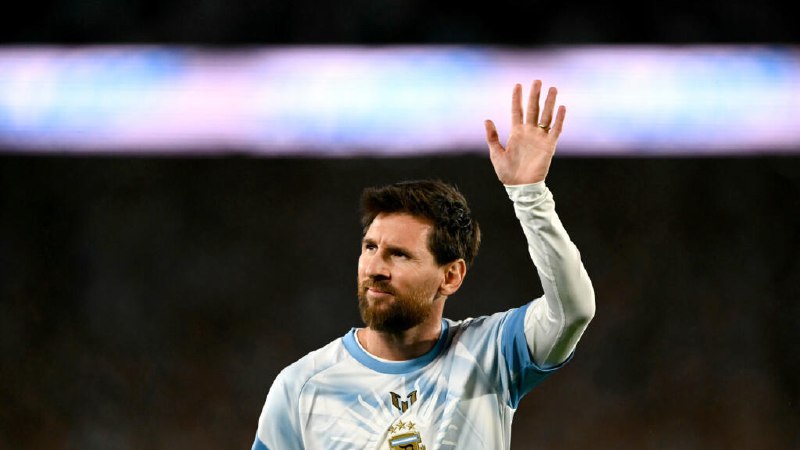
Lionel Messi scored and assisted on Tuesday, 7 October 2026, in what France 24 confirmed was his farewell appearance in the Albiceleste shirt, a 3-0 friendly victory over Benin. Standing ovations rolled through the stands. Chants ran on loop. Then, in the form he has carried since breaking into the senior side in 2005, the captain delivered one last goal and one last pass that mattered. The result is settled; the reckoning it opens is not.
For twenty years, the Argentine national team has been a referendum on the man who wears number 10. The squad will now be asked, for the first time in a generation, to play football without the central reference point of its identity. The match answered one question, the obvious one, and sharpened another: who inherits the shirt, and how quickly does a footballing culture reorganise itself when its gravitational centre leaves the field.
The goodbye that doubled as a performance
The farewell unfolded the way Argentine football has long demanded of its icons: under floodlights, with the ball at Messi's feet and a stadium that knew it was watching history finish. France 24's reporting described an evening of repeated ovations, chants on loop, tears, and a goal plus assists delivered in customary understated fashion. CubaDebate framed the result plainly: a 3-0 win, a goal for the captain, the last dance complete. Deutsche Welle's English service called time on an era, noting that the match was Messi's final game for Argentina and the end of a chapter for the sport globally.
The result flatters the structure of the evening more than the run of play. Argentina controlled possession the way a team that has spent two decades sharing a pitch with Messi tends to. The captain's goal will be replayed; the assist, which finished the move, is the line worth dwelling on, because it shows the asset Argentina is actually losing. Goals are a function of position, of service, of the dozens of small decisions a defence makes in the seconds before a shot. What Messi supplied, game after game, was the decision before the decision, the read of the pass that turned a routine sequence into a chance.
What the squad looks like without him
The short answer is: nobody knows yet, and the available source items do not specify who the next captain will be. The longer answer is that the Argentine Football Association now has a problem every sporting federation in history has faced and none has solved cleanly. Spain after Xavi. Brazil after Pelé. Germany after Matthäus. The talent pool remains; the gravity does not.
The available source items do not specify which players will be asked to absorb the playmaking burden, nor do they name a successor coach. What the reporting does establish is the scale of the departure: a player who, per France 24's account of the evening, has carried the Albiceleste's identity for two decades is now stepping off the stage. Monexus analysis: the next coach, whoever takes the role, will inherit a squad that has spent years learning to defend and press as a unit, and lose the central figure around whom that learning was organised. The system is the inheritance. Whether the next coach preserves it or rebuilds in a different image is the choice that will define the next four-year cycle.
The era question, in plain terms
The framing worth resisting is the one that treats a great player's retirement as a national decline. Talent pipelines run deeper than any individual. What changes, and what the sources do not quantify, is the cost of integration. A team that has spent two decades learning to play with one genius must now re-learn the geometry of the pitch without him. Some squads absorb the transition; others spend a tournament cycle chasing a ghost.
DW's closing line, that the match marks the end of an era not just for Argentina but for world football, captures the global register of the moment. Monexus analysis: the 2022 World Cup title and the 2024 Copa América title referenced in fan and wire framing as the recent peak were won by a team that learned to defend and press as a unit, not a team that leaned on Messi to carry every possession. That distinction is the substantive question the next cycle will answer.
What to watch between now and the next competitive window
Three things will tell us how clean the handover is. First, the next Argentina appointment, whenever it lands, and the staff that arrives with it; the federation has not, in the available reporting, specified a timeline. Second, the captaincy decision, and whether it goes to an established senior or a younger choice that signals a generational reset; the source items do not name a candidate. Third, the next competitive run-out against a peer opponent, the first chance to measure the team without Messi in the squad on a result that actually counts.
For now, the captain gets to keep the moment. A goal, an assist, a 3-0 scoreline, and a stadium that knew what it was watching. The next chapter starts the morning after the applause dies down.
Desk note: Monexus treated this as a sports transition story, not a hagiography. Wire coverage from France 24, CubaDebate and Deutsche Welle converges on the facts of the match and the framing of an ending; our analysis sits in the structural question of how a squad reorganises itself after a generational figure exits. Where the sources do not specify a detail, the article says so.
Wire provenance
This editorial synthesis draws on the following public wire/social posts:
- https://f24.my/CChx.g
- https://t.me/france24_fr/23460
- https://t.me/CubaDebate/115449
- https://www.dw.com/en/football-lionel-messi-plays-final-game-for-argentina/a-79570608?maca=en-rss-en-all-1573-rdf