Palestinian Authority pushes November legislative vote by months, citing security and political conditions
Palestinian Authority Vice President Hussein al-Sheikh has told France that legislative elections scheduled for 28 November will be postponed by months, citing a failure of the political, security and economic conditions on which the original scheduling was based.
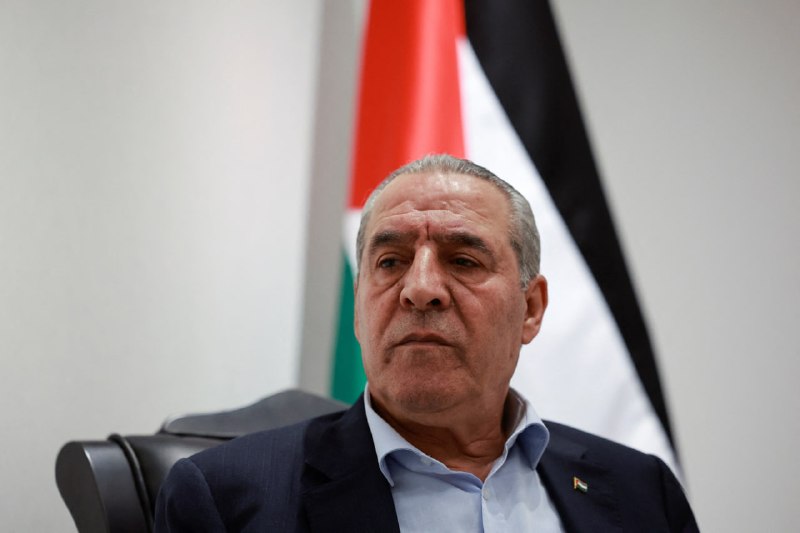
Palestinian Authority Vice President Hussein al-Sheikh wrote to France on 8 October 2026 to say that Palestinian legislative elections scheduled for 28 November would be delayed by months, according to a letter excerpt carried by Beirut-based The Cradle on 9 October. The letter was addressed to French Foreign Minister Jean-Noël Barrot and contained direct language quoted in The Cradle's reporting: "The assessment concluded that the anticipated political, security and economic conditions, on which the scheduling of the legislative elections for 28 November 2026 was based, have not materialized." The Al Mayadeen Arabic channel pushed a Reuters wire alert on the postponement at 11:07 UTC on 9 October, and Iran's Tasnim news agency carried the same core facts between 10:06 and 10:13 UTC.
The postponement is a formal Ramallah decision communicated through a European foreign ministry, not an informal notification. The question now is whether the Palestinian Authority is buying time to organise a credible ballot, or quietly shelving a vote that the letter's own language suggests the executive no longer believes can be held under current conditions. The cited posts do not say which; this article treats the ambiguity as the story.
The letter to Paris
The Cradle published the relevant excerpt from al-Sheikh's letter to Barrot, including the address line and the direct quotation above. The letter frames the delay in conditional rather than open-ended terms: the assessment, al-Sheikh wrote, found that the conditions on which the original scheduling rested had not materialised. That phrasing is doing a lot of work. It preserves the legal fiction that elections remain on the Palestinian Authority's books, while freeing the executive from the operational pressure of preparing polling stations, candidate lists, and observer missions on a November timetable. Monexus assessment: the language reads as the executive documenting its own decision in writing, not consulting on one still open.
Reuters' framing, relayed by Al Mayadeen's Arabic channel, treats the move as a postponement. The Cradle and Tasnim converge on the length of the delay: "by months," in The Cradle's wording, not weeks and not indefinitely. The cited posts do not specify a new target date, and this article has not independently established one.
Why Ramallah says it cannot hold a vote
The official line, drawn from al-Sheikh's letter, names three categories: political, security and economic. The Cradle excerpt reproduces the formulation. The cited posts do not itemise which sub-conditions within each category have failed. This article reads them in as the structural context any such postponement would imply, and treats that reading as analysis rather than as reported fact.
The political category, on the structural reading, is the hardest to disentangle. Holding a national vote while Gaza is in ruins and the Palestinian Authority's writ across its claimed territory is partial would invite accusations that the ballot is a managed outcome. The cited posts do not address that calculation directly. The security category, again on the structural reading, captures restrictions on movement, the question of whether voting could credibly be organised across the territories as currently configured, and the operational difficulty of running polling stations under those conditions. The economic category, on the same reading, captures the resource question of staging a national election. The cited posts do not separate these factors; this article does, and flags that it is doing so.
The European channel
That the channel of notification runs through a formal letter to the French foreign minister, rather than through Cairo, Doha, or Riyadh, is itself a signal. Monexus analysis: the choice of addressee is a diplomatic decision. European states are the audience for any future recognition track, and the letter's language is calibrated for that audience. The cited posts do not record a French response, and this article has not independently established one.
For Europe, the postponement complicates any policy strand that has leaned on Palestinian institutional reform as a precondition for further recognition steps. The cited posts do not address that complication; this article treats it as the structural question the letter raises, even if it does not answer it. The most natural reading, based purely on the letter's text, is that Paris is being read in on a fait accompli delivered through a written communication that quotes its own reasoning.
What to watch next
Three dates matter. First, any formal Palestinian Authority decree or presidential announcement codifying the delay, which the cited posts do not yet record. Second, a new target date, which the cited posts do not specify. Third, a response from the French foreign ministry acknowledging the letter, which the cited posts do not record. None of the cited sources names a date to watch, and this article has not independently established one.
The deeper question, which the letter sharpens rather than resolves, is whether the conditions al-Sheikh names can be made to materialise in any timeframe the cited posts describe. Monexus assessment: the decision announced on 9 October postpones a vote; the language of the letter itself, quoted in The Cradle's excerpt, suggests the executive has reached a written conclusion that those conditions are not currently in place. Whether that conclusion is reversible on a months-long horizon is the question the postponement now hangs on.
Desk note: Monexus framed this as a formal-communication story anchored to al-Sheikh's letter to Barrot as quoted by The Cradle, with Reuters relay and Tasnim confirmation. Readers seeking French or Palestinian Authority first-party confirmation should treat the postponement as confirmed by Reuters relay and pending formal codification. The story sits on the MENA desk; the European channel is the delivery mechanism, not the policy locus.
Wire provenance
This editorial synthesis draws on the following public wire/social posts:
- https://t.me/alalamarabic/509162
- https://t.me/JahanTasnim/238791
- https://t.me/TheCradleMedia/69113
- https://t.me/thecradlemedia/69113