Yemen's Houthi spokesman declares Saudi airports unsafe, tallies 2,058 airstrikes
Brigadier General Yahya Saree says Saudi airports are unsafe except over Mecca and Medina, claims 2,058 Saudi-led airstrikes since the latest escalation began and 124 in the past 24 hours across seven Yemeni governorates.
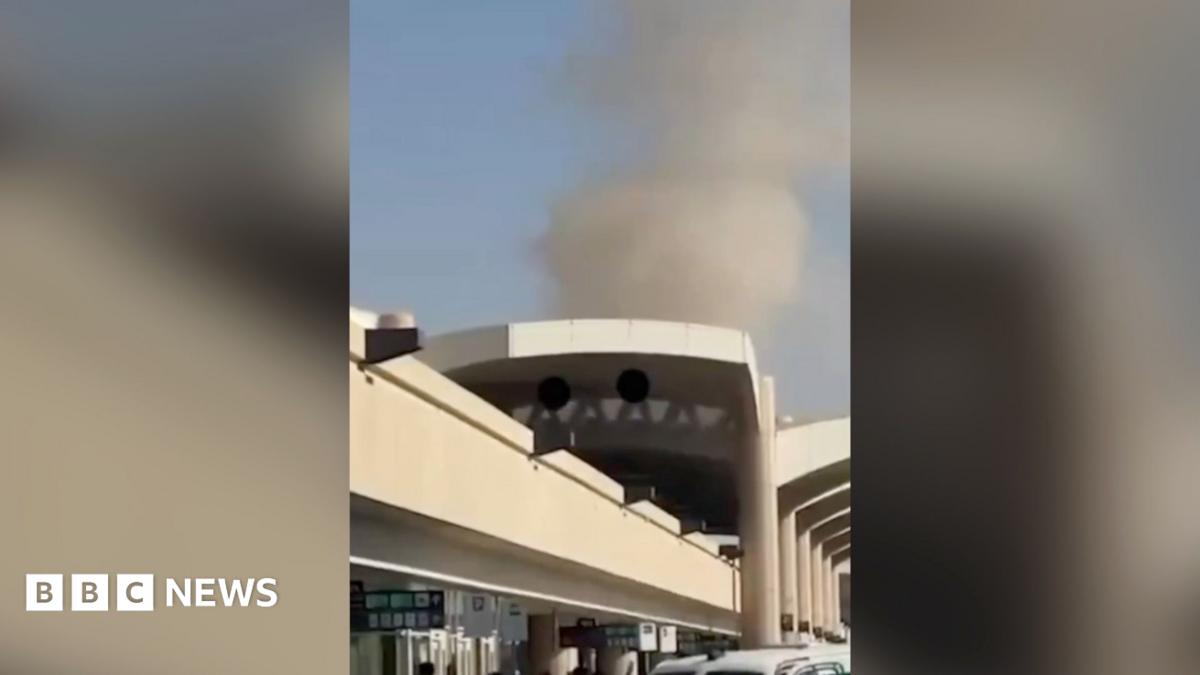
At 16:18 UTC on 11 October 2026, the Houthi military spokesman Brigadier General Yahya Saree set a new line of visibility on the Saudi-led air war over Yemen. In a series of statements relayed through the Beirut-based Al Alam Arabic channel, Saree said the cumulative count of "Saudi enemy" airstrikes since the latest escalation began had reached 2,058, with 124 strikes in the preceding 24 hours alone, hitting Sanaa, Taiz, Marib, Al-Jawf, Hajjah, Hodeidah and Saada governorates [1][2]. The same thread declared Saudi airports unsafe for international companies, experts, employees, workers and travellers, except for the airspace over Mecca and Medina [3][4].
The picture being drawn from Sanaa is a war of vertical reach: low-cost, locally produced surface-to-air missiles meeting high-end Saudi combat aircraft, with civil aviation in the Gulf as leverage. The operational claim is that several Saudi combat formations were confronted with domestically manufactured surface-to-air missiles and forced to retreat [6]. The political claim is that the blockade-for-blockade equation the group has run since late 2023 is again in force, with escalation meeting escalation, and that operations will continue deep inside Saudi Arabia [5].
The numbers, stripped of framing
Saree's cumulative figure, 2,058 airstrikes, and the 24-hour figure, 124, are tallies issued by one party to the conflict. The Saudi-led coalition has been conducting an air campaign in Yemen in various configurations since March 2015; a tally described as "since the escalation against our country began" without an explicit start date is difficult to compare with coalition communiqués. The cited items do not specify when that escalation phase began. What the thread does establish is that the Houthi side is foregrounding strikes against its own territory, not strikes it has launched into Saudi or Emirati airspace, in this particular set of statements.
The 24-hour breakdown lists Sanaa, Taiz, Marib, Al-Jawf, Hajjah, Hodeidah and Saada. That geography is consistent with an intensified internal phase across northern and western Yemen rather than a narrowly contested frontline: Saada, the Houthis' northern stronghold, and Hajjah, on the Red Sea corridor, sit alongside the long-contested governorates of Marib and Al-Jawf, while Hodeidah anchors the western coast. The cited items do not specify which Saudi infrastructure, if any, the Houthis struck in the same 24-hour window.
What Saree is signalling to civil aviation
The aviation warning is the most commercially consequential line in the thread, because it converts a battlefield metric into a pressure tool aimed at underwriters, airlines and foreign workforces operating in the kingdom. Saree's statement that "Saudi airports are unsafe, except for the airspace over the holy areas in Mecca and Medina" exempts precisely the airspace that carries Hajj and Umrah traffic, a calibrated carve-out that leaves Riyadh, Jeddah's commercial operations, Dammam and the broader Gulf transit stack exposed. The same thread warned international companies, experts, employees, workers and travellers of consequences, framing the airports as a hostile operating environment rather than as a discrete target [4].
This is not the first time the group has moved against Saudi civil aviation as a pressure tool. The earlier round, beginning in 2023, drove material disruption to transit traffic and an insurance-led reroute of carriers, according to independent aviation coverage of that period. The structural question raised by Saturday's statements is whether underwriters and the major codeshare operators treat the renewed warning as binding or as messaging, and whether carriers reroute, reprice or cancel. The cited items do not specify whether any airline, regulator or aviation insurer has yet responded.
The surface-to-air claim, read carefully
Saree's claim that locally manufactured surface-to-air missiles forced Saudi combat formations to retreat is the strongest operational assertion in the thread, and the one with the least corroboration inside the cited items. Yemeni air-defence capabilities have expanded materially over the past three years, including through external transfers, and claims of indigenous production have been made before. The phrasing in the cited item, that the engagement forced formations to retreat rather than that aircraft were shot down, is a softer version of the claim than the one the group has made in earlier rounds, when downed aircraft were shown on official channels [6]. The thread contains no imagery, no coordinates and no Saudi coalition statement to weigh against the assertion, so the operational content sits, on the cited evidence, as a single-party claim.
What is left to verify
Three threads will move this story out of the messaging layer. First, whether the Saudi-led coalition issues its own count for the same 24-hour window and how it characterises the targets; the cited items contain no Saudi side of the ledger. Second, whether any airline, regulator or aviation insurer alters routing or insurance pricing in response to the warning, the way operators did in 2023. Third, whether the surface-to-air claim produces visible evidence, footage, wreckage or a Saudi denial of loss. Until one of those lands, the items above are most credibly read as a Houthi communications package: a cumulative total, a 24-hour total, a civil-aviation warning, and an operational assertion, in that order of corroboration. Independent reporting on 11 October 2026 documents Houthi missile activity directed at Riyadh and at least one prior fatal incident at a Saudi airport; the cited Telegram items do not record those strikes or casualties, so this article does not assert them. The available source items also do not specify whether any of the 124 airstrikes Saree lists hit civilian targets specifically, nor do they identify the start date of the escalation window he is using to frame the 2,058 cumulative total.
Desk note: Monexus has reported the Houthi claims verbatim and added the context that the figures come from one party to the conflict, with no Saudi coalition read on the same events in the cited items. The seven governorates named in the 24-hour tally have been listed in full. Aviation readers should treat the airport warning as a signal from a combatant until underwriters and carriers respond in ways that confirm or qualify it.
Wire provenance
This editorial synthesis draws on the following public wire/social posts:
- https://t.me/alalamarabic/509785
- https://t.me/alalamarabic/509784
- https://t.me/alalamarabic/509783
- https://t.me/alalamarabic/509782
- https://t.me/alalamarabic/509781
- https://t.me/alalamarabic/509780