Insider sales at American Well share a trading day with Iran's Hormuz signal
Two insider stock sales at American Well landed in the early hours of 12 October 2026; on the same trading day Esmaeil Baghaei framed the United States as the cause of Hormuz instability while back-channel messages continued through intermediaries.
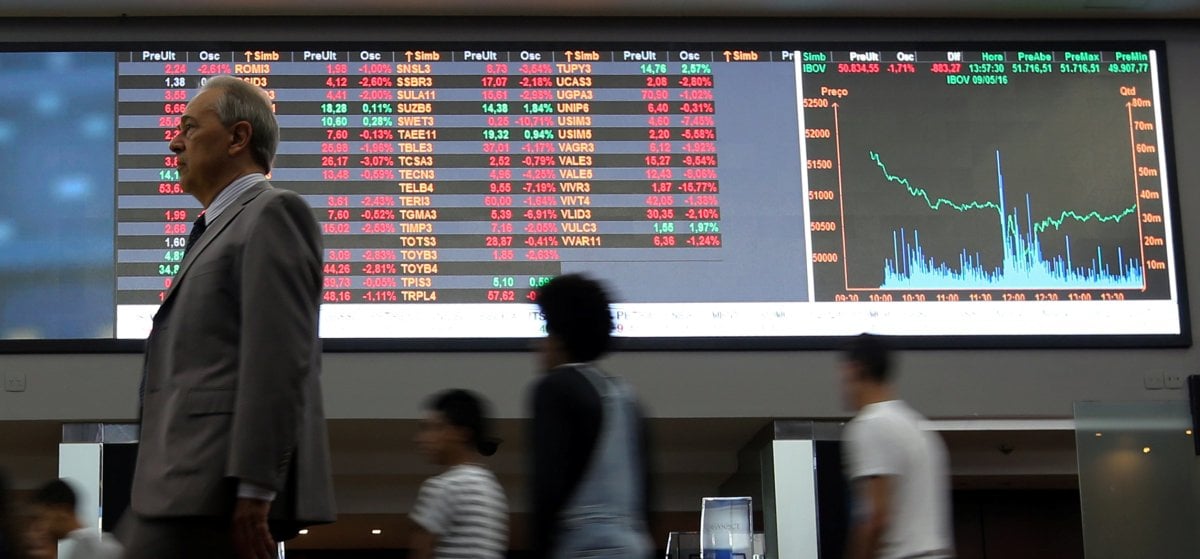
Two Form 4 filings carried by Investing.com on 12 October 2026 reported insider stock sales at American Well. The company's chief product and technology officer sold $109,746 in shares, and its chief accounting officer sold $8,489, according to the disclosure summaries posted to Investing.com's insider-trading news feed.
Those dollar values are small relative to the broader market. What makes the morning interesting is the second story sitting next to them on the same news cycle. Iran's foreign ministry spokesperson, Esmaeil Baghaei, used the same trading day to argue that the United States is the cause of instability in the Strait of Hormuz, to note that back-channel messages with Washington continue through intermediaries, and to question why the United States is reaching out to Russia for energy if it has no Hormuz problem. The pair of stories sit awkwardly on the same screen: a routine disclosure summary on one side, an open diplomatic channel on the other.
Two sales, one trading day
The American Well filings, both dated 12 October 2026 and carried by Investing.com's insider-trading feed, are the kind of summary that would normally escape notice. The chief product and technology officer disposed of $109,746 in company stock; the chief accounting officer disposed of $8,489. Monexus assessment: taken on their own, two filings in a single pre-market window from two officers with administrative remits, with dollar values differing by more than an order of magnitude, are more suggestive of administrative timing than a coordinated signal. The optical effect is real either way; the next disclosure will tell readers more than this one did.
The available source items are the two Investing.com summary headlines and do not include the underlying Form 4 text. This article has not independently verified the EDGAR document numbers, the share counts, the execution prices, or whether either sale was conducted under a pre-arranged 10b5-1 plan. The summaries state only the dollar value of the transactions, the role of the named officer, and the trading day. Any inference about whether these are scheduled plan trades or discretionary sales is, on the evidence available, analysis rather than a documented fact.
A second analytical observation sits alongside that hedge. Monexus assessment: insider trading at healthtech-adjacent names has been a watched category across 2026 because of the broader pattern of plan-driven sales written at higher valuations now converting paper gains into cash. Whether American Well's two filings sit inside or outside that pattern is a question the two summary items, on their own, do not answer. Readers who want the cleanest read should wait for the underlying EDGAR text.
The available source items do not specify American Well's listing venue, headquarter location, or business model; the body of this article therefore uses the company name only, and avoids assigning a sector label that the cited material does not support.
What Iran's foreign ministry put on the wire
Across the same trading day, Esmaeil Baghaei, the spokesperson of Iran's foreign ministry, used two channels to make a parallel argument about energy and access to the Strait of Hormuz. The Arabic-language Telegram channel Al Alam carried four items, captured between 07:38 and 07:42 UTC on 12 October 2026. The first framed the United States as "the cause of the problem in the Strait of Hormuz because of its attacks on Iran." The second, captured at 07:41 UTC, posed a counter-question: "If America has no problems in the Strait of Hormuz, why is it reaching out to Russia for energy?" The third, on the same minute, noted that "the exchange of messages between America and Iran continues through intermediaries." The fourth, at 07:42 UTC, narrowed the operational claim: "We are studying the American positions presented, and when we finish, we will announce our position to the mediators."
The fifth item, on the Tasnim-aligned Telegram channel JahanTasnim at 07:38 UTC on 12 October 2026, framed the broader civilisational pitch that Iranian diplomatic notes often accompany: "Openness to interaction and cultural authenticity are the enduring secret of Iran's civilization spanning several thousand years."
Taken together, the four Al Alam items and the JahanTasnim item present a single argument with two registers. Three of the four Al Alam items carry operational content framed through a hostile lens, naming the United States and Moscow in the same breath. The fifth item, on JahanTasnim, performs the civilisational framing that Iranian public diplomacy has historically used to remind interlocutors that Tehran reads its moves on a longer timeline than the news cycle. The available source items do not specify who the "mediators" are, what the "American positions" contain, or whether the Russia-energy framing refers to specific documented requests.
Reading the diplomatic signal
Monexus assessment: the five Telegram items, taken together, are best read as Iran signalling that it is still talking without signalling that it is ready to close. The first three Al Alam items carry operational content. The fourth names the next step. The JahanTasnim item is the rhetorical bookend that places the operational track on a longer civilisational timeline.
A counterpoint is also worth naming. Western reporting has sometimes framed Iranian foreign ministry briefings as calibrated for domestic audiences and the Arabic-speaking press rather than for the negotiating room. The available Telegram items do not specify whether the same language was carried simultaneously in English by IRNA or PressTV, and this article has not independently established whether senior Iranian figures have framed the same negotiating track differently in other venues. The messages on the wire are clear enough; their audience and weight are not.
A second counterpoint. By invoking Russia's energy leverage, Iran implicitly raises the political cost to Washington of any rapid sanctions relief that does not include an energy-side concession. That is also the framing a Russian energy partner would welcome. The available source items do not specify any Russian reaction in the same window. The structural read, on the evidence available, is that Tehran is choosing its leverage carefully; the question of whether Moscow has reciprocated publicly is one the cited material does not answer.
A third reading sits in plain view on the Telegram posts themselves. The Monexus read is that an Iranian foreign ministry briefing that names the Strait of Hormuz, the United States, and energy trade with Russia in the same hour is signalling to Washington, to Moscow, and to oil-market traders. The JahanTasnim civilisational note performs the same signalling for a different audience. The addresses exist for the diplomatic-trading complex, not only for the negotiating room.
What to watch from here
Two threads sit on the desk at the same time and they will not resolve on the same clock. The American Well filings settle into the routine Form 4 pipeline, where the next data point will be the next disclosure. The Strait of Hormuz exchange settles into a slower tempo, where the next data point is the next set of "mediator" signals, most likely carried by the same Al Alam or Tasnim channels.
Monexus analysis: the optics of pairing a small insider-trade story with an Iran-United States diplomatic postcard on the same morning understates how much of the 12 October news cycle is being spent on energy-corridor politics rather than on equity tape. The hard reading is that a spike in diplomatic traffic referencing the Strait of Hormuz and Russia is itself a trading-relevant signal. A Hormuz closure scenario is the kind of single event that can move front-month crude and tanker rates by double-digit percentages in a session. The American Well disclosures, on the evidence available, do not adjust that probability. The Tehran wire leaves the probability on the table rather than taking it off.
The honest acknowledgement is also worth writing down. The insider-trading disclosures quoted here come from Investing.com's wire summary, not from the underlying SEC filings; the available source items do not include the EDGAR document numbers for cross-reference. The diplomatic items come from two Telegram channels whose titles identify them as Al Alam (Arabic-language) and JahanTasnim (Persian-language, Tasnim-aligned). The available source material does not let this article independently weigh whether American "positions" have been formally tabled, who is carrying them, or what is being asked in return. Both stories are early-cycle, and both warrant the next filing, not just the first.
Desk note: Monexus framed this as a parallel-tape story rather than as a causal claim. The American Well sales and the Strait of Hormuz exchange sit on the same 24-hour clock by coincidence; we did not assert any mechanism connecting them. On the diplomatic side, we treated the Iranian foreign ministry's Arabic and Persian Telegram channels as primary-source framing and flagged the limits of what the available source material actually established. We did not assign American Well a sector label in the body or headline because the available source items do not specify the company's business model.
Wire provenance
This editorial synthesis draws on the following public wire/social posts:
- https://www.investing.com/news/insider-trading-news/american-well-chief-product--tech-officer-sells-109746-in-stock-93CH-4943012
- https://www.investing.com/news/insider-trading-news/american-well-chief-accounting-officer-sells-8489-in-stock-93CH-4942980
- https://t.me/alalamarabic/509926
- https://t.me/alalamarabic/509925
- https://t.me/alalamarabic/509924
- https://t.me/alalamarabic/509923
- https://t.me/JahanTasnim/239264
- https://www.investing.com/news/insider-trading-news/american-well-chief-product--tech-officer-sells-109746-in-stock-93CH-4943012
- https://www.investing.com/news/insider-trading-news/american-well-chief-accounting-officer-sells-8489-in-stock-93CH-4942980
- https://t.me/alalamarabic/509926
- https://t.me/alalamarabic/509925
- https://t.me/alalamarabic/509924
- https://t.me/alalamarabic/509923
- https://t.me/JahanTasnim/239264