Vishnevskaya at 100 and the Bolshoi's New Pipeline: Two Notes on Russian Classical Music's Power Game
Rossiya-Kultura marks the centenary of soprano Galina Vishnevskaya while a separate programme couples the Bolshoi Theatre with private business to fast-track young Russian singers. The two stories, running within a day of each other, illuminate how the country's flagship lyric institutions are managed.
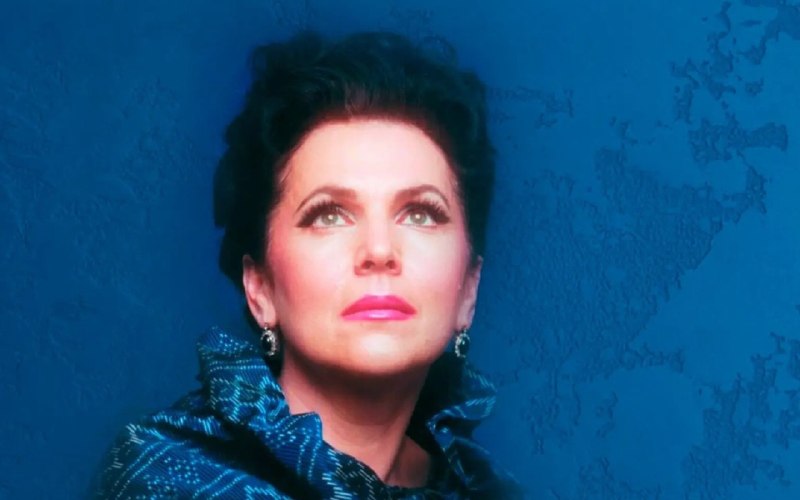
On 14 October 2026, the Rossiya-Kultura television channel begins a cycle of programmes built around the centenary of Galina Vishnevskaya, the soprano whose career spanned Bolshoi premieres and Western stages from the 1940s into the 2000s. Days earlier, on 13 October, a separate piece in the same Russian classical-music press laid out a quieter but operationally consequential story: how a partnership between private business and the Bolshoi Theatre is being used to shorten the path from conservatory to the main stage for young Russian singers.
Together the two items sketch the dual machinery of Russian classical music in 2026. The centenary is the symbolic layer: a major cultural figure repackaged for a state-aligned broadcaster. The Bolshoi-business pipeline is the operational layer: how performers are sourced, trained and slotted into a state institution that remains, sanctions and isolation notwithstanding, one of the world's most visible opera houses.
A centenary built around a Soviet-era icon
Classical Music News reported on 14 October 2026 that Rossiya-Kultura will air a series of programmes marking the 100th anniversary of Vishnevskaya's birth. The channel's framing, as relayed by the outlet, positions her as a People's Artist of the USSR and as one of the great operatic voices of the twentieth century. The announcement follows standard Russian commemorative practice: a national broadcaster curating archive material, interview segments and performance clips for a long-running on-air tribute.
The cycle matters less for any single programme than for what its existence says about cultural stewardship inside Russia. The available source items do not specify which Western houses have pared back ties with Moscow-linked institutions since 2022; the broader reorientation of Russian cultural life is a context Monexus analysis reads into the picture, not a fact the cited posts establish. What the posts do establish is the framing: Rossiya-Kultura as the platform, Vishnevskaya as the subject, and the People's Artist designation as the inherited credential. The pattern, as reported, is the usual one for Soviet-era laureates at major birthdays: archive remastering, studio concert inserts, and roundtables hosted by people who knew the artist or who carry the institutional torch.
The Bolshoi's new business partnership
The second thread, dated 13 October 2026, runs through classicalmusicnews.ru under the headline "The path to the big stage" and lays out how a private-sector partnership is being used to open up opportunities for young performers at the Bolshoi Theatre. The piece, as summarised by the Telegram channel that carried it, frames the arrangement as an answer to a perennial problem in Russian lyric training: the gap between graduating from a conservatory or academy and finding space on the main stage at a state theatre.
The article, on the evidence available, does not specify the corporate partners by name, nor does it disclose the financial mechanics. It does outline a familiar logic: external sponsorship funds training slots, masterclasses and small-stage roles that give young singers the kind of curated exposure that state budgets alone have struggled to provide at scale. For the Bolshoi, the arrangement extends its talent funnel beyond the traditional academy pipeline. For the corporate side, it offers branding inside a high-prestige cultural institution.
This is not unique to Russia. Comparable structures exist across Europe, where opera houses routinely pair with banks, energy groups and luxury brands to underwrite young artist programmes. What is distinctive is the institutional setting: the Bolshoi operates as a state theatre, a fact the cited material presents as background to the partnership rather than as a fresh claim. Any private capital therefore sits inside that larger architecture rather than substituting for it.
A state broadcaster, a state theatre, and the limits of the source material
Read together, the two items sit inside a familiar pattern: symbolic commemoration handled by state-aligned media, operational reform handled inside state institutions with private-sector help. The backdrop of post-2022 reorientation of Russian cultural life is the structural frame Monexus analysis brings to the reporting; the posts themselves supply the immediate facts (centenary cycle, business partnership) and leave the wider geopolitical context to the reader.
Classical Music News is a niche outlet, not a wire service. Its reporting on both items is essentially press-release transmission. The centenary cycle's content, guests and broadcast schedule will only become clear once Rossiya-Kultura begins airing the programmes; the Bolshoi-business partnership will only become legible once named sponsors and contract terms are visible. The available source material supports the structural reading rather than the granular one, and any extension into cancellation patterns, visa disruptions or the broader sanctions environment is analysis rather than reported fact.
Who gains, who waits
The centenary audience is obvious on the source evidence: Russian viewers of Rossiya-Kultura, the channel's classical-music demographic, and Russian-heritage listeners abroad who follow the broadcaster's online presence. The sponsorship programme's audience is narrower and more practical: young Russian singers and their teachers, plus the institutional partners hoping to attach their names to the Bolshoi brand.
Two things to watch. First, whether Rossiya-Kultura's centenary cycle eventually surfaces on a Western-facing platform, which would be one of the easier ways to test whether the soft-cultural isolation of the past four years is hardening or softening. Second, whether the Bolshoi's private partnership produces named sponsors, public contract terms, or a roster of alumni moving into main-stage roles. The available source items do not specify either, and any further reading of the partnership's significance depends on those details becoming public.
Desk note: Monexus pairs two Russian classical-music items published one day apart to make a structural point about symbolic commemoration and operational reform running in parallel. The wire coverage on both stories is thin; the analysis here leans on what the announcement does and does not say, and flags where Monexus is reading context into the posts rather than reporting it.
Wire provenance
This editorial synthesis draws on the following public wire/social posts:
- https://t.me/classicalmusicnews/38807
- https://www.classicalmusicnews.ru/anons/na-telekanale-rossiya-kultura-vyjdet-czikl-peredach-k-100-letiyu-galiny-vishnevskoj/
- https://t.me/classicalmusicnews/38796