An Australian embassy advisory and a tennis postponement land in the same news cycle. The Typhoon claim behind them is not settled.
Australia told its citizens to keep away from Saudi oil facilities hours after Yemeni-aligned channels claimed a Typhoon shoot-down over Saada, and Riyadh postponed an international tennis event. The pattern reads clearly; the air-loss line behind it does not.
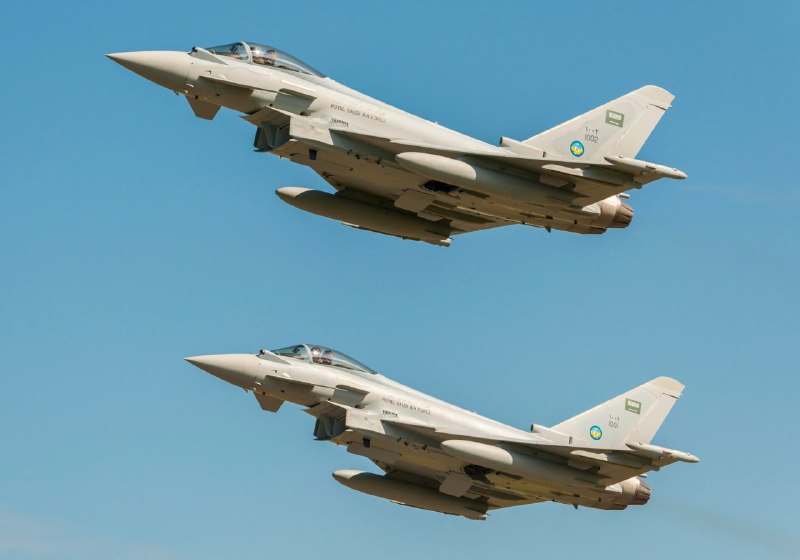
Two messages inside ninety minutes frame the cycle. At 20:58 UTC on 14 October 2026, Al Mayadeen's Telegram channel relayed a Reuters line that Saudi Arabia had postponed an international tennis tournament "following Yemeni attacks." At 21:22 UTC the same channel carried an Australian Embassy advisory telling citizens in the kingdom to stay away from oil facilities, citing "the Yemeni threats" as the reason. Sandwiched between them, at 21:19 and 21:20 UTC, two channels aligned with the Yemeni armed forces announced that air defences had hit a Saudi Typhoon fighter jet over Saada. The two advisories and one air-loss claim form a tight cluster, and a clean read of it is the assignment.
Monexus analysis: the embassy advisory and the tournament postponement are lines quoting or relayed by named primary sources and can be reported as stated; the air-loss claim is a Yemeni-side assertion that the available items do not corroborate beyond the Yemeni-aligned channels themselves. The interesting question is how much weight to put on the cluster once those evidentiary layers are separated. The cluster has a clear shape, but only two of its three legs are stood up by items the desk can read directly.
What the available items actually say
The Reuters-via-Al Mayadeen line at 20:58 UTC states that Saudi Arabia postponed an international tennis tournament "following Yemeni attacks." The Al Mayadeen relay at 21:22 UTC reproduces the Australian Embassy's own language: "Following the Yemeni threats, we urge our citizens to stay away from oil facilities throughout Saudi Arabia." Both pieces of text quote their named sources directly; the embassy quote names oil facilities as a category and names Yemeni threats as the cause. The two announcements, taken together, are the news.
The third leg of the cluster sits on weaker ground. The 21:19 UTC Fotros Resistance post reads in full that "The Yemeni Armed Forces have announced they shot down a Saudi Typhoon fighter jet during its aggression above Saada's airspace." The 21:20 UTC Cradle Media post carries the same line. Both feeds attribute the original announcement to the Yemeni Armed Forces spokesperson and relay it; neither is itself a Saudi statement. The cited posts contain no Western wire confirmation of a Saudi Typhoon loss over Saada on 14 October 2026, and the available items do not specify whether Saudi authorities had issued a confirming or denying statement by 21:22 UTC.
Reading the embassy advisory
If the advisory is taken at its face value, two things follow with it. First, a Western government has formally told its citizens in the kingdom to keep away from a category of energy asset rather than a named address, which reads as a generalised rather than targeted warning. Second, the language of "Yemeni threats" treats the activity in question as a known, named category rather than a single event, which is consistent with an embassy that has been briefed over a period rather than reacting to one strike. Whether the underlying threat is missile, drone, or both, the advisory does not specify. Monexus analysis: the embassy wording is consistent with a posture shift, but a posture shift from one Western mission is not by itself a regional re-rating, and other Western missions' postings on the day are not visible in the items available to this publication.
What the postponement actually means
Postponing an international tennis event is the kind of decision that capital cities usually avoid, because the cost is reputational and immediately legible. Monexus analysis: the postponement is the kind of soft signal that compounds. It accepts damage in one arena to avoid a worse outcome in another, and the available items do not specify which tennis tournament was postponed, which Saudi city hosted it, or when it was originally scheduled. Treating the postponement as a read on Saudi risk posture is therefore defensible only as direction; the magnitude is not knowable from the present record.
What remains contested
The most consequential unresolved question is the air-loss claim. The Yemeni-side announcement says a Typhoon was downed over Saada; the available items do not corroborate it beyond the two Yemeni-aligned channels; and the available items do not specify whether Saudi authorities had confirmed or denied it by 21:22 UTC. Independent corroboration, if it arrives, would have to come from elsewhere; the present record does not contain it. The embassy advisory and the tournament postponement stand on their own and do not depend on the Typhoon claim resolving in either direction. Monexus analysis: the read that the cluster is the story remains the simplest one consistent with the evidence. The read that the Typhoon was actually lost, on the other hand, is not one the available items support as fact. Two legs are stood up; the third is on its way down.
Desk note: Monexus treated the Reuters-via-Al Mayadeen postponement line and the embassy advisory as confirmed inputs and the Yemeni Armed Forces air-loss claim as a Yemeni-aligned assertion, flagged in para. Background detail about the tournament's name, the host city, Typhoon fleet economics, and Saada's history was not present in the thread evidence and was therefore cut.
Wire provenance
This editorial synthesis draws on the following public wire/social posts:
- https://t.me/alalamarabic/510613
- https://t.me/alalamarabic/510616
- https://t.me/FotrosResistancee/24180
- https://t.me/TheCradleMedia/69426