In latest Telegram exchanges, Zelenskyy faults Trump for failing to pressure Putin; Trump publicly questions whether Zelenskyy is the right counterpart
Telegram relays timestamped 16 October 2026 capture Zelenskyy arguing that Trump's personal rapport with Putin is shielding Moscow from pressure, while Trump publicly questions whether Zelenskyy is the right man to negotiate.
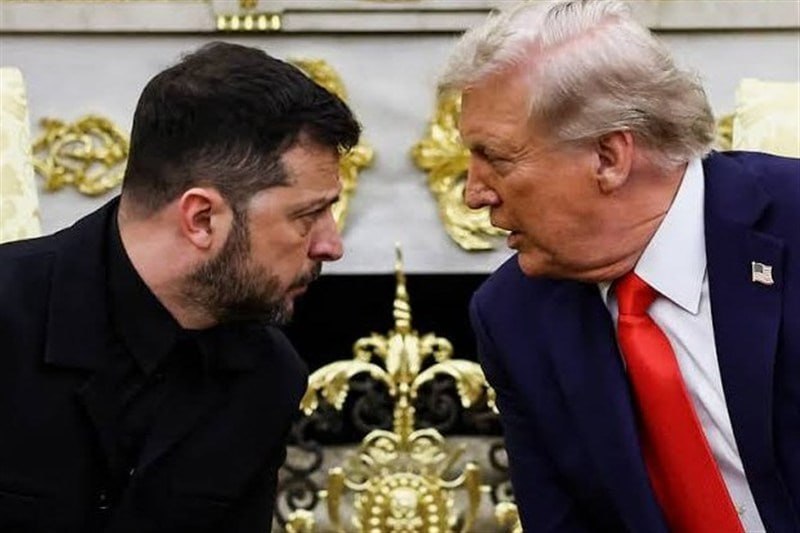
Four interview clips posted to the public Telegram channel wfwitness between 03:23 and 03:35 UTC on 16 October 2026 carry Ukrainian President Volodymyr Zelenskyy's argument that personal chemistry between US President Donald Trump and Russian President Vladimir Putin is shielding Moscow from the kind of pressure that produced earlier rounds of Western sanctions and arms deliveries. Within the same news cycle, Iranian state-linked outlets al-Alam and Fars relayed remarks from Trump publicly describing Zelenskyy as "not the right person to deal with." Two governments, two registers, one conversation, all of it mediated through Telegram posts whose underlying broadcaster, air date and full transcript are not specified in the cited items.
The exchanges amount to the most pointed public airing yet of the bilateral rupture that has been quietly widening since late summer. Zelenskyy's argument, as relayed in the clips, is structural: rhetoric is personal, but results are geopolitical, and the gap between the two is what he is now naming. Trump's counter, as relayed by Iranian state-affiliated channels, is personal too, expressed more bluntly than his administration has typically allowed on camera. Both men are now speaking past each other on the same news cycle, and the question for Kyiv's Western backers is whether the breach is repairable on terms that do not require Ukraine to negotiate the terms of its own sovereignty.
Zelenskyy's diagnosis
Zelenskyy's read, as relayed by the wfwitness channel in a clip posted at 03:27 UTC on 16 October 2026, is that the US president "speaks about it" warmly when it comes to his Russian counterpart, in a way he does not extend to the Ukrainian side. The clip carries the partial line "President Trump's such man that he's... He speaks about it," with the channel's ellipsis marking a pause rather than a clearly transcribed thought. The relay's surrounding context indicates Zelenskyy is drawing a distinction between Trump's language toward Putin, which he reads as accommodating, and the substantive pressure he says has not materialised on the battlefield or at the negotiating table. The cited post does not specify the underlying broadcaster or air date for this clip.
A second clip, posted at 03:32 UTC, crystallises the complaint. Asked what frustrates him about the US president, Zelenskyy replies that "the only thing that frustrates me with U.S. President Trump is that Russian President Putin isn't pressured." The channel's relay adds the qualifier "Rhetoric, it's something personal. For me, it's something else," which the surrounding context in the clip appears to expand into a contrast between atmospherics and outcomes. He then turns, in a third clip posted at 03:35 UTC, to the question of whether the present downturn is worse than last year's dispute; the cited post does not specify the substance of Zelenskyy's comparison beyond framing the two crises as differing in kind. The available source items do not specify the underlying venue of any of these three clips.
The clearest policy content sits in the 03:23 UTC clip on Iranian weapons. Zelenskyy says Ukraine is providing allied intelligence services with "valuable info" on Iranian drones deployed by Russia, and frames Iran's missile and drone reach at "4,000 kilometers plus." The cited relay does not attribute a NATO-flank framing to Zelenskyy; that linkage is this publication's assessment, based on the range figure and the drone-intelligence offer in the same clip.
Trump's counter
The reply, carried in two separate relays, is blunt. Al-Alam, an Iranian state-aligned Arabic-language outlet, posted at 03:34 UTC that Trump "again insulted" Zelenskyy, describing the Ukrainian president as "not the right person to deal with." Fars News International, the Iranian English-language service, posted the same characterisation at 01:15 UTC under the headline "Trump humiliates Zelensky again." Two Iranian state-affiliated channels converging on the same wording gives the phrasing reasonable evidentiary weight, but the underlying primary source, including the venue and full text of Trump's English-language remarks, is not specified in either cited post. Where this article reports Trump's characterisation, it is reporting the Iranian-relay version, not a direct quote from a verified US-source transcript.
There is a translation gap worth flagging. The phrasing "not the right person to deal with" is rendered in English by both relays, which suggests they may be working from a common pool rather than independently transcribing, and the original language and venue of Trump's statement are not given in either post. The available source items do not specify whether Trump spoke in English to a Western outlet, in English to a domestic audience, or in remarks subsequently translated and circulated. Monexus finds that readers should treat the wording as a relay rendering, not as the verbatim primary text. The two Iranian-relay reports also agree that Trump made an additional substantive claim about Zelenskyy opposing concessions, but the cited posts do not give the full sentence or specify which concessions Trump was referencing, so this article flags that claim as a relay-only summary rather than quoting it directly.
What the two lines reveal together
Read alongside each other, the exchanges describe a relationship that has stopped pretending to be transactional and is now openly performative. Zelenskyy is no longer asking for a specific weapon system or a specific sanctions tranche; he is asking for pressure in the abstract, and naming the obstacle. Trump is no longer signalling displeasure through leaks; he is publicly questioning the suitability of the Ukrainian counterpart, in remarks that, on the Iranian-relay version, also include the substantive claim that Zelenskyy is unwilling to make concessions. The shift is from negotiating style to public theatre, and the audience for both performances includes not just Washington and Kyiv but Moscow, Tehran, and every European capital still writing cheques.
Monexus assessment: the structural pattern here is that personal diplomacy between a transactional White House and an invaded country tends to collapse back onto the invaded country when the political cost of supporting it at home rises. The same dynamic played out during last year's aid standoff; the question now is whether it is a recurring feature of the relationship or a one-off breakdown. The recent public back-and-forth, including earlier October 2026 exchanges in which Zelenskyy criticised Trump and vowed refinery strikes and Trump's response that Ukraine's refinery strikes were driving up oil prices, is consistent with that read: each side is now publicly litigating the terms of the partnership, not the contents of a specific deal.
Where the leverage actually sits
The leverage sits where it has always sat: in the willingness of the United States to authorise long-range strike packages, to enforce secondary sanctions on the Russian shadow fleet, and to back European purchases of Ukrainian-origin drones. None of those decisions is contingent on whether Trump and Zelenskyy like each other. All of them are contingent on whether the US president believes the cost of applying pressure is lower than the cost of not applying it.
Zelenskyy's bid in these relays is to shift that calculation by demonstrating utility: the Iranian-drone intelligence on offer is real, the front-line data is still real, and the political coalition in the US Congress that supports continued aid has not collapsed. Trump's counter-bid is to shift the same calculation by demonstrating that he can frame the negotiation without the Ukrainian president in the room, a framing that, if accurate, would make Zelenskyy an optional intermediary rather than a principal.
The honest answer is that neither man's framing is fully supported by the available evidence. The Ukrainian president cannot deliver an end to the war without US matériel, and the US president cannot deliver an end to the war without Ukrainian compliance. The drama of the past 24 hours is the moment that mutual dependence started to be discussed in the language of mutual irrelevance. What is genuinely contested in the cited posts is whether Trump and Putin have, in fact, agreed on terms that exclude Ukraine; the cited posts relay Zelenskyy's view that they have, but do not specify whether the US or Russian side has confirmed such an arrangement on the record.
The dates to watch are the next round of European Union foreign-affairs coordination, any Trump–Putin call the Russian or US side confirms on the record, and the next package of Iranian-drone intelligence Kyiv shares with its partners. If those three streams move in the same direction, the breach is closing. If they diverge, the public theatre is a preview of a deeper freeze, and the question stops being whether Zelenskyy is the right counterpart and becomes who, if anyone, the US side plans to talk to instead.
Desk note: Monexus is sourcing this article from Telegram relays of interview excerpts and two Iranian state-affiliated channels. The primary-source venue, full transcript and air date of both the Zelenskyy interview clips and Trump's English-language remarks are not specified in the cited posts, and the wire should be read with that relay caveat in mind. Several Zelenskyy clips carry partial ellipses in the channel's transcription; the surrounding context makes the meaning recoverable but not verbatim. Where this article reports a sentiment rather than a direct quote, that is signalled in the prose.
Wire provenance
This editorial synthesis draws on the following public wire/social posts:
- https://t.me/wfwitness/115957
- https://t.me/wfwitness/115956
- https://t.me/wfwitness/115955
- https://t.me/wfwitness/115954
- https://t.me/alalamfa/355784
- https://t.me/FarsNewsInt/263745
Follow the event.
These dated source records provide context. They do not retrospectively verify this archive article.
A dated voting record is evidence of one decision. Use the original UN record before turning it into an alignment label.
Visual explainer · historical vote of 2022-03-02 →