Bank of Japan to hold rates, signal further hikes, while shoppers feel the squeeze
The Bank of Japan's headline on 30 October 2026 pairs a hold with a signal of further hikes. The shopper, freight and drone items in the same feed suggest the cost of that choice will not stay inside the central bank's models.
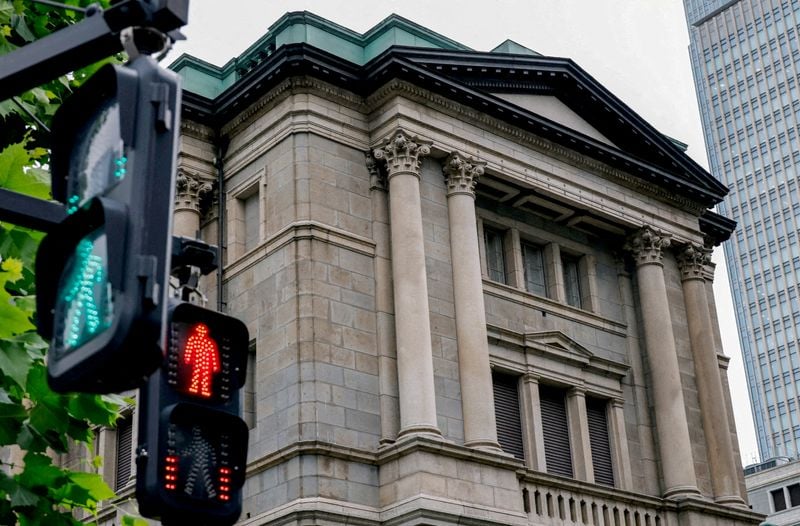
Time-stamped 00:00 UTC on 30 October 2026, the Investing.com headline read “Bank of Japan to hold rates, signal further hikes.” It is a sentence central bankers prefer to write. The rate stays put, and the direction of travel is announced in advance. Six minutes earlier in the same feed, a second item made a narrower and less comfortable point: Japan's shoppers are a worry for convenience stores and, by extension, for the economy. Read side by side, the two headlines describe a monetary authority leaning toward tighter money and a consumer base with less room to absorb it.
Monexus analysis: the rate signal, the convenience-store worry, a US freight data point and a Japanese rule change for drones are not four separate stories. They are four readings of one cost structure, in which money is getting dearer, moving goods is getting more expensive, and the state is turning to technology to make labour and logistics stretch further. The question is who absorbs the difference when the central bank's preferred tool works through the cheapest and most frequent purchases in the economy. The sources here are headlines and short summaries, and the analysis below is written with that limit in view.
A hold with a forward guide
A hold is the cautious option, and the headline frames it as only the first half of a sentence. The second half, signal further hikes, is where the decision sits. Businesses setting prices and wage negotiators reading the outlook respond to forward guidance at least as closely as they respond to the day's rate. A central bank that leaves rates unchanged while promising more tightening is effectively setting expectations for its next decisions.
The thread carries the headline of the Investing.com item but not its full text, so the bank's stated reasons for the hold, and the conditions it attaches to any further move, are not established here. What the headline does establish is narrow: the institution has chosen to pause the action and keep the direction visible.
The strongest case for that approach is that a pause preserves options. A central bank that moves in measured steps can watch incoming data, avoid overshooting, and protect its credibility by signalling rather than surprising markets. The weaker case is that a signal of further tightening, delivered while households are under visible pressure, shifts the risk onto the people least able to carry it. Both readings can hold at once. The difference lies in the pace of future hikes and the state of household finances, and the thread offers evidence on the second only through the shopper item.
The shopper at the end of the chain
Convenience stores are where monetary policy becomes an everyday experience. They sell small baskets, depend on frequent footfall, and tend to register first when a household decides to trade a purchase down or skip one. The Investing.com item, summarised in the thread under the headline “Japan's beleaguered shoppers are a worry for convenience stores and the economy,” draws exactly that link. Its importance lies in the chain it describes. A squeezed shopper weakens the store, and a weaker store is a weaker node in local economies where it employs people and serves neighbourhoods with few alternatives.
The thread does not specify which measure of shopper strain the report relies on, how large the effect on store sales is, or whether the pressure is concentrated by age, region or income. Those details would decide whether the worry is a cyclical wobble or a structural shift in household spending. The counter-read deserves weight. Retailers adjust, reshuffling shelves toward cheaper lines, smaller packs and private-label products, and a shopper trading down is still a shopper. A store that keeps customers on a smaller basket may be showing resilience rather than fragility. The gap between those two readings is measurable, and this thread does not measure it.
The structural point is simpler. Tightening works by making borrowing and spending dearer across the economy, and it reaches households through the price of what they buy most often. An explicitly directional rate path gives a household a reason to plan for more of the same. For a central bank trying to keep inflation expectations anchored, that is a rational outcome. For a shopper deciding where the next yen goes, it is a difficult one.
Costs that travel, and a machine that flies
Across the Pacific, a separate signal points the same way. Investing.com reports, under the headline “US shipper costs hit five-year high, even as demand stalls, US Bank data shows,” that shipper costs have reached a five-year high while demand stalls. Those two facts should not sit comfortably together. When volumes are rising, freight increases can be passed on to customers. When volumes stall and costs still climb, the squeeze falls on margins, and the shipper either absorbs the cost or cuts capacity. The thread does not explain the cause of the cost increase, and it would be a mistake to attribute it to any single factor without the underlying series. What it does establish is the combination itself: higher costs alongside softer demand.
Japan's response in the same feed is regulatory. A Nikkei Asia post on Telegram, mirrored on a second channel, reports that Japanese companies will be able to expand drone services after a cap on simultaneous operations by a single pilot was scrapped. The headline frames the change as preparation for commercial drone flocks. The logic is operational: one pilot supervising many machines, a model that lowers the labour cost of each delivery or inspection. Read against rising freight costs, the argument is straightforward. If moving goods is getting expensive, a state that wants logistics to stay competitive has reason to make each unit of work cheaper to perform.
The concern in its strongest form is that the operating limit existed for a reason, and the thread does not say what safety, oversight or insurance conditions accompany its removal. A pilot supervising several aircraft performs a different task from one supervising a single machine. Monexus analysis: the rule change reads as a productivity bet made by the regulator, and the burden of proof now sits with the safety record that follows the announcement, not with the announcement itself.
The three signals share a shape. Monetary policy is restraining demand, freight costs are pushing up the price of moving things, and the state is loosening operational rules so that firms can raise output with fewer people per task. Whether that combination works depends on whether productivity gains arrive before the household squeeze hardens. The optimistic case is that automation can lower unit costs faster than prices rise. The sources in this thread do not measure that, and this desk has not tested it.
What to watch next
The desk's expectation, which is a forecast and not a reader instruction, is that the next readings on Japanese shopper spending and convenience-store sales will be interpreted against the Bank of Japan's guidance. If footfall holds, the case for a steady hiking path strengthens. If it weakens while the bank keeps signalling tighter money, the debate moves from whether to tighten toward how much damage the tightening does along the way. Savers and institutions that earn more from higher rates stand to gain from that path. Small retailers and households that rely on frequent, low-value purchases carry the most exposure in the sources described here, and the thread does not quantify that exposure.
Nuance matters. Every claim in this piece rests on a headline or a short summary carried in a wire or Telegram feed. The thread does not include the full text of the bank's decision, the convenience-store data, the US Bank series, or the Nikkei article on drone operations. This publication has not reconciled those items against primary documents, and readers should treat the analysis as a reading of the signals rather than a measurement of them.
The contradiction left standing is the one a rate headline cannot resolve on its own. A central bank wants households to keep spending and firms to keep investing, while the freight data and the shopper worry describe an economy where both are getting harder. Between a signalled hike and a flock of drones, someone has to carry the difference, and the feed does not yet say who.
Desk note: Wire-level coverage of this feed reports the rate signal, the shopper worry and the freight and drone items as separate stories; this article reads them together as one cost picture and labels that reading as analysis.
Wire provenance
This editorial synthesis draws on the following public wire/social posts:
- https://www.investing.com/news/economy-news/bank-of-japan-to-hold-rates-signal-further-hikes-4985276
- https://www.investing.com/news/stock-market-news/japans-beleaguered-shoppers-are-a-worry-for-convenience-stores-and-the-economy-4985612
- https://t.me/nikkeiasia/22384
- https://t.me/NikkeiAsia/22384
- https://www.investing.com/news/economy-news/us-shipper-costs-hit-fiveyear-high-even-as-demand-stalls-us-bank-data-shows-4984897