Dakar opens the Youth Olympics, which Africanews calls the first Olympic event in Africa
About 2,700 athletes aged 14 to 17 will compete across Dakar, Diamniadio and Saly through 13 November, in an event Africanews describes as the first Olympic event held in Africa.
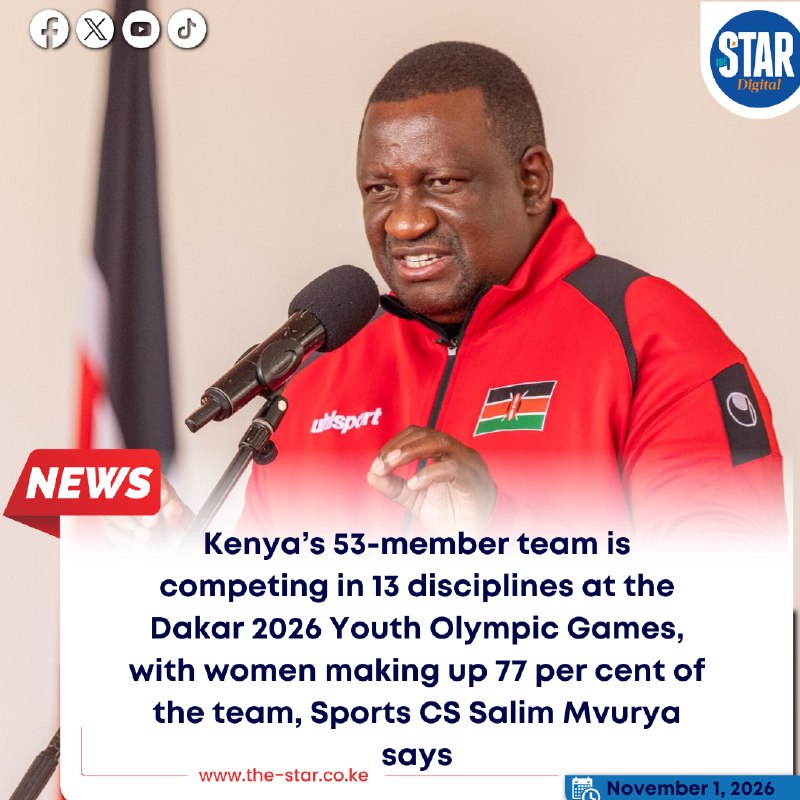
On Saturday, 31 October 2026, the Youth Olympic Games opened in Senegal, an event Africanews describes as the first Olympic event held in Africa. About 2,700 athletes aged 14 to 17 will compete until 13 November across three linked locations: the capital, Dakar, the nearby city of Diamniadio and the beach resort of Saly. In the two days before the opening, International Olympic Committee President Kirsty Coventry toured the Youth Olympic Village in Dakar. Kenya's Sports Cabinet Secretary, Salim Mvurya, has said his country is fielding 53 athletes in 13 disciplines, with women making up 77 per cent of the team. The numbers are simple. The meaning attached to them is not.
Sport is rarely only sport when a continent hosts something for the first time. The Dakar Games will be judged as an athletic festival, and they should be, but the framing around them invites a second reading. Africanews reports that the continent is seeking a bigger role in international sports competitions, and a first Olympic event on African soil is the most visible way to make that case. This publication's view is that the symbolism is real while the delivery record has yet to be written. The supplied items describe the opening, the venues and the delegations. They do not describe what the Games will leave behind.
A first, counted in athletes and venues
The immediate facts are logistical, and they are not small. The competition runs from the opening on 31 October to 13 November, spread across Dakar, Diamniadio and Saly rather than gathered on a single campus. Africanews's pre-opening coverage puts the field at about 2,700 athletes, all aged 14 to 17, which makes this a full competitive programme rather than a ceremonial gesture. Running one event across three locations asks more of an organiser than running it in one place. Athletes, officials and spectators have to move between the capital, a satellite city and a coastal resort, and the supplied items do not specify how that movement is organised.
The IOC's presence was visible before the first competition began. Africanews reported on 30 October 2026 that Coventry had toured the Youth Olympic Village in Dakar, just two days before the start of the Games. Monexus analysis: a visit of that kind signals to the host and the wider sporting world that the movement's leadership is watching the first event of its kind on the continent closely. That attention helps a first-time host, but it also means the event will be read against the expectations of the organisation doing the watching.
Kenya offers a second data point. Mvurya's remarks, relayed by The Star's Telegram channel, put the Kenyan delegation at 53 athletes across 13 disciplines, with women at 77 per cent of that team. The figure is a ministerial statement passed along by a news channel, not a full delegation list, and the post does not indicate how typical the ratio is among other national teams. The post foregrounds women's share of the squad, a choice of emphasis rather than a measure of performance. Whether that ratio holds elsewhere is a question the supplied items do not answer.
Why the word first carries weight
The strongest case for treating Dakar as a turning point runs as follows. Africanews frames the moment as the continent seeking a larger role in international sport, and the opening itself as the first Olympic event held in Africa. Monexus analysis: placing an Olympic-branded competition on African soil is a claim about who gets to stage the spectacle, and claims of that kind are usually judged by what follows the opening night.
The sceptic's reading is narrower and deserves the same seriousness. A first is a fact about location, not governance. The word describes where the event is held, not who sets the rules, controls the revenue or decides how the venues will be used later, and the supplied items do not say how those responsibilities are divided. Mega-events can make a host visible without changing the terms on which that host takes part. The question for Senegal is whether the Games do more than that, and the reporting available to this desk describes plans and openings rather than outcomes.
The word historic also needs careful handling. Africanews's 30 October headline describes the Dakar 2026 Youth Olympics as historic. Monexus analysis: that is the outlet's characterisation, not a measured result, and readers should weigh it as framing until the Games have a record to judge.
Our assessment of a symbol still awaiting delivery
Our assessment is that the Dakar Games should be read as a symbol with a delivery test attached. The symbol is clear. The first Olympic event held in Africa is being staged in Senegal, the IOC's president has toured the Youth Olympic Village, and national delegations such as Kenya's have put figures on the record. The test is less visible. The supplied items describe the opening, the athlete count and the geography of the competition. They do not describe the transport plans or what the three venue clusters will be used for once 13 November has passed.
Those gaps matter because the value of a youth Games is usually settled after the closing ceremony. A host that can show working venues and athletes who leave with a sense of having been part of something larger has a stronger claim than one that can point only to a successful opening night. Monexus analysis: the available reporting does not show which outcome is more likely in Dakar, and this publication has not established that.
Cost and funding are the sharpest open question, and the source set behind this article does not answer it. The supplied items do not specify the cost of the Games or how they are financed. Wider searches on the event also returned budget-related headlines, including one describing a budget dispute and another comparing city investment with a larger figure. This article has not verified that material against its original reporting and does not rely on it for any claim. Readers looking for the funding picture should treat those leads as unchecked until the underlying reporting is read in full.
What remains uncertain deserves plain statement. The Africanews material available to this desk consists of headline and summary text distributed through its RSS feed, not full articles. The Kenyan delegation figures come from a Telegram relay of a ministerial remark. The pre-opening reporting describes plans and expectations. Confidence is therefore high on the basic facts of date, city, venue spread and athlete age range, and lower on any claim about how the Games are performing or will perform.
Stakes past the closing ceremony
For Senegal, the immediate beneficiaries are the host government, the organising structure and the young athletes who will compete on home ground at an event Africanews describes as the first Olympic event held in Africa. The downside falls on the same parties if logistics across three sites fail in public view. For the wider argument, the stake is credibility. If the Games run smoothly across Dakar, Diamniadio and Saly, the first-in-Africa claim becomes a precedent that other African host countries can point to. If they do not, the same event becomes a footnote in a story about the limits of hosting.
The time horizon is short, but the test is longer. The closing day on 13 November 2026 is the first checkpoint, when the question shifts from whether the Games happen to how they are remembered. The second checkpoint is the period after the crowds leave, when the venues either stay in use or go quiet. The desk's expectation is that closing coverage will lean on the symbolism, and that the harder reporting on budgets and venue use will come later. That is a forecast, not a finding.
The continent's bid for a bigger role in sport will not be settled by the flame. It will be settled by what the three venue clusters are doing in the weeks after 13 November, and by whether the reporting on that question keeps pace with the reporting on the opening.
Desk note: Wire coverage of the Dakar Games leans on the symbolism of a first, and this article follows that thread while holding the operational and cost questions to the same standard; where the supplied items are silent on costs and legacy, we say so rather than fill the gap.
Wire provenance
This editorial synthesis draws on the following public wire/social posts:
- http://www.africanews.com/2026/11/01/youth-olympics-open-in-senegal-marking-the-first-olympic-event-in-africa/
- https://t.me/TheStarKenya/40560
- http://www.africanews.com/2026/10/31/senegal-set-for-opening-ceremony-of-youth-olympic-games/
- http://www.africanews.com/2026/10/30/senegal-gears-up-for-a-historic-dakar-2026-youth-olympics/