One morning in Khan Younis, three tolls and a chain of Telegram posts
Telegram posts put the toll from a morning of strikes in Al-Mawasi and Khan Younis at two, then three, then five on 1 November 2026, and the supplied thread does not include an independent count or an Israeli military account.
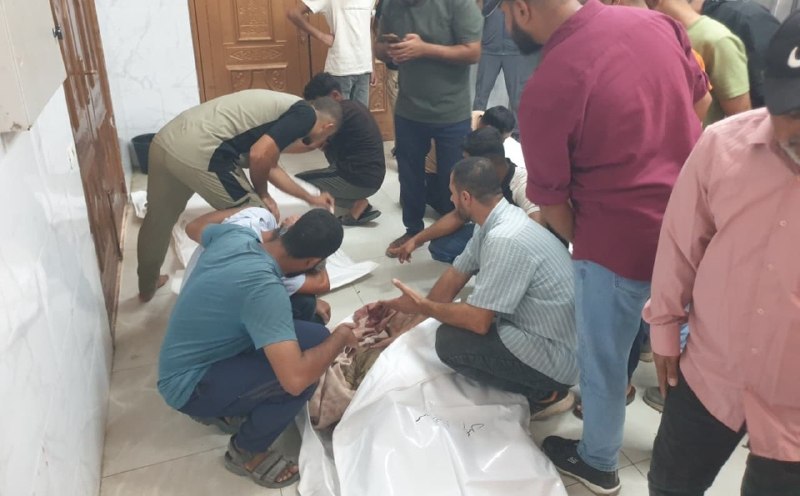
At 09:37 UTC on 1 November 2026, the Gaza Now Telegram channel reported that Israeli warplanes had launched an airstrike near Al-Sumoud Junction in the Al-Mawasi area, west of Khan Younis, in the southern Gaza Strip. Ten minutes later the same channel put the toll at two Palestinians killed and several others injured. By 10:00 UTC its update had raised the figure to five. At 10:04 UTC a post carrying Al Jazeera's name gave the same five for a drone strike on Al-Mawasi, and by 10:52 UTC Gaza Now was still reporting five dead, now from a strike on a site it named as Al-Manga Land. Two, then three, then five, with the place names shifting along the way. Every item in the supplied thread is a Telegram relay, and the order in which those relays arrived is part of the story.
This piece treats the morning's strikes as a case study in how a casualty record gets assembled when the material in hand is a chain of Telegram posts. The thread contains no independent field report, no hospital register, no UN or Red Cross count and no Israeli military account. What it does contain is a Gaza Interior Ministry statement describing police as the targets, a broadcaster's figure relayed mid-morning, and a channel's own updates that change as the hours pass. Monexus's view is that the reported harm is serious and deserves human weight, and that the numbers should be read as claims in progress until a second class of source confirms them.
The count moved faster than the checking
The first post in the thread names a location rather than a toll: an airstrike near Al-Sumoud Junction, in an area the post places west of Khan Younis. The 09:47 UTC update from the same channel gave the first casualty figure, two Palestinians killed and several others injured. That update described the strike as one targeting a group of civilians near Al-Manga Land in the Al-Mawasi area, so the location changed within ten minutes. At 09:56 UTC the channel reported three killed and several others critically injured in a strike on Al-Manga Land, this time placed in the Al-Muharrarat area of Khan Younis. The place labels do not match, and the thread does not explain why.
The 10:00 UTC repeat of the three-killed item carried an update stating that the death toll had risen to five Palestinians, following an attack the update described as targeting a group of civilians in the Al-Mawasi area. At 10:04 UTC a post carrying Al Jazeera's name reported five people killed and several wounded in an Israeli drone strike on Al-Mawasi, west of Khan Younis. Half an hour later the Gaza Interior Ministry statement reached the thread through two further channels, Al Alam's Arabic-language feed at 10:33 UTC and The Cradle's Telegram channel at 10:36 UTC. The last figure in the thread, posted by Gaza Now at 10:52 UTC, puts the toll from the Al-Manga Land strike in the Al-Mawasi area at five, with several others injured.
The thread does not establish whether these posts describe one strike, several strikes, or a single event reported under shifting locations. The Al-Muharrarat and Al-Mawasi labels for the Al-Manga Land strike are not reconciled. The figure of five appears in three posts, two from Gaza Now and one relaying an Al Jazeera attribution. A number repeated across channels looks like corroboration. In this case the thread cannot show that the three posts drew on separate observations.
A ministry's account of police targets
The Interior Ministry claim is the most consequential line in the thread and the least independently checkable. Two relays, Al Alam's and The Cradle's, carry the same framing: that Israeli warplanes targeted several police officers and personnel while they were carrying out their duties in the Al-Mawasi area of Khan Yunis, with reports of dead and wounded. That categorisation shapes how the strikes will be assessed. A strike that killed civilians and a strike that killed officers on duty will be argued about by different parties for different reasons, and the difference matters to any later judgment about targeting. The source items do not specify the names, ranks or roles of the people killed or injured, or whether each of them was on duty at the time.
The thread also carries a disagreement it does not resolve. Two Gaza Now updates, at 09:47 UTC and 10:00 UTC, describe the people hit as a group of civilians. The ministry describes police and personnel. Both descriptions sit in the same morning's record, and neither is accompanied in the thread by a list of names or a statement from the people who were struck.
The ministry is a Gaza government body, and its releases are statements issued by one of the parties in this conflict. That does not make them false. It means they are the opening line of an account rather than its verification. Monexus does not treat the police framing as established, and does not dismiss it either. Its strongest form is plain: people were killed in a strike that the ministry says was aimed at its personnel, and the human cost is the same whichever category a later investigation assigns them.
The Israeli side of the record is absent from the thread. The available source items do not specify an Israeli military statement on these strikes, the intended targets, or the reasoning behind them. Israeli security concerns in southern Gaza are legitimate and deserve a first-order hearing, and a reader should be able to set the military's account beside the ministry's before forming a view on who was hit and why. This article cannot do that from the thread alone. The sources in hand agree that people were killed. They differ on the numbers, on the place names, and on whether the dead were civilians or police.
The tally as an assessment of a relay chain
Monexus analysis: every number in this morning's record traces to a Telegram post, and most of those posts trace back to another post. The Gaza Now channel carries the earliest and most frequent updates. The Al Jazeera figure reaches the thread through a relay account. The ministry statement arrives through two further channels. None of the links in that chain is shown in the thread as a field observer with a verifiable location, and none is shown as a body that publishes an audited casualty count.
In conflict coverage, the first account in circulation often sets the vocabulary the rest of the coverage adopts. Coverage routinely defers to the language of official spokespeople, and the word police in a ministry statement can migrate into a headline before anyone has seen a list of names. Reporting that treats the ministry's framing as neutral description, rather than one side's account, quietly shifts the work of scepticism onto the reader. The job of this article is to name the gap rather than fill it with the most authoritative-sounding line available.
The same logic runs the other way. A channel that revises its figure upward is not necessarily wrong, and a ministry that gives a precise category is not necessarily lying. The problem is sequencing. A reader who sees five in one post and a ministry statement in another has no way, from the thread alone, to tell whether they are looking at two confirmations or one claim passed along twice.
What would settle the count
The desk's expectation is that the toll will be revised as hospitals, the Interior Ministry and humanitarian agencies publish their own figures. None of those records appears in the supplied thread yet. Three things would change how this morning reads. The first is a count from a UN agency or the Red Cross for the Al-Mawasi and Khan Younis area that separates the dead by location and by time. The second is an Israeli military statement that names the intended targets and the basis for each strike. The third is a published account of the police personnel the ministry says were hit, including their status at the time of the strikes.
The stakes are concrete. For the people of Al-Mawasi and the families of those killed and injured, the difference between a strike on police and a strike on civilians is the difference between a grievance and a legal question, and both will be argued in the coming days whatever the thread shows. For readers trying to understand the conflict, the risk is quieter. A morning of contested numbers hardens into a settled narrative if the first version is repeated often enough, and whichever post arrives first tends to frame the rest.
What the thread supports is narrow. It supports that strikes were reported in the Al-Mawasi area and at the Al-Manga Land location on 1 November 2026, that the Gaza Interior Ministry said police personnel were targeted, that two Gaza Now updates described the victims as civilians, and that the reported toll moved from two to five across the morning. It does not establish the identities of the dead, the military rationale, or whether the figures in different posts refer to the same events.
The first number in the thread was two. The number that held the feed by 10:52 UTC was five. The figure that will matter is the one a second source can sign.
Desk note: Monexus reads the morning's posts in the order they appeared rather than leading with the highest figure, labels the ministry's account as a ministry claim, and treats the Telegram relay chain itself as part of the reporting.
Wire provenance
This editorial synthesis draws on the following public wire/social posts:
- https://t.me/gazaalanpa/26923
- https://t.me/gazaalanpa/26924
- https://t.me/gazaalanpa/26925
- https://t.me/gazaalanpa/26929
- https://t.me/wfwitness/118129
- https://t.me/alalamarabic/514870
- https://t.me/TheCradleMedia/70323
- https://t.me/gazaalanpa/26951