Cuba's Unraveling: Trump, Markets, and the Steady Collapse of Díaz-Canel's Cuba
As Cuban hospitals ran on phone flashlights and prediction markets priced a June leadership change, the Trump administration moved to talk past Díaz-Canel and to the Cuban people, a rhetorical shift with material consequences.
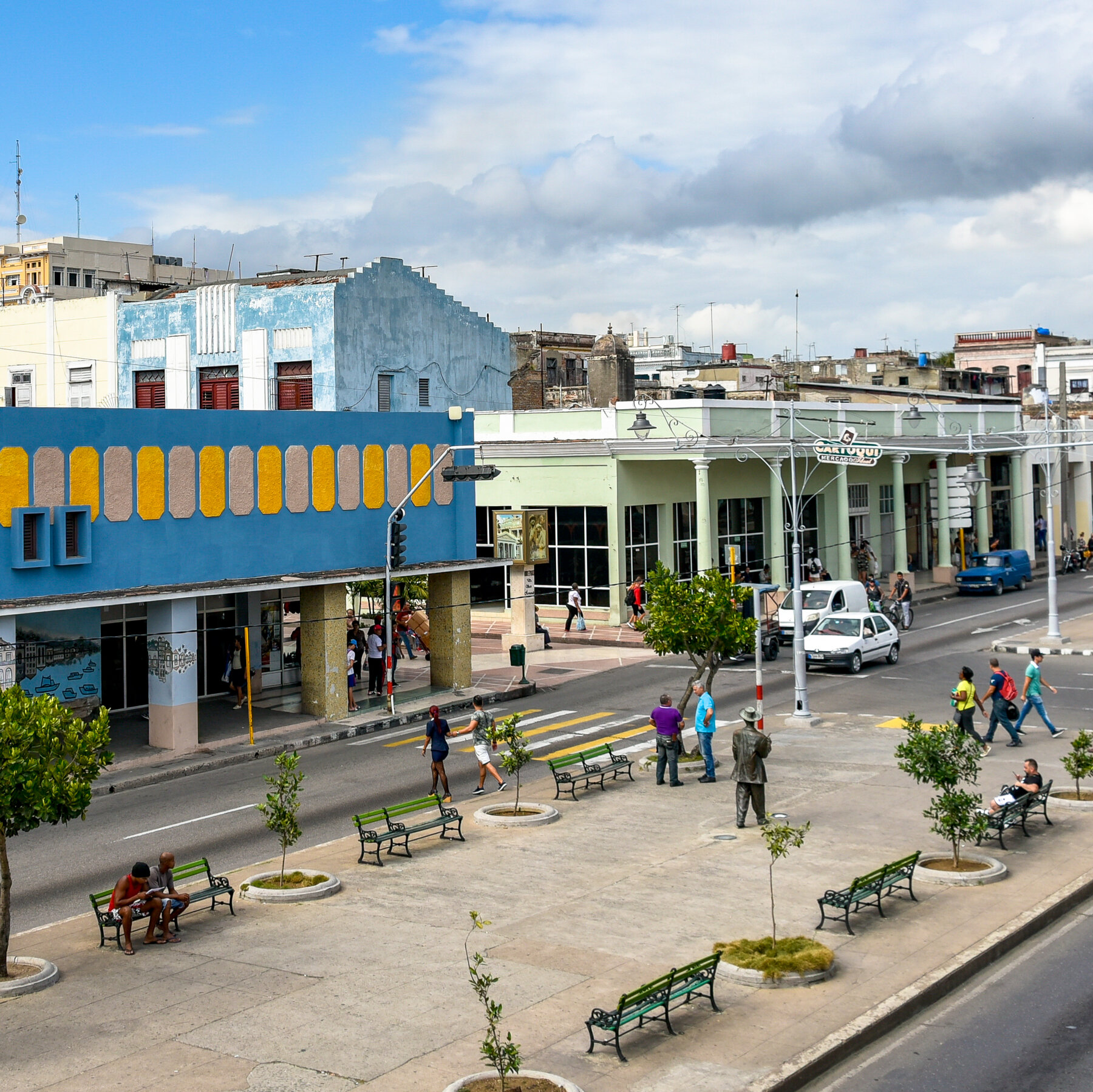
Cuba's hospital generators failed across three provinces during the same week that the Trump administration publicly split the Cuban people from the regime that runs them. The blackouts hit Pinar del Río, Holguín and Granma between May 14 and May 19, leaving surgical wards lit by phone flashlights and dialysis patients without treatment. Outside Havana, the framing was sharper: senior US officials have begun distinguishing, in their public comments, between ordinary Cubans and the government of Miguel Díaz-Canel, a rhetorical move that clears the path for direct engagement with the island's diaspora and with internal opposition while leaving the formal diplomatic freeze intact.
That separation is not a courtesy. It is a transaction. By recasting Cubans as a population held hostage rather than a polity governed by consent, Washington acquires the standing to fund humanitarian channels, court military and intelligence figures unhappy with the succession math, and signal to Mexico, Canada and the European Union that the embargo's next phase will be people-first rather than state-first. The wire response has so far treated the Cuba shift and the parallel round of Iran nuclear talks as separate diplomatic files. They are not. Read together, they describe a US foreign-policy posture that is willing to loosen pressure on adversaries whose populations are deemed salvageable, while tightening pressure on adversaries whose governments are deemed replaceable.
The infrastructure question, not the ideology question
The signal from the provinces is not political; it is electrical. Power generation across Cuba has been degrading for the better part of a decade, a function of Soviet-era thermoelectric plants running past design life, a chronic fuel shortage after Venezuelan shipments collapsed in 2018, and a foreign-exchange crunch that has left the government unable to pay for imported parts. The May blackouts were not a storm, and they were not sabotage. They were the predictable output of a system that has been borrowing from tomorrow for fifteen years.
That distinction matters because US commentary on Cuba has historically oscillated between two registers, neither of them accurate on its own. The first treats the island as a revolutionary project still under way, with the regime's narrative of resilience deserving the benefit of the doubt. The second treats it as a totalitarian monolith whose population is a passive instrument of state will. The current Trump-administration framing, as carried in the administration's readouts and amplified through diaspora media, refuses both. Cubans are described as a national community whose interests diverge from those of the party leadership, particularly on remittances, private enterprise, and family reunification. The Díaz-Canel government is treated as the obstacle, not the embodiment.
What a market is already pricing
Prediction markets have moved faster than diplomats. On Polymarket, contracts on whether Díaz-Canel will still be Cuba's leader by June 30, 2026 trade at a level that implies substantial assigned probability to an exit within weeks rather than years. The contract does not name a mechanism, and prediction-market pricing is famously thin on regime-change questions where the action set is narrow. But the existence of a liquid two-sided quote on a six-week leadership horizon is itself a piece of information. It tells you that informed money considers the question open, which is a different claim from saying informed money considers the answer likely.
The more telling flow sits in the diaspora bond and remittance complex. Cuban-American capital has been quietly increasing exposure to small-business credit vehicles inside the island, particularly in private restaurants, casa particulares, and agricultural co-ops operating in the legal grey zone tolerated since the 2021 monetary unification. None of that is visible in official statistics, because official statistics do not count it. It is visible in the pattern of cross-border payment traffic and in the rising price of dollar-denominated inventory inside Havana's wholesale markets. Capital is positioning for an opening that has not been announced.
The Iran parallel nobody is drawing
The same week that Washington's Cuba posture was hardening along humanitarian lines, negotiators were converging on a framework for a new round of Iran nuclear talks. The two files share an administrative parent and, increasingly, a doctrine. In the Iran case, the US position has been that the Iranian state can be contained and deterred while ordinary Iranians, particularly the post-2022 protest cohort, are engaged around the state rather than through it. In the Cuba case, the mirror logic applies: the Cuban state is to be isolated while Cuban society is to be courted. The pattern is not new in American foreign policy, but the candor with which officials are describing it is.
This is where the wire coverage has been thinnest. Telegram channels carrying the administration's Iran readout and the Cuba comments in parallel feeds have treated them as discrete bulletins. Telegram channels focused on the Middle East, including the Fars News International and Middle East Spectator threads that carried the Iran material, did not flag the Cuba shift at all. The Russia-adjacent Clash Report and witness channels that did pick up the Cuba comments treated them as regime-collapse colour rather than as the opening of a new US negotiating track. The result is a public conversation that has two parallel stories when it should have one.
What the Cuban state actually controls
The harder question is what Díaz-Canel still commands. The Cuban military, formally the Revolutionary Armed Forces and economically the conglomerate GAESA, has been the decisive actor in every succession since 1959. Raúl Castro's withdrawal from the presidency in 2018 did not withdraw him from the military-economic command structure that controls tourism revenue, the remittance-capture joint ventures, and the offshore financial architecture that sustains the elite. Any transition scenario that does not include a negotiated handoff within that structure produces a worse outcome than the status quo, both for Cuban citizens and for US interests.
That is the constraint the administration's framing has to clear. By separating people from government in its public language, Washington has acquired room to fund civil-society channels, support independent journalism, and route humanitarian assistance through NGOs and diaspora organisations without formally recognising the regime. That is the same playbook used, with mixed results, in Venezuela between 2019 and 2024. Whether the Cuban case resembles the Venezuelan case in its endgame, or whether the military-economic elite chooses accommodation earlier than Caracas did, is the open question the markets are now pricing.
The stakes before summer
Three dates are worth watching. First, the UN General Assembly vote in September on the annual Cuban embargo resolution, which has passed with overwhelming margins for three decades and which the US will now have to defend while simultaneously arguing that its policy is people-first. Second, the Organisation of American States debate over whether to readmit Cuban observers, an initiative that Mexico and Colombia are expected to revive. Third, and most immediately, the question of whether the prediction market's implied probability on a June leadership change begins to drift higher as the month progresses, which would force diplomats and investors alike to price a transition rather than a continuity.
The infrastructure failures in Pinar del Río, Holguín and Granma are not going to stop on their own. The fuel deliveries that would restart the thermoelectric fleet are not going to arrive while Venezuela's own production remains depressed and while Mexico's Pemex lacks the export credit to substitute. The blackouts are the visible surface of a fiscal state that has been printing pesos it cannot back and subsidising consumption it cannot afford. Whoever sits in the palace in Havana at the end of June will inherit that arithmetic, and the Trump administration's decision to talk past the palace and to the country is a bet that the arithmetic, rather than the politics, will force the change.
Sources
- Polymarket – Miguel Díaz-Canel out as leader of Cuba by June 30?
- Clash Report (Telegram) – Cuba infrastructure and political coverage
- Witness (Telegram) – Cuba blackout and provincial reporting
- Tasnim News English (Telegram) – Iran nuclear-talks parallel coverage
- Russian Intelligence (Telegram) – US foreign-policy framing analysis
- Fars News International (Telegram) – Iran-US negotiation coverage
- Middle East Spectator (Telegram) – Regional diplomatic posture
Desk note: Wire coverage this week split the US administration's Iran nuclear-talks readout from its Cuba posture, treating them as separate diplomatic files. Monexus reads them as a single transactional posture in which humanitarian engagement with adversary populations is the through-line.