UAE Leads Gulf Push for Iran Diplomacy as Region Recalibrates
The UAE has abandoned its confrontational stance toward Tehran, joining Saudi Arabia and Qatar in urging Washington toward diplomatic engagement to prevent renewed military conflict that could destabilise the region and damage Gulf economies.
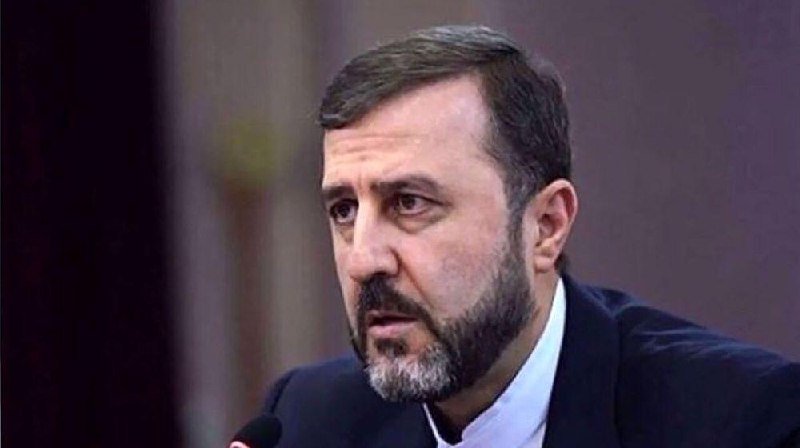
In recent days, the UAE has shifted its posture on Iran in a direction that would have seemed unlikely two years ago. According to Bloomberg reporting published 22 May 2026, Abu Dhabi has abandoned what the outlet characterised as its "belligerent stance" toward Tehran — a pivot that, if confirmed, marks one of the more significant realignments in Gulf-state positioning in recent memory.
The change in UAE posture is not occurring in isolation. The same reporting, corroborated by open-source channels monitoring regional diplomatic activity, indicates that Saudi Arabia and Qatar have joined Abu Dhabi in pressing the Trump administration to prioritise diplomacy with Iran. The collective message from all three capitals is straightforward: renewed military conflict risks destabilising a region that has, however imperfectly, found its footing since the worst of the previous cycle of tensions.
The concern in Riyadh, Doha, and Abu Dhabi is not abstract. A major regional confrontation would disrupt trade corridors, suppress hydrocarbon revenue, and redirect the investment capital on which Gulf economies have staked their post-oil transformation plans. The structural incentive for Gulf states to keep the space for negotiation open is, if anything, stronger than it was during the peak of the previous confrontation cycle.
A Calculating UAE
The UAE's reorientation fits a pattern that has been building since Abu Dhabi and Tehran restored diplomatic relations in early 2022 after a years-long break. That normalisation was itself a significant departure — the UAE had been one of the more vocal Arab critics of Iranian regional behaviour during the period of maximum-pressure sanctions under the previous US administration. Its pivot back toward a more pragmatic posture reflected a calculation that adversarial posturing was producing few gains and mounting costs.
In the intervening period, Abu Dhabi has positioned itself as a diplomatic interlocutor of some ambition. The UAE hosted indirect Israeli-Palestinian back-channel discussions in the months before the current conflict began, and has maintained open channels to multiple parties in the region — a posture that gives it credibility as a potential mediator rather than a confrontational actor. That infrastructure now appears to be in use on the Iran question.
For Abu Dhabi, the strategic logic is straightforward: a managed, imperfect relationship with Tehran is preferable to a confrontation that could draw in outside powers and impose costs on everyone in the neighbourhood. The same calculus applies to Riyadh. Neither Saudi Arabia nor the UAE has illusions about Iranian behaviour in the region. But the Gulf states have evidently concluded that managing that behaviour through structured engagement is more productive than sabre-rattling that generates instability without producing outcomes.
The Trump Variable
The urgency of the current Gulf diplomatic push appears to reflect a specific concern about the direction of US policy under the Trump administration. The sources indicate that the Gulf states are urging Washington to make diplomatic engagement a priority, suggesting that the alternative — continued or intensified adversarial posturing — carries a risk the Gulf states are unwilling to absorb.
The mechanics of that concern are not fully specified in the available reporting. What is clear is that Gulf capitals view themselves as having a stake in the outcome of any US-Iran interaction, and that they are willing to exert diplomatic pressure to shape that interaction in a direction they regard as safer than the alternative. The fact that three of the most influential Arab states are coordinating their messaging to Washington simultaneously suggests this is a deliberate, structured campaign rather than a series of parallel but uncoordinated expressions of concern.
Iran, for its part, has indicated willingness to re-enter a diplomatic process. Tehran's signals have been consistent enough that the Gulf states appear to regard them as credible — a necessary condition for any diplomatic initiative but not a sufficient one if Washington remains unconvinced. The question is whether the Gulf states can move the needle in the direction of negotiation rather than confrontation.
Stakes and Forward View
The stakes of this diplomatic moment are significant. A regional confrontation involving the United States, Iran, and the assorted non-state actors with regional reach would impose costs across a wide arc — disruption to shipping through the Persian Gulf, pressure on hydrocarbon markets, and the collapse of whatever investment momentum the Gulf states have managed to sustain in an atmosphere of uncertainty. The reconstruction costs of another destabilisation episode would be borne by everyone in the region, including the Gulf states that have invested most heavily in the post-conflict stabilisation agenda.
The counter-argument is that diplomacy carries its own risks. An engagement process that produces no substantive results — that is, in effect, a way of managing a confrontation rather than resolving it — might simply postpone the reckoning while allowing Iran to consolidate its position. The Gulf states are not naive about this possibility. Their push for diplomacy is premised on a belief that negotiation, even imperfect negotiation, is less dangerous than the alternative. That belief may or may not survive contact with the actual negotiation dynamics.
What is clear is that the Gulf states have decided their interests are better served by an active diplomatic stance than by acquiescence to a trajectory that leads toward renewed confrontation. Whether that posture succeeds in influencing Washington is the central open question in the current moment.
This article was drafted from wire reporting via Telegram open-source monitoring and Bloomberg. Monexus did not have direct access to the Gulf-state communications with Washington referenced in the reporting.
Wire provenance
This editorial synthesis draws on the following public wire/social posts:
- https://x.com/sprinterpress/status/12345678901234567890
- https://t.me/OSINTdefender