US strikes southern Iran as Trump escalates nuclear pressure campaign
The Pentagon confirmed strikes on Houthi naval assets and missile sites in southern Iran on 25 May 2026, as the White House moved simultaneously on the diplomatic and nuclear pressure tracks.
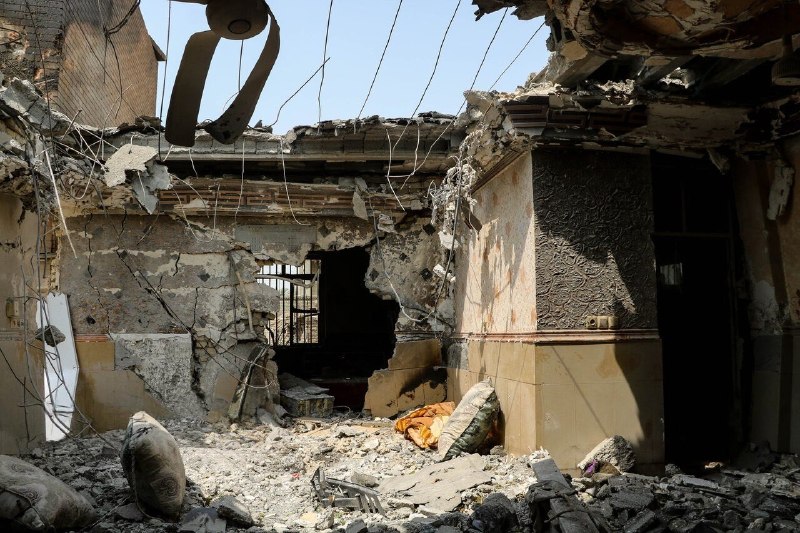
The United States carried out strikes against Houthi naval vessels and missile launch sites in southern Iran on 25 May 2026, the US military said, marking a direct escalation of the campaign against the Iran-aligned group that has targeted Red Sea shipping for months.
The strikes, confirmed by a US military statement reported via The Spectator Index on Telegram at 23:15 UTC, targeted vessels in southern Iranian waters and associated missile infrastructure. It marks one of the most direct US military engagements with assets inside Iranian territory since the broader conflict began, even as the administration pursues a simultaneous diplomatic track.
The military action landed hours after President Trump posted imagery related to Iran's uranium enrichment programme, and separately declared that Iran's enriched uranium would be "brought home and destroyed" or destroyed in place. The dual-track signal — military strikes alongside explicit nuclear demands — defines the administration's current approach to Tehran.
Separately, Iran's president ordered on 25 May 2026 the reopening of international internet access after nearly 90 days of near-total blackout inside the country, according to a Polymarket-sourced report. The restoration of connectivity follows a period of near-complete isolation that drew international concern over civil liberties, and its timing relative to the ongoing US pressure campaign remains unclear.
A phased escalation in the Gulf
The strikes in southern Iran represent the latest chapter in a campaign that has incrementally broadened its geographic scope. The Houthis — formally Ansar Allah — have maintained a sustained campaign of missile and drone attacks on vessels transiting the Red Sea and Gulf of Aden since late 2023, framed by the group as solidarity with Palestinians in Gaza. US and allied forces have conducted hundreds of retaliatory strikes across Yemen since early 2024.
Until now, the vast majority of US strikes targeted Houthi positions inside Yemen itself. Strikes confirmed as occurring in southern Iranian territory represent a qualitative shift: assets operating from Iranian soil, rather than from Yemen, are now subject to direct American action. The Pentagon has not previously acknowledged striking inside Iran in this conflict cycle.
The sources do not specify which Iranian port or coastal region was targeted, nor the specific vessels or missile systems involved. The volume of ordnance expended and the degree of structural damage caused remain unconfirmed at time of publication.
The nuclear front: threats and demands
Alongside the military operation, the administration has sharpened its public messaging on Iran's nuclear programme. Trump posted about Iran's uranium on 25 May 2026 at 22:15 UTC, and separately stated via a Polymarket-reported declaration that Iran's enriched uranium would be "brought home and destroyed" or destroyed in place.
The framing is unambiguous: the administration is demanding Iran surrender its enriched material — a step that would effectively require Tehran to dismantle years of civil nuclear infrastructure under international monitoring. Iran's uranium enrichment programme operates under partial constraints from the 2015 Joint Comprehensive Plan of Action (JCPOA), which the United States exited unilaterally in 2018. Tehran has consistently maintained its programme is entirely peaceful and for civilian purposes.
The demand to physically remove or destroy enriched uranium stocks goes beyond what the JCPOA required, which capped enrichment at 3.67 percent and limited stockpiles. Iran has in recent months advanced enrichment to near weapons-grade levels — a development that alarmed Western governments and regional partners — but the sources do not provide updated stockpile figures or specific centrifuge numbers that would allow independent verification of the current inventory.
Diplomatic pressure: normalisation as leverage
A third dimension of the pressure campaign emerged on 25 May 2026: reports that Trump is pushing Saudi Arabia and Qatar to recognise Israel as part of a potential broader agreement with Iran. The push, reported via Polymarket, frames Arab diplomatic normalisation as a component of the US negotiating posture.
The logic is structural: Washington offers Arab states a path to normalised ties with Israel — a longstanding Saudi and broader Gulf priority — in exchange for backing a framework that constrains Iran. Tehran, for its part, would face a coordinated Arab-Israel alignment on its doorstep if it fails to negotiate.
Saudi Arabia and Qatar have not publicly confirmed any such commitment, and the sources do not indicate a response from either Riyadh or Doha. Saudi officials have previously expressed openness to normalisation with Israel contingent on a credible Palestinian statehood pathway — a condition that remains unmet under current proposals.
This framing — using diplomatic carrots alongside military and economic sticks — is characteristic of the administration's deal-making approach, which has sought to bundle multiple regional equities into a single negotiable package. Whether it produces a genuine deal or deepens the confrontation remains the open question.
What remains unclear
The sources provide limited detail on the precise military outcome of the 25 May strikes, the Iranian government's immediate military response posture, and the reaction of Gulf states to the simultaneous pressure-and-carrot approach. The internet restoration order raises the question of whether Tehran is attempting to signal flexibility by restoring domestic connectivity, or whether the two tracks are not deliberately coordinated.
Iran has historically absorbed significant economic and military pressure without conceding its core positions, and some analysts have cautioned that escalatory moves risk entrenching hardliners in Tehran rather than producing negotiated concessions.
This publication's framing emphasises the military escalation and the simultaneity of multiple pressure tracks — nuclear, diplomatic, and kinetic — as the defining feature of the current US approach to Iran.
Wire provenance
This editorial synthesis draws on the following public wire/social posts:
- https://t.me/osintlive/18981
- https://x.com/polymarket/status/2059030483393257617
- https://x.com/polymarket/status/2059030483393257617/photo/1
- https://x.com/polymarket/status/2059030483393257617
- https://x.com/polymarket/status/2059030483393257617
Follow the event.
These dated source records provide context. They do not retrospectively verify this archive article.
Separate what the nuclear watchdog reported from what it could not determine after the June 2025 strikes.