Trump Declares Naval Blockade Lifted as US-Iran Talks Reach Fragile Crossroads
Oil markets tumbled on 29 May after Donald Trump said a naval blockade would be lifted, hours after conflicting reports placed the Strait of Hormuz at the centre of escalating confrontation between Washington and Tehran.
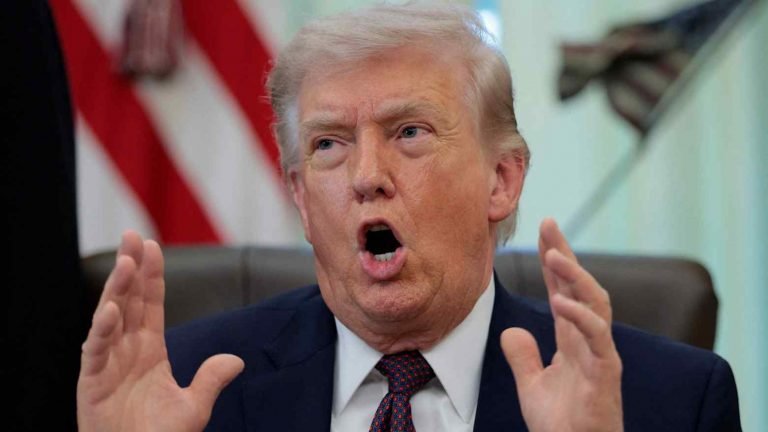
Oil prices fell sharply on the afternoon of 29 May 2026 after Donald Trump announced the lifting of a naval blockade against Iran—an abrupt reversal that came hours after US forces had redirected 115 vessels and intensified enforcement operations in the Gulf. The announcement pushed Brent crude below recent highs, reversing a morning rally driven by fears of disruptions to the Strait of Hormuz, through which roughly a fifth of global oil traffic flows daily.
The whipsaw in market sentiment captured the central dynamic of a single extraordinary day of reporting: the United States and Iran were, at various points throughout 29 May, engaged in simultaneous military escalation and diplomatic positioning, with the Hormuz strait serving as the physical and symbolic prize over which both sides were maneuvering.
The blockade reversal
Trump confirmed the blockade would be lifted in a post published at 16:21 UTC on 29 May, via social media. The announcement came against a backdrop of active military operations that had dominated the morning newsfeed. Earlier in the day, US forces had redirected 115 vessels and intensified Iran blockade enforcement, according to reporting by CryptoBriefing citing wire sources. Separately, an Iranian state-aligned account reported that a US aircraft had been shot down over Iran during the same window of escalation.
That conflict, whatever its precise contours on the morning of 29 May, appeared to have been contained—or at least temporarily paused—by the midday announcement from Washington. The blockade reversal, if it holds, would restore commercial shipping lanes that Iran had partially managed during the preceding days of tension, directly impacting global oil trade flows.
The nuclear question
The announcement on the naval front followed a series of claims from Washington about the shape of a potential deal on Iran's nuclear programme. Trump stated that Iran had agreed to nuclear disarmament, a claim that came paired with reports that Kazakhstan had offered to take Iran's uranium as part of a diplomatic resolution. Those two elements together—a commitment to dismantle enriched material and a third-party physical pathway for containing it—constituted the substantive core of what the White House was describing as a deal.
The confirmation, however, was incomplete. The same reporting noted that a Hormuz reopening remained unconfirmed at the time the nuclear-disarmament claim was made public. Iran, for its part, had positioned the Strait of Hormuz as leverage in talks, with an official citing Iran's missile capability as structurally more important than dialogue in determining deal prospects.
The Polymarket market on a potential tariff dividend—meaning a positive market reaction driven by easing trade tensions—carried just an 8 percent implied probability as of mid-afternoon on 29 May, a reflection of how uncertain traders remained about the durability of any claimed breakthrough.
Hormuz as pressure point
The Strait of Hormuz has sat at the centre of every oscillation in this episode. Prior to the blockade reversal, reports had circulated that oil prices could reach $160 per barrel if Hormuz disruptions continued. Iran manages Strait of Hormuz traffic, reporting indicated, and had been doing so in a way that affected global oil trade meaningfully—raising the stakes of any prolonged closure well beyond the immediate military confrontation.
Iranian officials repeatedly signalled that missile power—not diplomatic goodwill—was the mechanism through which Tehran intended to secure its interests in any negotiation. That framing stood in direct tension with the White House's framing of a deal as concluded. The divergence between what Washington announced and what Tehran acknowledged publicly is the unresolved question that will determine whether this episode resolves into a durable agreement or another round of positioning.
Market reaction and what comes next
Asian equity markets provided a concurrent benchmark for how seriously traders were treating the potential diplomatic opening. Japanese and South Korean stock markets hit new historical highs on 29 May morning, driven in part by expectations of a tentative deal between the US and Iran. That correlation—East Asian equity indexes rising on US-Iran deal speculation—underscored the global stakes of a corridor whose traffic disruptions register immediately in Tokyo, Seoul, and beyond.
Whether the blockade lift constitutes a ceasefire or merely a pause in a longer standoff remains the central question. The sources reporting on 29 May do not confirm that Hormuz traffic has resumed normal operations, nor do they establish that Iran has formally accepted any enrichment limitation that would satisfy international monitors. Kazakhstan's involvement as a uranium repository adds a structural pathway to de-escalation, but a pathway is not a destination.
The markets moved first on optimism. Whether the ground matches the signal Washington sent will be answered in the days ahead.
This publication's coverage has tracked the full arc of the day's reporting—from military escalation to diplomatic possibility—rather than anchoring to either the most alarmist or the most optimistic framing available.
Wire provenance
This editorial synthesis draws on the following public wire/social posts:
- https://t.me/CryptoBriefing/0
- https://x.com/unusual_whales/status/1924171879276093775
- https://t.me/CryptoBriefing/0
- https://t.me/CryptoBriefing/0
- https://t.me/CryptoBriefing/0
- https://t.me/CryptoBriefing/0
- https://t.me/CryptoBriefing/0
- https://t.me/NikkeiAsia/0
Follow the event.
These dated source records provide context. They do not retrospectively verify this archive article.
Separate what the nuclear watchdog reported from what it could not determine after the June 2025 strikes.